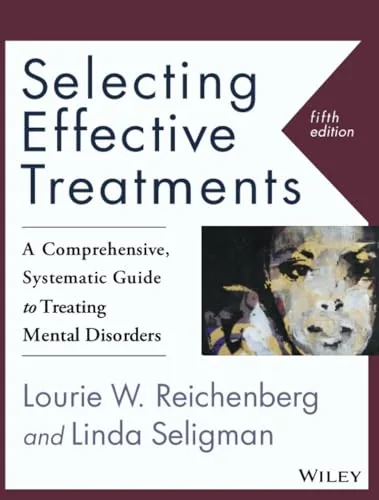
Selecting Effective Treatments, Fifth Edition, uses the Client Map framework to connect assessment, diagnosis, and individualized treatment planning. Lourie W. Reichenberg and Linda Seligman examine client strengths, presenting problems, environmental influences, and therapeutic options for counselors, psychologists, social workers, and graduate trainees working with the edition's DSM-5 diagnostic framework.
Inside this title
Client Map framework organizes assessment and individualized treatment planning
Current listed price $28.00Regular price $64.00Digital ebook
The Client Map provides an organizing structure for bringing assessment information into a treatment plan. Rather than considering a diagnosis alone, the framework includes strengths, difficulties, and environmental factors that affect case conceptualization. The fifth edition relates this work to the DSM-5 material presented when it was published in 2016.
Discussion of interventions includes cognitive-behavioral, dialectical-behavioral, and psychodynamic approaches, with attention to cultural considerations and crisis presentations. Treatment goals, progress evaluation, and adjustments to plans extend the process beyond initial selection. Graduate students and clinicians can use the volume to study the links among diagnostic description, an individual client's circumstances, and the rationale for particular therapeutic choices.
A working manual for clinicians who must move from intake impressions to a defensible plan. Reichenberg and Seligman place strengths, presenting problems, and environmental pressures on one map, then tie that map to DSM-5 description and to a deliberate choice among therapies.
The book treats treatment selection as a reasoning problem rather than a lookup. Its Client Map gathers what a counselor has learned about difficulties, capacities, and surroundings, so that diagnosis becomes one input among several. From there the text compares cognitive-behavioral, dialectical-behavioral, and psychodynamic options, adds cultural and crisis considerations, and closes the loop with goals and progress review. Graduate trainees get a template for explaining why a particular approach fits a particular person. Practitioners in counseling, psychology, and social work can use it to make case conceptualization explicit and auditable.
Mapping the Client Before Choosing a Method
Assessment is presented as structured gathering. The map records difficulties, strengths, and the pressures a person faces at home, at work, and in the community, so the plan rests on more than a label.
Separates presenting problems from underlying capacities
Records environmental and relational pressures
Keeps strengths visible during planning
Open here; later sections assume this map.
Diagnosis as One Voice, Not the Whole Story
DSM-5 categories supply shared language, but the text sets them beside the client's own circumstances. A diagnosis narrows the search for interventions without deciding which intervention a given person should receive.
Uses diagnosis to organize inquiry
Checks whether a category explains the person in front of you
Prevents a label from replacing formulation
Useful when a diagnosis starts crowding out context.
Comparing Three Therapeutic Families
Cognitive-behavioral, dialectical-behavioral, and psychodynamic approaches are set out as distinct options with different assumptions. The point is not to crown a winner but to match a rationale to a case.
Contrasts what each approach targets
Connects method to the client's difficulties
Requires an explicit reason for the choice
Read alongside a current case you are formulating.
Culture, Identity, and the Fit of a Plan
Cultural context is treated as part of the clinical picture, not a footnote. A plan that ignores a client's background risks mistaking difference for pathology or missing a source of support.
Asks how identity shapes the presenting problem
Checks whether the proposed method fits the client's world
Invites the client's own account of what helps
Return to this when a plan feels technically correct but stalled.
Crisis Presentations and Safety
Crisis situations require the framework to be applied quickly and with attention to immediate risk. The text keeps crisis work connected to the broader plan rather than treating it as an exception.
Recognizes when urgency changes the usual sequence
Balances immediate concerns with longer-term goals
Feeds crisis learning back into conceptualization
Relevant when assessment cannot proceed at a measured pace.
Goals, Measurement, and Revision
Selection does not end with the first session. Treatment goals give the plan a direction, progress evaluation tests whether it is working, and adjustments keep it responsive.
States goals in terms that can be reviewed
Uses progress evidence to confirm or revise
Documents why a plan changed
The closing chapter of the book's logic.
Topic map
Topic 1Themes 1-2
Topic 2Theme 2
Topic 3Theme 3
Topic 4Theme 4
Topic 5Theme 5
Topic 6Theme 6
Key takeaways
The Client Map turns scattered assessment notes into a usable formulation.
A diagnosis should guide inquiry without dictating the intervention.
Treatment plans need review points, not just an initial decision.
Counseling, psychology, and social work graduate students and practicing clinicians.
Topics covered
Selecting Effective Treatments 5th Edition
Client Map framework
individualized treatment planning
DSM-5 case conceptualization
counseling assessment guide
Reichenberg Seligman treatment selection
psychotherapy approach comparison
graduate counseling textbook
Questions about this ebook.
Edition, audience, and study-guide details at a glance.
What is Selecting Effective Treatments, 5th Edition about?
Selecting Effective Treatments, Fifth Edition, uses the Client Map framework to connect assessment, diagnosis, and individualized treatment planning. Lourie W. Reichenberg and Linda Seligman examine client strengths, presenting problems, environmental influences, and therapeutic options for counselors, psychologists, social workers, and graduate trainees working with the edition's DSM-5 diagnostic framework.
Which edition of Selecting Effective Treatments, 5th Edition is this?
This listing is for the 5th edition. Check the title, ISBN, and book details above before ordering, especially if your course or reading list names a specific edition.
Who is Selecting Effective Treatments, 5th Edition for?
Counseling, psychology, and social work graduate students and practicing clinicians.
Does this page include a study guide?
Yes. This page includes an original study guide with six thematic sections, key takeaways, and a topic map for structured reading.