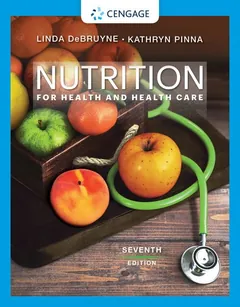
Nutrition for Health and Health Care, fifth edition, presents basic nutrition alongside its applications in healthcare. Written for nursing, nutrition, and allied health learners, it follows nutrients through digestion and metabolism, examines changing requirements across life stages, and relates dietary assessment to the pathophysiology of common nutrition-related conditions.
Inside this title
Digestion, absorption, and metabolism of major nutrient groups
Current listed price $3.99Regular price $6.00Digital ebook
DeBruyne and Pinna explain how nutrients are digested, absorbed, and used, then extend those principles to pregnancy, infancy, and aging. Coverage of diabetes, cardiovascular disease, and obesity places food and nutrient needs within the context of disease processes. The nutrition care process provides a framework for understanding assessment and dietary planning.
The fifth edition also considers the cultural, psychological, and socioeconomic factors that influence food choices and adherence. Case studies, review questions, and assessment tools support classroom discussion of the relationship between nutrition science and patient circumstances. Health science students can use its combination of physiological explanation and applied material to study the foundations of clinical nutrition.
Study guide included
Inside Nutrition for Health and Health Care, 5th Edition.
This edition links food and nutrient physiology to clinical choices about what a patient needs, can consume and can use. Nutrition care chapters show why assessment and plan must evolve together, and the book adds nutrition-focused physical examination language plus an appendix on the IDDSI texture framework.
Dietary tools, digestion, nutrients and energy balance precede life-stage nutrition and the care process. Later chapters cover nutrition support, metabolic stress, digestive and organ disorders, diabetes, cardiovascular disease, cancer and HIV. Nutrition-focused physical examination terminology and an IDDSI appendix turn physiological concepts into shared observations and documented care. The structure rewards a reader who traces a recommended change from the underlying mechanism through assessment to the delivered meal, including whether the patient actually eats it. A useful habit is to ask what evidence would show the change worked.
Patterns, labels and digestive fate
Dietary references provide population benchmarks, labels describe a declared serving, and a food history supplies portions, preferences and access. Comparing all three exposes likely gaps and uncertainty, since an intake estimate is limited by completeness and representativeness. Digestion and transport then distribute absorbable products according to their properties, and gut microbes add a layer when components reach the lower tract.
Compare standards, labels and real portions
Question how typical a record is
Follow each nutrient to absorption
Chs. 1–5 · Food choices, digestion, and macronutrients
Estimates, composition and micronutrients
Requirements depend on size, activity and physiology, and weight change may reflect fluid as much as tissue. This edition widens discussion of intermittent fasting and ultra-processed foods within energy balance, inviting comparison of proposed mechanisms with observed outcomes. Vitamins and minerals support metabolism, tissue upkeep, transport and signaling, while water and electrolytes govern fluid movement. Overall pattern and losses matter when judging a proposed nutrient change.
Separate weight from body composition
Match mechanisms to observed outcomes
Read a nutrient claim in context
Chs. 6–9 · Energy balance, weight management, vitamins, and minerals
Life stages and feeding demands
Pregnancy changes requirements and places food decisions within a family. Lactation adds feeding considerations and support needs, and early childhood moves from infant feeding toward other foods as skills and routines develop. Childhood and adolescence combine growth, school schedules, peers and growing choice. Older adults may face altered appetite, mobility and health, so barriers to buying, preparing or eating deserve exploration before intake is judged.
Trace feeding development across stages
Ask what school changes about intake
Explore barriers in later life
Chs. 10–12 · Nutrition through the life span
Documenting assessment, choosing support
This edition pairs nutrition-focused physical examination with history, dietary assessment, anthropometry and laboratory data. Findings need context: hydration, recent illness and physical change can alter interpretation. Screening selects cases for fuller review, and a written problem statement connects evidence to a concern. Interventions include counseling, foodservice change, modification and support; medication effects matter, and enteral versus parenteral routes raise different questions about gut function, access and monitoring.
Pair physical findings with other evidence
Let screening decide depth of assessment
Justify the route, not just the formula
Chs. 13–15 · Assessment, intervention, and support
Texture, dysphagia and metabolic stress
Swallowing and tolerance problems sit in the upper tract, and the IDDSI framework supplies shared vocabulary for specifying texture and drink thickness, which helps a team check that a delivered meal matches what was ordered. Metabolic and respiratory stress can change demand and the ability to eat, while lower tract and liver disease alter tolerance, digestion, absorption or handling. A change that solves one problem may make a meal impractical elsewhere.
Use shared texture terminology
Check tray against the order
Watch for intake lost to impractical meals
Chs. 16–19 · Stress, gastrointestinal and liver disorders; App. G
Chronic and complex conditions
Diabetes considers carbohydrate patterns beside medication, activity and monitoring; cardiovascular nutrition addresses pressure and lipids; kidney disease changes protein, mineral and fluid questions with function and treatment. Cancer and HIV show how symptoms and therapy affect eating, weight and function. Even a sound plan may fail under fatigue, taste change or gastrointestinal symptoms, so look for measurable intake and tolerance and note where the patient's experience calls for adjustment.
Name the main concern first
Measure intake and tolerance over time
Keep treatment burden visible
Chs. 20–23 · Diabetes, cardiovascular and renal diseases, cancer, and HIV
Chapter and section map
Food choices and digestive physiologyChs. 1–5
Energy balance and micronutrientsChs. 6–9
Nutrition through the life spanChs. 10–12
Assessment and nutrition supportChs. 13–15
Stress and digestive disordersChs. 16–19
Chronic and complex diseaseChs. 20–23
Dysphagia Diets: IDDSI FrameworkApp. G
Dietary Reference Intakes and Daily ValuesApps. H–I
Key takeaways
Combine examination, intake and history before assigning meaning to any single nutrition finding.
Use a shared texture vocabulary to confirm that the ordered diet actually reached the patient.
Measure acceptance and real intake, not only whether the tray matched its written specification.
Nutrition, nursing and dietetics students studying clinical nutrition, plus practitioners who need shared language for assessment, texture modification and nutrition support decisions across care settings.
Topics covered
clinical nutrition
nutrition assessment
IDDSI framework
dysphagia diets
nutrition support
metabolic stress
chronic disease
physical examination
Other editions of this title.
Compare editions, prices, and book details before you choose.
Edition, audience, and study-guide details at a glance.
What is Nutrition for Health and Health Care, 5th Edition about?
Nutrition for Health and Health Care, fifth edition, presents basic nutrition alongside its applications in healthcare. Written for nursing, nutrition, and allied health learners, it follows nutrients through digestion and metabolism, examines changing requirements across life stages, and relates dietary assessment to the pathophysiology of common nutrition-related conditions.
Which edition of Nutrition for Health and Health Care, 5th Edition is this?
This listing is for the 5th edition. Check the title, ISBN, and book details above before ordering, especially if your course or reading list names a specific edition.
Who is Nutrition for Health and Health Care, 5th Edition for?
Nutrition, nursing and dietetics students studying clinical nutrition, plus practitioners who need shared language for assessment, texture modification and nutrition support decisions across care settings.
Does this page include a study guide?
Yes. This page includes an original study guide with six thematic sections, key takeaways, and a chapter and section map for structured reading.