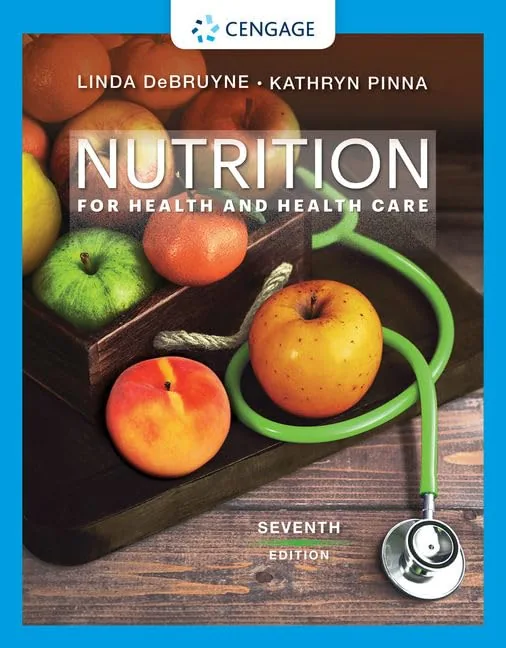
Nutrition for Health and Health Care, Seventh Edition connects nutrition science with the concerns of nursing and allied health education. Linda Kelly DeBruyne and Kathryn Pinna discuss nutrient functions, digestion, energy balance, nutritional assessment, and diet therapy, including nutrition across life stages and in chronic disease.
Inside this title
Digestion, nutrient metabolism, energy balance, and nutritional assessment
Current listed price $29.99Regular price $60.00Digital ebook
Foundational chapters explain digestion, nutrient metabolism, and the roles of macronutrients and micronutrients before the text turns to healthcare applications. Energy balance and assessment methods connect the science of food with the interpretation of dietary intake, body measurements, and biochemical information.
Medical nutrition therapy topics include diabetes, cardiovascular disease, gastrointestinal conditions, and renal disorders. Coverage across the lifecycle considers changing nutritional concerns from pregnancy and infancy through older adulthood. Cultural and psychosocial influences on food choices add context to the clinical material. Designed for nursing and allied health courses, the seventh edition offers students a way to study nutrition alongside the conditions and patient populations encountered in healthcare education.
Study guide included
Inside Nutrition for Health and Health Care, 7th Edition.
Nutrition science only becomes clinical when it meets a real person's intake, budget, illness, and daily routine. This textbook moves from digestion and nutrient function through life-stage needs to assessment, diet therapy, and nutrition support, keeping one question in view: what does this finding mean for what someone can actually eat and absorb?
Opening chapters cover food choice, digestion, energy balance, macronutrients, vitamins, minerals, and water. The middle section follows pregnancy, infancy, childhood, adolescence, and adulthood later in life, where requirements and practical barriers shift. Later chapters introduce screening, the nutrition care cycle, diet-drug interactions, enteral and parenteral support, and therapeutic diets for stress, digestive and liver disorders, diabetes, cardiovascular and kidney disease, cancer, and HIV. Assessment checklists accompany disorder chapters, turning broad disease descriptions into focused questions concerning intake, symptoms, tolerance, and care demands.
What a food record really shows
Eating patterns are shaped by preference, habit, money, and surroundings, so a nutrition history has to capture context before it interprets anything. Dietary guides and labels allow comparison, but only if the reader notices the serving size used. Digestion and absorption then explain why carbohydrate, fat, and protein quality matter in combination. Topics such as glycemic index, fat type, and vegetarian eating lose meaning when pulled out of the total diet.
Record portions, timing, and companions
Compare patterns, not single foods
Read labels against actual servings
Chs. 1–5 · Nutrition, digestion, and energy nutrients
Energy, weight, and micronutrients
Food eaten, calories burned, and scale weight answer separate questions, and body composition adds another. The text keeps the arithmetic of energy balance but sets it beside behavior, environment, and activity, since numbers alone rarely explain a weight trajectory. Vitamin and mineral chapters link sources to function, deficiency, and excess. Supplement claims invite scrutiny of dose, current intake, and the kind of evidence offered, rather than blanket acceptance or dismissal.
Separate intake, output, and measurement
Ask what a supplement claim assumes
Keep fluid and electrolytes in view
Chs. 6–9 · Energy balance, weight management, vitamins, and minerals
Life stages change the questions
Pregnancy and infancy bring rapid change and feeding decisions; childhood and the teen years add growth, preference, and social eating; later adulthood introduces function, appetite, taste, mobility, and access. The checklists translate general recommendations into observations. A missed meal for an older adult could reflect transport, tiredness, chewing, appetite, or simply an unasked routine. Treating the stage as context keeps the assessment specific instead of assuming a single cause.
Tie intake to developmental stage
Ask about access and ability
Separate appetite from logistics
Chs. 10–12 · Nutrition through the life span
From assessment to a defensible plan
Screening decides who needs deeper assessment; history, records, measurements, laboratory values, and physical findings then supply different kinds of evidence. The nutrition care cycle links a defined problem to an intervention and a review method, and documentation should make that chain readable. Interventions range from changed food selection and meal service to medication coordination and specialized enteral or parenteral feeding, each with its own feasibility and monitoring demands.
Screen first, then assess in depth
Connect each intervention to a problem
Weigh route, tolerance, and monitoring
Chs. 13–15 · Nutrition care, diet-drug interactions, and support
Stress, digestion, and tolerance
Respiratory and metabolic stress raise requirements while often making eating harder, so a small intake can matter more and still need explanation. Disorders are approached by locating the impaired function: swallowing, gastric emptying, intestinal movement, absorption, or hepatic metabolism. Symptom timing becomes a diagnostic clue. Two reports of poor intake mean different things when one follows swallowing and the other follows digestion.
Match symptoms to the impaired function
Explain why intake fell, not just that it did
Account for treatment schedules
Chs. 16–19 · Metabolic and respiratory stress, digestive disorders, and liver disease
Chronic disease and measurable follow-up
Diet therapy means different things by condition. Diabetes planning weighs carbohydrate against activity, medication, and glucose monitoring; cardiovascular care relates eating patterns to blood pressure and lipids; kidney care balances protein, energy, fluid, and minerals. Cancer and HIV add appetite, tolerance, and status changes during treatment. Comparing plans requires naming the objective and context first, then asking if the person can follow the plan and whether the target measure moves.
Name the objective before comparing diets
Check feasibility, not just theory
Track intake and symptoms together
Chs. 20–23 · Diabetes, heart and blood vessel disorders, renal disease, cancer, and HIV
Chapter and section map
Food choices, digestion, and macronutrientsChs. 1–5
Energy balance, vitamins, and mineralsChs. 6–9
Pregnancy, infancy, growth, and later adulthoodChs. 10–12
Nutrition care, intervention, and supportChs. 13–15
Stress, gastrointestinal disorders, and liver diseaseChs. 16–19
Diabetes and cardiovascular and renal diseasesChs. 20–22
Nutrition, Cancer, and HIV InfectionCh. 23
Key takeaways
Use stage-specific checklists to turn broad nutrition advice into questions about access, ability, symptoms, and the body's demands.
Keep the recorded meal separate from the explanation you are testing, and say what still needs verification.
Tie every diet or support choice to a care goal and a measure that can show change.
Nursing and allied health students, dietetics learners, and practicing clinicians who need a practical bridge from nutrient science to patient assessment, therapeutic diets, and nutrition support in hospital and community settings.
Topics covered
clinical nutrition
nutrition assessment
diet therapy
energy balance
life stage nutrition
nutrition care process
enteral nutrition
chronic disease nutrition
Other editions of this title.
Compare editions, prices, and book details before you choose.
Edition, audience, and study-guide details at a glance.
What is Nutrition for Health and Health Care, 7th Edition about?
Nutrition for Health and Health Care, Seventh Edition connects nutrition science with the concerns of nursing and allied health education. Linda Kelly DeBruyne and Kathryn Pinna discuss nutrient functions, digestion, energy balance, nutritional assessment, and diet therapy, including nutrition across life stages and in chronic disease.
Which edition of Nutrition for Health and Health Care, 7th Edition is this?
This listing is for the 7th edition. Check the title, ISBN, and book details above before ordering, especially if your course or reading list names a specific edition.
Who is Nutrition for Health and Health Care, 7th Edition for?
Nursing and allied health students, dietetics learners, and practicing clinicians who need a practical bridge from nutrient science to patient assessment, therapeutic diets, and nutrition support in hospital and community settings.
Does this page include a study guide?
Yes. This page includes an original study guide with six thematic sections, key takeaways, and a chapter and section map for structured reading.