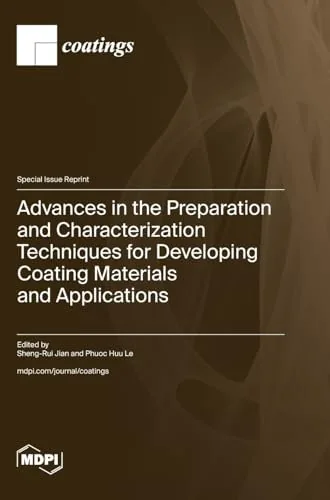
Advances in the Preparation and Characterization Techniques for Developing Coating Materials and Applications
Edited by Sheng-Rui Jian, Phuoc Huu Le
About this ebook
This research collection examines the preparation, characterization, and performance of coating materials. Edited by Sheng-Rui Jian and Phuoc Huu Le, it brings together studies of thin films, nanostructured surfaces, mechanical behavior, and analytical techniques for materials scientists, engineers, and graduate researchers investigating relationships between processing, structure, and function.
Inside this title
Preparation and characterization of thin-film coating materials
Current listed price $26.99Regular price $44.00Digital ebook
Coating preparation and characterization are treated together in this reprint of research from Coatings. Studies examine how deposition and processing influence thin-film structure, composition, and behavior. Microscopy and spectroscopy provide ways to connect the material produced with its observed properties, rather than treating fabrication and analysis as separate activities.
Mechanical topics include nanoscale deformation, hardness, elasticity, and fracture, alongside questions of adhesion, wear, and corrosion protection. Experimental findings and computational approaches contribute different views of performance in electronic, structural, and functional applications. Edited by Sheng-Rui Jian and Phuoc Huu Le, the collection is intended for researchers following specific investigations in surface engineering and coating materials.
Study guide included
Inside Advances in the Preparation and Characterization Techniques for Developing Coating Materials and Applications.
This research collection treats coating preparation and characterization as one connected problem. Jian and Le gather studies of thin films and nanostructured surfaces, pairing deposition and processing with microscopy and spectroscopy so that structure, composition, and behavior can be read together. Mechanical performance, adhesion, wear, and corrosion follow as questions about how a coating actually functions.
The volume reprints research from Coatings on how deposition and processing shape thin-film structure, composition, and performance. Microscopy and spectroscopy are presented as ways to connect the material produced with its observed properties, rather than as separate analytical steps. Mechanical topics include nanoscale deformation, hardness, elasticity, and fracture, together with adhesion, wear, and corrosion protection. Experimental findings and computational approaches offer different views of behavior in electronic, structural, and functional applications. Readers follow specific investigations in surface engineering rather than a single unified method.
Thin-film deposition and processing
Deposition and processing determine what a coating becomes before any measurement is made. The section examines how fabrication choices influence film structure, thickness, and composition, and why those effects matter for later performance. Rather than separating making from testing, the collection treats processing as part of the evidence about a material.
Trace fabrication choices to film structure
Treat processing as evidence, not setup
Connect thickness and composition to use
Topic 1 · Deposition and Processing
Microscopy and structural characterization
Microscopy gives a direct view of surface and film structure at scales that matter for coatings. The section shows how images reveal grain structure, defects, and interfaces that influence mechanical and functional behavior. Characterization is presented as interpretation: a micrograph supports a claim only when the imaging conditions and the question being asked are clear.
Read grain structure and defects from images
Note imaging conditions behind a claim
Connect surface structure to behavior
Topic 2 · Microscopy and Structure
Spectroscopy and composition analysis
Spectroscopy connects a coating's chemical composition and bonding with the properties it displays. The section pairs such analysis with structural observation so that composition and morphology are interpreted together. Readers see how a single technique answers only part of a question and why combining methods strengthens a conclusion about a material.
Link composition and bonding to properties
Read composition alongside morphology
Combine methods for stronger conclusions
Topic 3 · Spectroscopy and Composition
Nanoscale deformation, hardness, and elasticity
Mechanical behavior at the nanoscale can differ from bulk response, and the collection examines deformation, hardness, and elasticity in that regime. The section asks how measurement scale and method affect what is reported, and how a film's structure produces the stiffness or resistance observed. Results are treated as dependent on both material and test conditions.
Compare nanoscale and bulk behavior
Note how scale and method affect results
Relate film structure to stiffness
Topic 4 · Nanoscale Mechanics
Fracture, adhesion, wear, and corrosion
Durability questions ask how a coating fails and how long it protects the surface beneath. The section covers fracture, adhesion, wear, and corrosion protection as related but distinct failure modes. Readers are encouraged to match the test to the failure being studied and to consider that a coating may perform well in one respect and poorly in another.
Distinguish fracture, wear, and corrosion
Match test method to failure mode
Expect tradeoffs between properties
Topic 5 · Adhesion, Wear, and Corrosion
Structure, processing, and application
The collection returns to the relationship among processing, structure, and function as the thread that holds its separate studies together. Experimental and computational results are compared, and applications in electronic, structural, and functional systems show why the relationship matters. The section asks readers to move between a specific result and the broader question of material design.
Treat processing, structure, and function as linked
Compare experimental and computational views
Move from result to design question
Topic 6 · Structure, Processing, and Function
Topic map
Thin-Film Deposition and ProcessingTopic 1
Microscopy and Structural CharacterizationTopic 2
Spectroscopy and Composition AnalysisTopic 3
Nanoscale Deformation, Hardness, and ElasticityTopic 4
Fracture, Adhesion, Wear, and CorrosionTopic 5
Structure–Property RelationshipsTopic 6
Electronic, Structural, and Functional ApplicationsTopic 7
Key takeaways
Read deposition and characterization together rather than treating fabrication and analysis as separate stages.
Combine microscopy and spectroscopy before drawing firm conclusions about composition and structure.
Match the mechanical or durability test to the failure mode under study.
Materials scientists, coating engineers, and graduate researchers who follow surface engineering studies and want to connect deposition, characterization, mechanical behavior, and application performance in coatings.
Topics covered
coating materials
thin films
materials characterization
microscopy and spectroscopy
nanoscale mechanics
corrosion protection
surface engineering
structure-property relationships
Questions about this ebook.
Edition, audience, and study-guide details at a glance.
What is Advances in the Preparation and Characterization Techniques for Developing Coating Materials and Applications about?
This research collection examines the preparation, characterization, and performance of coating materials. Edited by Sheng-Rui Jian and Phuoc Huu Le, it brings together studies of thin films, nanostructured surfaces, mechanical behavior, and analytical techniques for materials scientists, engineers, and graduate researchers investigating relationships between processing, structure, and function.
Who is Advances in the Preparation and Characterization Techniques for Developing Coating Materials and Applications for?
Materials scientists, coating engineers, and graduate researchers who follow surface engineering studies and want to connect deposition, characterization, mechanical behavior, and application performance in coatings.
Does this page include a study guide?
Yes. This page includes an original study guide with six thematic sections, key takeaways, and a topic map for structured reading.