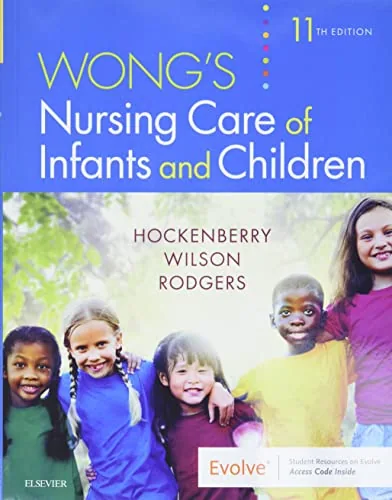
Wong's Nursing Care of Infants and Children, eleventh edition, approaches pediatric nursing through development and family-centered care. Nursing students and pediatric practitioners examine growth, assessment, health promotion, acute illness, chronic conditions, medication considerations, and emergencies, with cases and clinical reasoning activities that place children and caregivers within the care process.
Inside this title
Family-centered pediatric care from infancy through adolescent development
Current listed price $22.99Regular price $38.00Digital ebook
The child and family form the central unit of care in this pediatric nursing text. Coverage follows growth from infancy through adolescence, bringing developmental milestones and age-related assessment together with health promotion, injury prevention, and responses to illness.
Acute childhood conditions and chronic disorders, including asthma, diabetes, and congenital conditions, are explored alongside medication administration and dosage calculation. Emergency topics include respiratory distress and shock. Case-based discussions and reasoning exercises provide opportunities to examine assessment findings, priorities, and the participation of parents and caregivers. The eleventh edition can accompany pediatric nursing coursework and clinical rotations or support nurses reviewing the conceptual foundations of care across childhood.
Study guide included
Inside Wong's Nursing Care of Infants and Children, 11th Edition.
Pediatric nursing asks the clinician to read a child's development, family life, and clinical findings together. This textbook organizes care from health promotion through acute, chronic, and high-risk situations, using cases and reasoning exercises to show how observation, teaching, and family participation shape decisions at every stage.
The book starts with perspectives on the profession, child health promotion, heredity, assessment, and pain, then follows the child by age: newborn, infant, toddler, preschooler, school-age, and adolescent. Separate units address palliative care, chronic illness and disability, and sensory, cognitive, or communication impairment. Next come hospital skills, followed by nutrition, elimination, circulation, oxygenation, regulation, and mobility. Throughout, developmental ability and family knowledge are treated as evidence that shapes interpretation, and care plans connect findings to expected outcomes, action, and reassessment. Cases and exercises in clinical reasoning give readers practice in explaining what shifted and what caregivers need to understand.
Assessing the child within the family
Assessment begins with the people around the child. Nurses learn who provides care, how the household makes decisions, and which cultural or religious beliefs shape health practices. Inherited information sharpens questions about risk but sits alongside history, setting, and current findings. Because children differ in understanding and expression, communication and developmental review belong together, and any pain measure should match the child's ability so later comparisons remain meaningful.
Ask who looks after the child
Match pain tools to ability
Treat family knowledge as evidence
Chs. 1–6
Infant and newborn care
Newborn chapters separate routine promotion, common problems, and the care of high-risk infants, since maturity and the circumstances of birth change what an observation means. The high-risk unit keeps monitoring and intervention inside the infant-family relationship, including how caregivers are informed and included. Infant chapters tie feeding, nutrition, development, and safety together, and teaching works best when it targets something the household will actually do and confirms what the caregiver should watch between visits.
Distinguish routine, problem, high-risk care
Include caregivers in high-risk units
Teach tasks families will perform
Chs. 7–11
Growing children and prevention
Units on toddlers and preschoolers connect growth with prevention, because greater mobility raises exposure to injury and poisoning while judgment is forming. Guidance depends on the caregiver and a setting suited to the child, making details about play, sleep, and household routine relevant. School-age chapters place health within learning, peers, and activity. The teen years bring puberty, privacy, shifting relationships, and responsibility, so interviews give the young person room to speak and clarify every role.
Link mobility to injury exposure
Adapt guidance to the setting
Let adolescents describe their choices
Chs. 12–18
Long-term illness, comfort, and access
Long-term illness or disability reaches into school, work schedules, siblings, family resources, and everyday participation, so planning must ask what the child hopes to continue and what families can sustain. A dedicated palliative chapter treats dialogue, ease, aims, and help for households dealing with grave illness, bereavement, and grief. Sensory, cognitive, or communication impairment changes how a child meets unfamiliar settings, and effective supports should follow the child across transitions.
Ask what the condition alters at home
Preserve familiar communication methods
Carry supports across care transitions
Chs. 19–21
Hospital stays and clinical skills
A hospital stay can cut into family contact, daily activity, and a child's feeling of control, with effects that change with age and earlier experience. Getting ready should use language and options the child grasps, and familiar items or easy choices help when selected with the family. Pediatric procedures require a briefing, safety steps, dialogue, and a check of the response, and the plan must say how distress gets tracked and how caregivers take part.
Prepare children in understandable language
Brief, check safety, assess response
Name how distress will be observed
Chs. 22–23
Organ systems and observation
Later units trace whichever function is involved. Chapters on nutrition and elimination link renal function, fluid balance, and gastrointestinal change to nursing assessment, and a standalone overview of gas exchange precedes respiratory dysfunction, explaining why work of breathing, activity, and feeding shift once oxygenation is affected. Hematologic, circulatory, immune, cancer, cerebral, endocrine, musculoskeletal, and neuromuscular topics each carry their own monitoring priorities, and care plans connect findings with action and later reassessment.
Trace the affected function first
Compare findings with baseline
Explain the next observation
Chs. 24–35
Chapter and section map
Communication, Physical, and Developmental AssessmentCh. 4
The High-Risk Newborn and FamilyCh. 9
Health Promotion of the School-Age Child and FamilyCh. 15
Family-Centered Palliative CareCh. 20
The Child With Cognitive, Sensory, or Communication ImpairmentCh. 21
Pediatric Nursing Interventions and SkillsCh. 23
Overview of Oxygen and Carbon Dioxide ExchangeCh. 27
The Child With Neuromuscular or Muscular DysfunctionCh. 35
Key takeaways
Draw on family knowledge and development as evidence, and show how each shifts your reading of the case.
Tie every procedure to a visible goal for comfort or involvement, then review the child's response.
When teaching caregivers, attach the clinical worry to a step they can explain and repeat.
Nursing students, pediatric staff, and clinical instructors who need a developmental, family-centered reference for assessment, hospital skills, and system-based care, plus educators building simulation and reasoning exercises around it.
Topics covered
pediatric nursing
family-centered care
child development
nursing assessment
clinical reasoning
health promotion
hospital care
nursing education
Other editions of this title.
Compare editions, prices, and book details before you choose.
Edition, audience, and study-guide details at a glance.
What is Wong's Nursing Care of Infants and Children, 11th Edition about?
Wong's Nursing Care of Infants and Children, eleventh edition, approaches pediatric nursing through development and family-centered care. Nursing students and pediatric practitioners examine growth, assessment, health promotion, acute illness, chronic conditions, medication considerations, and emergencies, with cases and clinical reasoning activities that place children and caregivers within the care process.
Which edition of Wong's Nursing Care of Infants and Children, 11th Edition is this?
This listing is for the 11th edition. Check the title, ISBN, and book details above before ordering, especially if your course or reading list names a specific edition.
Who is Wong's Nursing Care of Infants and Children, 11th Edition for?
Nursing students, pediatric staff, and clinical instructors who need a developmental, family-centered reference for assessment, hospital skills, and system-based care, plus educators building simulation and reasoning exercises around it.
Does this page include a study guide?
Yes. This page includes an original study guide with six thematic sections, key takeaways, and a chapter and section map for structured reading.