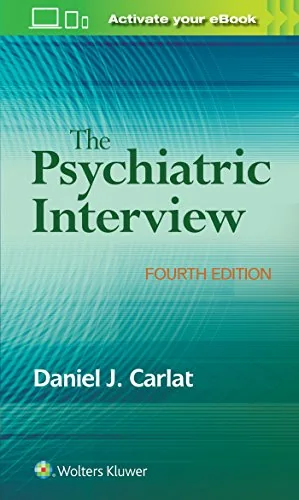
The Psychiatric Interview, 4th Edition presents Daniel J. Carlat's practical approach to gathering a psychiatric history and establishing rapport. It addresses symptom questions, sensitive subjects, difficult encounters, and the mental status examination. Psychiatry trainees and other mental health clinicians can study the sequence and communication choices involved in interviewing patients.
Inside this title
Rapport building, agenda setting, and structured psychiatric symptom histories
Current listed price $29.00Regular price $65.00Digital ebook
Carlat follows the encounter from its opening moments through the exploration of symptoms and personal history. Rapport, agenda setting, and clear questioning provide a framework for examining depression, mania, psychosis, and anxiety. The focus remains on how to conduct the conversation as well as what information to collect.
Separate discussions address trauma, substance use, suicide, violence, and interviews that become challenging because of anger or limited engagement. Mental status examination and documentation connect observed behavior with the written assessment. Material on younger, older, and culturally diverse patients broadens the range of situations considered. The fourth edition suits learners developing psychiatric interviewing skills and clinicians reviewing approaches to particular interview tasks.
Study guide included
Inside The Psychiatric Interview, 4th Edition.
Carlat treats the psychiatric interview as a sequence of decisions rather than a script. Opening moves, agenda setting and question wording are shown to shape what a patient discloses, and the same attention carries through symptom review, sensitive topics and the written record.
The book moves from the first minutes of contact to the final note in the chart. It begins with rapport, agenda setting and the phrasing of questions, then works through the major symptom domains one at a time: depression, mania, psychosis and anxiety. Sensitive ground follows, including trauma, substance use, suicide and potential violence. The mental status examination is presented as an extension of the conversation, and documentation is tied back to what was observed and asked. Later material adjusts the approach for younger patients, older patients and people from different cultural backgrounds.
Opening the interview and building rapport
Carlat treats the first minutes as work, not small talk. How the clinician introduces the purpose of the meeting, handles the patient's uncertainty and sets a tone determines how much disclosure follows. Rapport is described as something built through specific choices, including seating, pacing, open questions and tolerating silence, rather than a personality trait some clinicians have and others lack.
State the purpose and limits of the interview
Use open questions before narrowing
Silence can be a tool, not a failure
Topics 1–2
Structured questioning for depression and mania
Symptom review is presented as a sequence with reasons behind it. For depression the clinician moves from mood and interest to sleep, appetite, energy, concentration and suicidal thinking, then checks duration and impairment. Mania requires separate questions about elevated mood, irritability, decreased need for sleep and impulsive activity, because patients often report the experience as productivity rather than illness.
Cover mood, interest, sleep, appetite and energy
Ask about duration and functional impairment
Mania may be reported as productivity, not illness
Topics 3–4
Psychosis, anxiety and symptom detail
Psychotic symptoms demand careful wording because the question can suggest the answer. The book separates hallucinations from overvalued ideas and delusions, and asks about insight without arguing. Anxiety is approached through triggers, physical symptoms, avoidance and timing, so that panic, generalized worry, social fear and obsessive patterns can be distinguished by the pattern of the report rather than by a single complaint.
Word psychosis questions to avoid leading
Distinguish hallucinations, delusions and overvalued ideas
Map anxiety by triggers, avoidance and timing
Topic 4
Trauma, substances, suicide and violence
These subjects are treated as ordinary parts of a complete history rather than special procedures. The text discusses when to ask, how to phrase questions about trauma and substance use, and how to move from suicidal ideation to plan, intent and means. Violence questions are framed around risk to others and access to weapons, with attention to what the clinician does with an affirmative answer.
Ask about trauma directly but without pressure
Follow ideation through plan, intent and means
Know what to do when risk is disclosed
Topics 5–6
Mental status examination and documentation
The mental status examination is presented as organized observation rather than a checklist recited at the end. Appearance, behavior, speech, mood, affect, thought process and content, cognition and insight are tied to what happened in the room. Documentation then translates the encounter into a note that another clinician can use, separating observation from inference and recording what was asked and answered.
Tie each MSE heading to observed behavior
Separate what was seen from what was inferred
Write notes another clinician can act on
Topic 7
Adjusting for age, culture and resistance
The closing material changes the frame rather than adding a chapter of exceptions. Younger patients require attention to development, consent and the presence of caregivers. Older patients bring cognitive screening, sensory limits and medication history. Cultural background shapes how symptoms are described and what treatment means. Difficult encounters involving anger, silence or limited engagement are discussed as problems of technique and setting, not only of diagnosis.
Adapt language and setting to developmental stage
Screen cognition when history seems unreliable
Read resistance as information about the encounter
Topic 8
Topic map
Opening Moves and RapportTopic 1
Agenda Setting and Question WordingTopic 2
Depression and ManiaTopic 3
Psychosis and AnxietyTopic 4
Trauma and Substance UseTopic 5
Suicide Risk and ViolenceTopic 6
Mental Status ExaminationTopic 7
Documentation and Special PopulationsTopic 8
Key takeaways
Watch how the opening minutes shape what a patient is willing to say later.
Treat suicide and violence questions as routine parts of the history, not exceptions.
Write the note from what was observed and asked, not from impression alone.
Psychiatry residents, medical students on clinical rotation, and mental health clinicians who want a structured approach to the interview, the mental status examination and documentation.
Topics covered
psychiatric interview technique
mental status examination
symptom history questions
rapport and agenda setting
suicide risk assessment
Carlat 4th edition
psychiatry trainee guide
Questions about this ebook.
Edition, audience, and study-guide details at a glance.
What is The Psychiatric Interview, 4th Edition about?
The Psychiatric Interview, 4th Edition presents Daniel J. Carlat's practical approach to gathering a psychiatric history and establishing rapport. It addresses symptom questions, sensitive subjects, difficult encounters, and the mental status examination. Psychiatry trainees and other mental health clinicians can study the sequence and communication choices involved in interviewing patients.
Which edition of The Psychiatric Interview, 4th Edition is this?
This listing is for the 4th edition. Check the title, ISBN, and book details above before ordering, especially if your course or reading list names a specific edition.
Who is The Psychiatric Interview, 4th Edition for?
Psychiatry residents, medical students on clinical rotation, and mental health clinicians who want a structured approach to the interview, the mental status examination and documentation.
Does this page include a study guide?
Yes. This page includes an original study guide with six thematic sections, key takeaways, and a topic map for structured reading.