Assessment and Diagnosis
Interviewing, the mental status examination, and differential diagnosis form the clinical entry point.
- Structured psychiatric interviewing
- Mental status examination findings
- Differential diagnosis and physical health
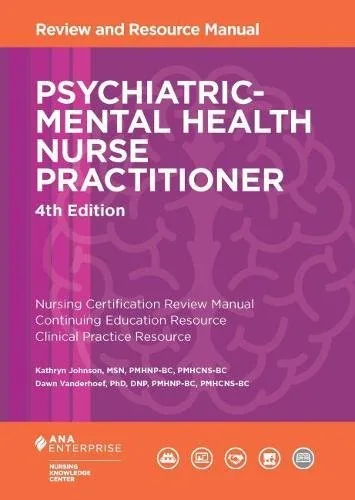
The Psychiatric-Mental Health Nurse Practitioner Review and Resource Manual, Fourth Edition, organizes advanced psychiatric nursing topics for students and practitioners reviewing the specialty. Kathryn Johnson and Dawn Vanderhoef cover assessment, diagnosis, neurobiology, psychopharmacology, psychotherapy, and professional responsibilities across the lifespan, with attention to major psychiatric and co-occurring conditions.
Digital ebook. Checkout sends an order request.
Psychiatric interviewing, mental status examination, differential diagnosis, and physical health assessment form part of this specialty review. The manual connects clinical presentation with neurobiology and the medication classes used in psychiatric care, including discussion of mechanisms, adverse effects, and monitoring. Its diagnostic material uses the DSM-5 framework described in the source.
The range includes mood and psychotic disorders, anxiety, trauma-related conditions, neurodevelopmental and neurocognitive disorders, and substance use. Individual, family, and group therapies accompany the pharmacological topics. PMHNP students, graduates preparing for certification, and nurses revisiting specialty content can use the fourth edition as an organized review of psychiatric nursing concepts and role responsibilities.
A specialty review for advanced psychiatric nursing. Kathryn Johnson and Dawn Vanderhoef organize assessment, diagnosis, neurobiology, psychopharmacology, and psychotherapy across the lifespan, with coverage of mood, psychotic, anxiety, trauma-related, neurodevelopmental, neurocognitive, and substance-related conditions for students and practitioners preparing for certification.
The manual gathers the knowledge base of advanced psychiatric nursing into an organized review. Psychiatric interviewing, the mental status examination, differential diagnosis, and physical health assessment sit alongside neurobiology and the medication classes used in care, including mechanisms, adverse effects, and monitoring. Diagnostic material follows the DSM-5 framework described in the source. Mood and psychotic disorders, anxiety, trauma-related conditions, neurodevelopmental and neurocognitive disorders, and substance use all appear, together with individual, family, and group therapies. Students, certification candidates, and nurses returning to the specialty can use it to revisit concepts and role responsibilities.
Interviewing, the mental status examination, and differential diagnosis form the clinical entry point.
Biological foundations and medication classes are linked to clinical presentation and monitoring.
Individual, family, and group therapies are reviewed as part of the advanced practice role.
Diagnosis and management of major mood and psychotic conditions are reviewed with attention to the lifespan.
Anxiety, trauma-related, neurodevelopmental, neurocognitive, and substance-related conditions broaden the review.
Role responsibilities and professional issues complete the specialty review.
PMHNP students, graduates preparing for certification, and nurses reviewing advanced psychiatric nursing content.
Edition, audience, and study-guide details at a glance.
The Psychiatric-Mental Health Nurse Practitioner Review and Resource Manual, Fourth Edition, organizes advanced psychiatric nursing topics for students and practitioners reviewing the specialty. Kathryn Johnson and Dawn Vanderhoef cover assessment, diagnosis, neurobiology, psychopharmacology, psychotherapy, and professional responsibilities across the lifespan, with attention to major psychiatric and co-occurring conditions.
This listing is for the 4th edition. Check the title, ISBN, and book details above before ordering, especially if your course or reading list names a specific edition.
PMHNP students, graduates preparing for certification, and nurses reviewing advanced psychiatric nursing content.
Yes. This page includes an original study guide with six thematic sections, key takeaways, and a topic map for structured reading.
More books from this subject area.