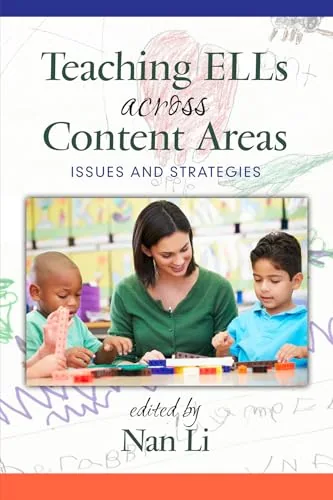
Teaching ELLs Across Content Areas: Issues and Strategies
Edited by Nan Li
About this ebook
This edited volume examines how K–12 teachers can develop academic English alongside subject knowledge. Edited by Nan Li, it covers language arts, mathematics, science, social studies, technology, and the arts, with attention to scaffolding, classroom interaction, and assessment for English learners in mainstream and specialist settings.
Inside this title
Subject-specific language support across the K-12 curriculum
Current listed price $27.00Regular price $60.00Digital ebook
Language demands change from a mathematics problem to a science investigation or a social studies reading. This book organizes its discussion by content area, showing how teachers can account for those differences when planning instruction for English Language Learners. Its scope includes subjects sometimes given less attention in language support resources, including technology, art, and music.
Topics include vocabulary development, reading and writing within disciplines, cooperative learning, and formative assessment of subject understanding. Classroom teachers, ESL specialists, instructional coaches, and teacher candidates can use the cross-curricular approach to consider how language support fits into ordinary lessons and collaboration with families and colleagues.
Study guide included
Inside Teaching ELLs Across Content Areas: Issues and Strategies.
An edited volume on teaching academic English alongside subject content in K–12 classrooms. Contributors address language arts, mathematics, science, social studies, technology, and the arts, with attention to scaffolding, classroom interaction, assessment, and collaboration for English learners in mainstream and specialist settings.
The book organizes language support by content area, because the demands of a mathematics problem differ from those of a science investigation or a social studies reading. Each subject receives attention, including technology, art, and music, which are sometimes neglected in language resources. Chapters discuss vocabulary development, reading and writing within disciplines, cooperative learning, and formative assessment of subject understanding. The cross-curricular approach asks teachers to see language support as part of ordinary lessons rather than a separate add-on. Collaboration with families and colleagues extends the discussion beyond the individual classroom, and the range suits mainstream teachers as well as ESL specialists.
Academic English Across the Curriculum
Academic English is treated as subject-specific rather than generic. The book argues that each discipline makes its own language demands on learners. This framing sets up the content-by-content discussion that follows.
Recognize subject-specific language
Distinguish academic from everyday English
Frame support across the curriculum
Topic 1
Language Arts and Literacy
Language arts provides a natural starting point for literacy work with English learners. The text addresses reading and writing within the discipline and the vocabulary that supports them. Literacy is connected with subject learning rather than isolated skill drills.
Support reading in language arts
Develop discipline writing
Build academic vocabulary
Topic 2
Mathematics and Science Language Demands
Word problems and investigations carry distinct language challenges. The book examines how teachers can scaffold the vocabulary and reasoning these subjects require. Support is tailored to the task rather than applied uniformly.
Scaffold math word problems
Support science investigation language
Adapt support to the task
Topics 3–4
Social Studies, Technology, and the Arts
Subjects beyond literacy and STEM also demand language work. Social studies, technology, and the arts are given space, since they are often overlooked in language resources. Each brings its own vocabulary and forms of participation.
Address social studies texts
Include technology and the arts
Notice overlooked subjects
Topic 5
Scaffolding and Classroom Interaction
Scaffolding and interaction are the practical means of support. The book discusses cooperative learning and classroom talk as ways to make content accessible. Interaction is presented as a resource for language development, not just management.
Design scaffolds
Use cooperative learning
Encourage classroom interaction
Topic 6
Assessment and Family Collaboration
Formative assessment reveals what learners understand in a subject, and collaboration extends support beyond the classroom. The text connects assessment with teaching decisions and involves families and colleagues in the effort. Language support becomes a shared responsibility.
Assess subject understanding formatively
Involve families
Collaborate with colleagues
Topics 7–8
Topic map
Academic English in K–12 content areasTopic 1
Language arts instruction for ELLsTopic 2
Mathematics language and problem solvingTopic 3
Science investigation and vocabularyTopic 4
Social studies, technology, and the artsTopic 5
Scaffolding and cooperative learningTopic 6
Formative assessment of subject understandingTopic 7
Collaboration with families and colleaguesTopic 8
Key takeaways
Each content area makes its own language demands, so support must be subject-specific.
Scaffolding and classroom interaction turn language support into ordinary teaching practice.
Assessment and collaboration extend English learner support beyond a single lesson or teacher.
K–12 classroom teachers, ESL specialists, instructional coaches, and teacher candidates who support English learners within mainstream or specialist content instruction.
Topics covered
teaching ELLs
academic English
content-area instruction
scaffolding
cooperative learning
formative assessment
K–12 education
Nan Li
Questions about this ebook.
Edition, audience, and study-guide details at a glance.
What is Teaching ELLs Across Content Areas: Issues and Strategies about?
This edited volume examines how K–12 teachers can develop academic English alongside subject knowledge. Edited by Nan Li, it covers language arts, mathematics, science, social studies, technology, and the arts, with attention to scaffolding, classroom interaction, and assessment for English learners in mainstream and specialist settings.
Who is Teaching ELLs Across Content Areas: Issues and Strategies for?
K–12 classroom teachers, ESL specialists, instructional coaches, and teacher candidates who support English learners within mainstream or specialist content instruction.
Does this page include a study guide?
Yes. This page includes an original study guide with six thematic sections, key takeaways, and a topic map for structured reading.