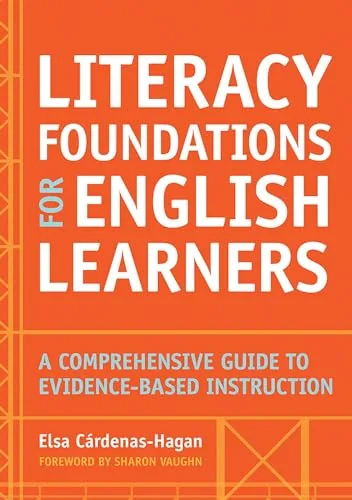
Literacy Foundations for English Learners: A Comprehensive Guide
Edited by Elsa Cárdenas-Hagan
About this ebook
Literacy Foundations for English Learners connects reading instruction with second-language development in elementary education. Edited by Elsa Cárdenas-Hagan, it addresses oral language, phonological awareness, phonics, fluency, vocabulary, comprehension, and writing. Teachers, specialists, and interventionists will find discussion of assessment and differentiated support for students learning English.
Inside this title
Reading components examined through second-language acquisition and linguistic differences
Current listed price $20.99Regular price $41.00Digital ebook
This guide considers how language development and literacy instruction intersect for English learners. It explores the component skills involved in reading while attending to students' linguistic backgrounds and the transfer of knowledge across languages. Oral language development provides a foundation for its treatment of decoding, vocabulary, comprehension, and written expression.
Instructional topics include explicit phonics, repeated reading, word selection, text structure, and writing scaffolds. Assessment and multitiered systems of support place these practices within decisions about differentiated teaching and intervention. The material is directed toward Pre-K through Grade 6 educators, including classroom teachers, English language specialists, reading interventionists, special educators, and those preparing for these roles.
Study guide included
Inside Literacy Foundations for English Learners: A Comprehensive Guide.
A guide to reading instruction for English learners that treats language development and literacy as intertwined. Elsa Cárdenas-Hagan assembles material on oral language, phonological awareness, phonics, fluency, vocabulary, comprehension, and writing, with assessment and tiered support for Pre-K through Grade 6 classrooms and intervention settings.
The book starts from the idea that English learners bring linguistic knowledge and experiences that shape how they learn to read. It examines each component of literacy in turn while asking how second-language acquisition changes instruction. Oral language is treated as a base for word recognition and meaning, and the chapters on decoding, fluency, vocabulary, comprehension, and writing describe explicit teaching routines. Assessment material supports decisions about differentiation, and multitiered systems of support frame intervention. The intended setting is elementary education, where classroom teachers and specialists share responsibility.
Oral Language as a Foundation
Language ability is treated as the ground on which reading and writing are built, with listening and speaking given instructional weight.
How oral proficiency supports word recognition and meaning
Classroom routines that build academic language
Connecting students' home language to school literacy
Read with attention to how oral language is linked to each later component.
Phonological Awareness and Phonics
Instruction in sounds and their written counterparts is presented as explicit and sequential, adapted for learners whose first language differs.
Phonological awareness tasks and their progression
Explicit phonics and decoding routines
Anticipating cross-language differences in sound and print
Note where the text adjusts standard routines for English learners.
Fluency
Fluency work connects accurate word reading with pace and expression so that attention can move toward meaning.
Repeated reading and teacher modeling
Monitoring accuracy, rate, and prosody
Choosing texts that support successful practice
Look for the links drawn between fluency and comprehension.
Vocabulary and Comprehension
Word selection and text structure are treated as instructional decisions that shape how English learners build meaning from text.
Selecting and teaching academic and content words
Comprehension strategies and text structure
Scaffolds for understanding expository and narrative text
Follow the examples of scaffolded comprehension lessons.
Writing
Written expression is developed through supported routines that address sentence construction, organization, and the demands of different genres.
Scaffolds for planning and drafting
Language supports for sentence-level and text-level writing
Responding to writing in ways that guide revision
Compare the writing scaffolds with the comprehension strategies.
Assessment and Tiered Support
Assessment informs grouping and intervention decisions, and multitiered systems frame how support is layered for students who need more.
Purposes of screening, progress monitoring, and diagnosis
Differentiating instruction within tiers
Roles of teachers, specialists, and interventionists
Use the assessment discussion to connect the instructional chapters.
Topic map
Topic 1: Oral Language DevelopmentFoundations
Topic 2: Phonological AwarenessEarly instruction
Topic 3: Phonics and DecodingEarly instruction
Topic 4: Fluency PracticeMiddle of the book
Topic 5: Vocabulary and ComprehensionMiddle of the book
Topic 6: Writing and SpellingLater chapters
Topic 7: Assessment and Multitiered SupportAcross the book
Key takeaways
Literacy instruction for English learners follows the same components as general reading instruction, with adjustments for language background.
Oral language is treated as a foundation for later reading and writing work.
Assessment and tiered support connect instruction to decisions about intervention.
Pre-K through Grade 6 classroom teachers, English language specialists, reading interventionists, special educators, and trainees in these roles.
Topics covered
Literacy Foundations for English Learners
Elsa Cárdenas-Hagan
literacy instruction for English learners
phonological awareness and phonics
vocabulary and reading comprehension
writing instruction for multilingual students
MTSS and literacy assessment
elementary English learner education
Questions about this ebook.
Edition, audience, and study-guide details at a glance.
What is Literacy Foundations for English Learners: A Comprehensive Guide about?
Literacy Foundations for English Learners connects reading instruction with second-language development in elementary education. Edited by Elsa Cárdenas-Hagan, it addresses oral language, phonological awareness, phonics, fluency, vocabulary, comprehension, and writing. Teachers, specialists, and interventionists will find discussion of assessment and differentiated support for students learning English.
Who is Literacy Foundations for English Learners: A Comprehensive Guide for?
Pre-K through Grade 6 classroom teachers, English language specialists, reading interventionists, special educators, and trainees in these roles.
Does this page include a study guide?
Yes. This page includes an original study guide with six thematic sections, key takeaways, and a topic map for structured reading.