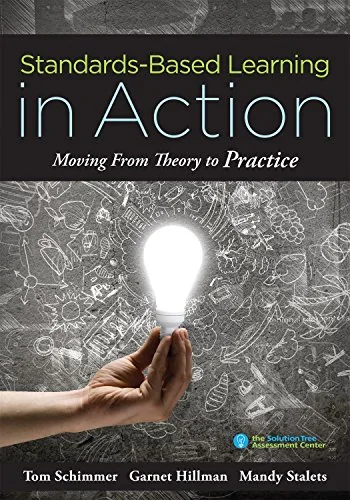
Standards-Based Learning in Action: A Practical Guide
By Tom Schimmer, Garnet Hillman, Mandy Stalets
About this ebook
Standards-Based Learning in Action connects learning standards with classroom assessment, feedback, instruction, and grading. Tom Schimmer, Garnet Hillman, and Mandy Stalets provide examples and reflective tools for teachers and school leaders implementing standards-based practices. The guide addresses learning targets, formative evidence, student participation, and the organizational work involved in changing assessment.
Inside this title
Learning targets connect standards with classroom assessment and instruction
Current listed price $12.99Regular price $24.00Digital ebook
Turning standards into clear learning targets is the starting point for this implementation guide. The authors connect those targets with formative assessments, feedback, and decisions about subsequent instruction. Examples, templates, and reflection questions help educators examine whether evidence of learning is aligned with the aims they intend to assess.
Grading and reporting are treated as part of the same learning process, alongside student involvement and the use of assessment data. The discussion also considers school-wide implementation, including inconsistent practices and resistance to change. Classroom teachers, instructional coaches, administrators, and professional learning communities can use the material to examine how standards-based principles translate into everyday decisions.
Study guide included
Inside Standards-Based Learning in Action: A Practical Guide.
A practical guide for turning standards into everyday classroom decisions. Schimmer, Hillman, and Stalets connect learning targets, formative evidence, feedback, grading, and school-wide change, offering examples and reflection tools for teachers, coaches, and leaders working to implement standards-based learning in their schools.
The guide treats standards-based learning as a set of connected classroom practices rather than a single policy. Clear learning targets come first, because assessment and instruction are only meaningful when everyone knows what is being aimed at. Formative evidence and feedback then inform decisions about what to teach next, while grading and reporting are folded into the same learning process. Student involvement receives its own attention, and the later material turns to implementation across a school, including inconsistent practices and resistance to change. Examples, templates, and reflection questions let educators test whether the evidence they collect actually matches the aims they intend to assess.
From Standards to Learning Targets
Standards become useful when they are translated into targets students and teachers can act on. The book shows how clear targets guide planning and clarify what evidence will count. Ambiguity here undermines everything that follows.
Translate standards into targets
Clarify intended learning
Guide planning from targets
Topic 1
Formative Assessment and Evidence
Formative assessment gathers evidence while learning is still in progress. The text connects that evidence with the questions teachers want to answer and warns against collecting data that does not match the target. Alignment between aim and evidence is the central concern.
Collect evidence during learning
Align evidence with targets
Interpret assessment results
Topic 2
Feedback and Responsive Instruction
Feedback turns evidence into guidance for the learner and the teacher. The book connects feedback with decisions about subsequent instruction rather than treating it as a final verdict. The emphasis is on using what was learned to adjust what comes next.
Give feedback that guides learning
Adjust instruction in response
Connect evidence to next steps
Topic 3
Grading and Reporting
Grades communicate learning, so the text treats grading and reporting as part of instruction rather than an administrative afterthought. Reporting practices are examined for whether they reflect the targets and the evidence. Consistency between what is taught, assessed, and reported is the goal.
Connect grades to learning targets
Report achievement accurately
Align grading with evidence
Topic 4
Student Participation in Assessment
Students are not passive recipients of assessment. The book gives student involvement its own place, discussing how learners can engage with targets, evidence, and feedback. Participation is presented as part of the learning process rather than an add-on.
Involve students in assessment
Help learners use feedback
Build ownership of learning
Topic 5
School-Wide Implementation and Change
Implementation extends beyond one classroom. The text addresses inconsistent practices, resistance to change, and the organizational work of making standards-based learning coherent across a school. The final material treats change itself as something to plan for.
Plan school-wide implementation
Address inconsistent practice
Respond to resistance to change
Topics 6–7
Topic map
Turning standards into learning targetsTopic 1
Formative assessment and evidence of learningTopic 2
Feedback and responsive instructionTopic 3
Grading and reporting practicesTopic 4
Student involvement in assessmentTopic 5
School-wide implementationTopic 6
Addressing inconsistent practice and resistanceTopic 7
Key takeaways
Standards only become actionable once they are expressed as clear learning targets.
Assessment evidence is useful only when it matches the target it is meant to inform.
Grading, reporting, and school-wide implementation belong inside the same learning process.
Classroom teachers, instructional coaches, administrators, and professional learning communities examining how standards-based principles translate into daily assessment and grading decisions.
Topics covered
standards-based learning
learning targets
formative assessment
feedback
standards-based grading
reporting
school improvement
Tom Schimmer
Questions about this ebook.
Edition, audience, and study-guide details at a glance.
What is Standards-Based Learning in Action: A Practical Guide about?
Standards-Based Learning in Action connects learning standards with classroom assessment, feedback, instruction, and grading. Tom Schimmer, Garnet Hillman, and Mandy Stalets provide examples and reflective tools for teachers and school leaders implementing standards-based practices. The guide addresses learning targets, formative evidence, student participation, and the organizational work involved in changing assessment.
Who is Standards-Based Learning in Action: A Practical Guide for?
Classroom teachers, instructional coaches, administrators, and professional learning communities examining how standards-based principles translate into daily assessment and grading decisions.
Does this page include a study guide?
Yes. This page includes an original study guide with six thematic sections, key takeaways, and a topic map for structured reading.