By Lawrence J. Raphael, Gloria J. Borden, Katherine S. Harris
About this ebook
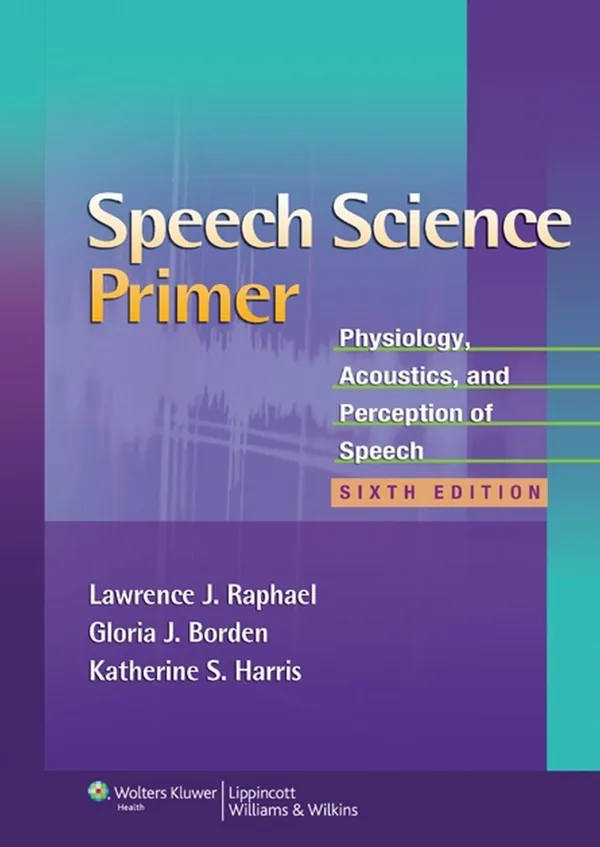
Speech Science Primer, 6th Edition, introduces the anatomy, physiology, acoustics, and perception of spoken communication. Lawrence J. Raphael, Gloria J. Borden, and Katherine S. Harris connect the speech mechanism with sound production and analysis. The text supports students in speech-language pathology, audiology, linguistics, and related communication sciences.
Inside this title
Respiratory, laryngeal, and articulatory systems establish speech production foundations
Current listed price $38.99Regular price $112.00Digital ebook
Speech is examined as a sequence of physiological events, acoustic signals, and perceptual processes. The respiratory, laryngeal, and supralaryngeal systems establish the anatomical foundation. Breath support, vocal fold vibration, and articulation are then related to the physical characteristics of the sound reaching a listener.
Basic acoustics introduces frequency, intensity, and resonance, providing terms for later discussion of speech waveforms and acoustic analysis. Perception connects those signals with the recognition of speech sounds and connected speech. For students entering communication sciences, the primer supplies a shared vocabulary for understanding how the body produces speech, how its acoustic properties are measured, and how listeners interpret them.
Study guide included
Inside Speech Science Primer, 6th Edition.
An introduction to how speech is produced, transmitted, and perceived. Raphael, Borden, and Harris connect the respiratory, laryngeal, and articulatory systems with acoustics and hearing, giving students in speech-language pathology, audiology, and linguistics a shared vocabulary for the science behind spoken communication.
The primer follows speech as a chain of events. Anatomy and physiology of the respiratory, laryngeal, and supralaryngeal systems establish how breath support, vocal fold vibration, and articulation generate sound. Basic acoustics then introduces frequency, intensity, and resonance, supplying terms for describing speech waveforms and for acoustic analysis. Perception closes the chain by connecting measured signals with how listeners recognize speech sounds and connected speech. Rather than separating body, sound, and listener, the book keeps them in one frame, so students see how a physiological event becomes an acoustic signal and then a perceived utterance.
Respiratory System and Breath Support
Speech begins with airflow, so the respiratory system comes first. The text describes how breathing supplies and regulates the energy for voiced sound. Breath support is treated as the foundation on which the other speech systems depend.
Describe respiratory anatomy
Explain breath support
Link airflow to sound production
Topic 1
Laryngeal System and Vocal Fold Vibration
The larynx turns airflow into sound through vocal fold vibration. The book connects laryngeal anatomy with the physiology of voicing, showing how this system shapes the source that later articulation modifies. Vibration is presented as a physical event with measurable properties.
Describe laryngeal anatomy
Explain vocal fold vibration
Connect voicing to the sound source
Topic 2
Supralaryngeal System and Articulation
Above the larynx, the vocal tract shapes sound into recognizable speech. The text covers the articulatory system and how movements of the tongue, lips, and related structures alter the acoustic output. Articulation is framed as the filtering stage of speech production.
Map supralaryngeal structures
Explain articulatory movement
Relate articulation to sound shaping
Topic 3
Acoustics of Frequency, Intensity, and Resonance
Basic acoustics gives speech science its descriptive terms. Frequency, intensity, and resonance are introduced as properties of sound that can be measured and compared. These concepts prepare readers for the analysis of actual speech signals.
Define frequency and intensity
Explain resonance
Use acoustic terms precisely
Topic 4
Speech Waveforms and Acoustic Analysis
Acoustic analysis connects the physical signal with the speech that produced it. The book discusses waveforms and the methods used to examine them, showing how measurements relate to articulation, voicing, and breath. Readers learn to read the signal rather than only hear it.
Read speech waveforms
Understand acoustic analysis
Relate measurements to production
Topic 5
Perception and Connected Speech
The listener completes the chain. Perception is treated as the process by which acoustic signals become recognized speech sounds and connected speech. Placing perception here shows that speech science includes not only production and measurement but also interpretation by a hearer.
Explain speech perception
Connect signals to recognition
Consider connected speech
Topic 6
Topic map
Respiratory anatomy and breath supportTopic 1
Laryngeal anatomy and vocal fold vibrationTopic 2
Supralaryngeal system and articulationTopic 3
Acoustics of frequency, intensity, and resonanceTopic 4
Speech waveforms and acoustic analysisTopic 5
Speech perception and connected speechTopic 6
Key takeaways
Speech science connects the body that produces sound, the acoustic signal it creates, and the listener who interprets it.
Breath support, vocal fold vibration, and articulation each contribute a distinct part of the speech signal.
Acoustic measurement gives students a way to describe speech beyond impression.
Students entering speech-language pathology, audiology, linguistics, and communication sciences who need a foundation in speech anatomy, physiology, acoustics, and perception.
Topics covered
speech science
speech production
speech acoustics
speech perception
vocal fold vibration
articulation
resonance
communication sciences
Questions about this ebook.
Edition, audience, and study-guide details at a glance.
What is Speech Science Primer, 6th Edition about?
Speech Science Primer, 6th Edition, introduces the anatomy, physiology, acoustics, and perception of spoken communication. Lawrence J. Raphael, Gloria J. Borden, and Katherine S. Harris connect the speech mechanism with sound production and analysis. The text supports students in speech-language pathology, audiology, linguistics, and related communication sciences.
Which edition of Speech Science Primer, 6th Edition is this?
This listing is for the 6th edition. Check the title, ISBN, and book details above before ordering, especially if your course or reading list names a specific edition.
Who is Speech Science Primer, 6th Edition for?
Students entering speech-language pathology, audiology, linguistics, and communication sciences who need a foundation in speech anatomy, physiology, acoustics, and perception.
Does this page include a study guide?
Yes. This page includes an original study guide with six thematic sections, key takeaways, and a topic map for structured reading.