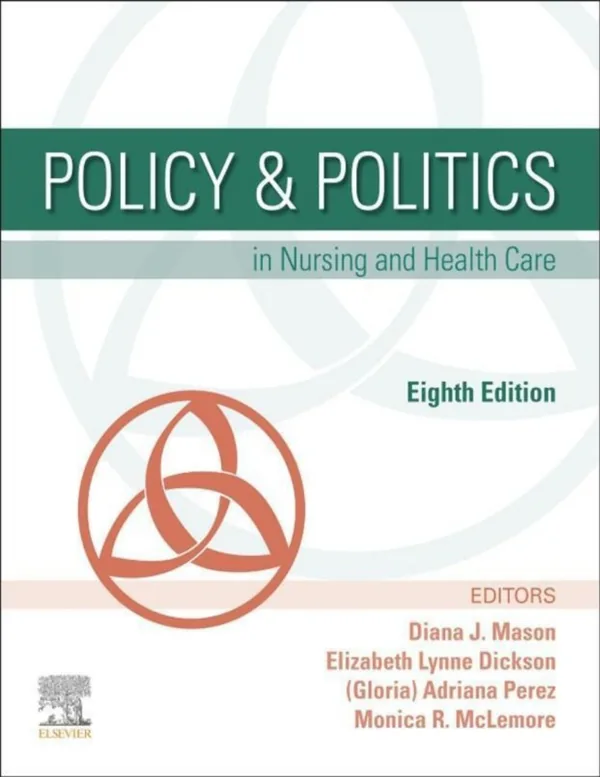
Policy & Politics in Nursing and Health Care, 8th Edition
By Diana J. Mason, Elizabeth Dickson, Monica R. McLemore, G. Adriana Perez
About this ebook
Policy & Politics in Nursing and Health Care, eighth edition, examines how nurses participate in health policy and political decision making. Nursing students, educators, and leaders explore healthcare financing, regulation, legislation, advocacy, health disparities, and organizational change through policy frameworks, cases, and accounts of nursing involvement in public affairs.
Inside this title
Healthcare financing, delivery, regulation, and legislative processes explained
Current listed price $7.99Regular price $13.00Digital ebook
Nursing practice is shaped by decisions made in institutions, professional organizations, legislatures, and regulatory agencies. This text examines those connections, introducing the structures of healthcare delivery and financing alongside the political processes through which policies develop.
Case studies and first-person accounts place policy analysis in the context of nursing leadership and advocacy. Readers consider communication with policymakers and the media, the use of evidence in proposals, and approaches to health disparities. Ethical, legal, and global policy questions broaden the discussion. The eighth edition is intended for nursing policy courses and readers examining how clinical experience can inform organizational, local, state, and national decisions.
Study guide included
Inside Policy & Politics in Nursing and Health Care, 8th Edition.
The eighth edition asks nurses to treat policy as a determinant of care, not a backdrop. Editors Mason, Dickson, McLemore, and Perez connect clinical patterns and community relationships to the decisions that produce inequity. This guide traces the framework across financing, regulation, workplace power, coalitions, and public health cases.
The text frames action across four arenas: government, employers, professional bodies, and communities. Early units tie political analysis, research, communication, and ethics to social conditions shaping health. Financing and delivery chapters follow payment, coordination, patient involvement, and overuse, asking who gains and who is excluded. Government units trace statutes, rules, courts, licensure, and participation, while workplace chapters weigh board governance, staffing ratios, and scope for advanced practice. Coalition and community sections address organizing, implementation, environmental harm, violence, trafficking, and infection. Cases such as Flint connect exposure to accountability.
From clinical pattern to political problem
The framework places nursing within social determinants and decisions that sit outside the clinic. A run of missed visits might signal scheduling, transport, or missing language support. The advocate names the relevant decision, records its effect, and checks explanations with people familiar with the setting. Evidence and political analysis work together: one clarifies likely effects, the other identifies authority, value conflicts, and possible allies.
Check rival explanations alongside the people affected
Pair likely effects with decision authority
Match the tactic to the audience
Unit 1 · Ch. 1, 7 to 12
Coverage is not the same as access
The book separates payment sources, provider reimbursement, and what people can actually use. Care delivered at home, long-term support, and people who qualify for both programs show where coordination breaks down. Payment changes can shift which services organizations offer, while distance, language, and staffing decide whether anyone can reach them. Examples involving migrant farmworkers, Indigenous nutrition programs, and unequal access tie access to employment conditions, local resources, and public policy.
Follow funding and service availability together
Ask who gains, and who stays excluded
Check whether care matches a person's goals
Unit 2 · Ch. 15 to 36
Locating authority in government
Federalism and the legislative and regulatory process explain why the same concern needs different strategies at different levels. A statute grants power, an agency fills in operating rules, and courts, licensing boards, and appointments interpret and apply them. Lobbying, service in office, and electoral participation are separate forms of influence. Testimony can explain practical consequences, and nurses in office show how professional experience informs priorities without removing the need to negotiate.
Trace a proposal from statute to operating rule
Enter at the stage open to comment
Choose testimony, service, or electoral work
Unit 3 · Ch. 37 to 47
Workplace power and workforce rules
Board governance, staffing, and quality priorities shape conditions within an organization. State rules, training routes, and rural placement set limits elsewhere. Nurse-to-patient ratios and the scope of advanced practice show why scale matters: a proposal aimed at an employer differs from one aimed at a regulator or legislature. Research may support a practice change, yet adoption depends on roles, resources, leadership, and which concerns get heard. Board service and organizing offer different routes.
Decide whether the target is employer or state
Check who can use the evidence
Use board or organizing channels deliberately
Unit 4 · Ch. 48 to 65
Coalitions that last past the launch
Associations bring expertise, members, and continuity; partners add trust, technical skill, or entry to another venue. Effective coalitions agree on a shared objective, divide the work, and anticipate support and opposition. Communication must translate evidence for the audience being addressed. School health and environmental campaigns show health goals pursued through non-health institutions. Adoption is not the end: delivery, follow-up, and who shares the benefit still need attention.
Define one common objective and divide tasks
Translate evidence for the target audience
Plan for implementation after adoption
Unit 5 · Ch. 66 to 72
Community knowledge and public accountability
Living conditions shape exposure, prevention options, and whether care is usable. Nurses offer knowledge of public health and service relationships; residents and organizers explain daily effects, and say what improvement would mean. Violence, trafficking, environmental harm, and infectious disease cross agencies, so responses need local fit and coordinated responsibility. The Flint case links exposure to advocacy and accountability, asking who governs infrastructure, messaging, and the response.
Let community define the problem and success
Follow one issue across agencies
Ask who controls infrastructure and response
Unit 6 · Ch. 73 to 83
Chapter and section map
Frameworks for Action in Policy and PoliticsCh. 1
Political Analysis and StrategiesCh. 8
Policy Approaches to Address Health DisparitiesCh. 22
Legislative and Regulatory ProcessesCh. 39
Nurse Staffing Ratios and Policy OptionsCh. 56
Coalitions and Political StrategyCh. 70
Flint Water and Elevated Blood Lead LevelsCh. 76
Creating a Culture of Health with CommunitiesCh. 77
Key takeaways
Let affected groups define what improvement means before anyone selects an outcome measure.
Pick the arena that controls the decision: public, employer, professional, or neighborhood.
Judge implementation by whether it reaches those who met the original barrier.
Nursing students, educators, and clinical leaders who want to understand how policy decisions create or reduce inequity, and how organized nursing can influence them at scale.
Topics covered
health equity
nursing policy
political strategy
healthcare delivery
social determinants
community organizing
nurse staffing
policy advocacy
Questions about this ebook.
Edition, audience, and study-guide details at a glance.
What is Policy & Politics in Nursing and Health Care, 8th Edition about?
Policy & Politics in Nursing and Health Care, eighth edition, examines how nurses participate in health policy and political decision making. Nursing students, educators, and leaders explore healthcare financing, regulation, legislation, advocacy, health disparities, and organizational change through policy frameworks, cases, and accounts of nursing involvement in public affairs.
Which edition of Policy & Politics in Nursing and Health Care, 8th Edition is this?
This listing is for the 8th edition. Check the title, ISBN, and book details above before ordering, especially if your course or reading list names a specific edition.
Who is Policy & Politics in Nursing and Health Care, 8th Edition for?
Nursing students, educators, and clinical leaders who want to understand how policy decisions create or reduce inequity, and how organized nursing can influence them at scale.
Does this page include a study guide?
Yes. This page includes an original study guide with six thematic sections, key takeaways, and a chapter and section map for structured reading.