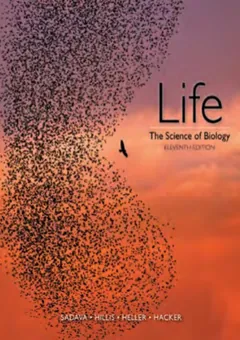
Life: The Science of Biology, Twelfth Edition introduces biology from molecules and cells to organisms, evolution, and ecosystems. Intended for undergraduate biology majors, the text emphasizes scientific investigation through experimental data, case studies, and quantitative reasoning, connecting biological knowledge with the methods used to develop and evaluate it.
Inside this title
Molecular biology, genetics, evolution, organismal diversity, and ecology
Current listed price $11.00Regular price $18.00Digital ebook
Biological organization gives this text its broad structure, beginning with chemical and cellular processes and extending through inheritance, evolution, organismal diversity, and ecology. Plant and animal structure and function connect molecular explanations with the challenges faced by whole organisms, including nutrition, reproduction, and gas exchange.
A recurring focus on discovery treats evidence as part of learning biology. Experimental data and case studies invite readers to consider how studies are designed, how findings are interpreted, and how biological explanations are tested. The twelfth edition is aimed at a two-semester introductory sequence for biology majors and can also serve pre-health students reviewing the relationships among cell biology, genetics, physiology, and the biosphere.
Study guide included
Inside Life: The Science of Biology, 12th Edition.
Hillis, Heller, Hacker and colleagues follow biological explanation from molecules to cells to development, population change and ecosystems. Repeated inquiry features ask readers to work with evidence, compare competing predictions and notice where a proposed mechanism remains unresolved instead of settling for a label.
Opening chapters present chemical building blocks, cellular organization and energy transformation. A sequence on inheritance and gene expression leads into a genomes section covering biotechnology and evolutionary developmental biology. Evolution then examines population processes, trees and the diversity of life. Plant, animal and ecology chapters connect form and function with species interaction and environmental change. Cases and data exercises throughout ask readers to practise reasoning across levels, from a molecular observation to a population pattern, without assuming that one level explains another.
Pattern as the start of inquiry
Opening cases like coral bleaching and starling flock movement raise questions about how individual components do. An explanation should name the mechanism that could produce the pattern and what else would be observable if it were right, while questions about timing and scale sharpen predictions. A test compares outcomes across conditions that differ in a defined way, while variation within a group shows whether a difference exceeds background noise.
Turn a phenomenon into a mechanism question
Use comparison and variation
Identify what remains unexplained
Front matter; Ch. 1
Cell structure directs chemical work
Water, macromolecules, membranes set the chemistry within cells. A bilayer behaves differently from isolated lipids, selective movement depends on molecular properties and transporters, and compartments let different chemical conditions coexist while signaling coordinates change between cells. Enzymes and pathways channel energy into reactions coupled to useful work: respiration harvests energy from fuels, photosynthesis uses light to build carbon compounds, and an explanation should say where carbon moves and where electrons or gradients supply it.
Connect molecular properties to organization
Follow energy through metabolism
Separate carbon movement from energy transfer
Chs. 2–10
Genes connect inheritance to activity
Chromosomes bear genes, and their behavior in meiosis and fertilization explains allele transmission. Crosses can be checked against offspring, though linkage and gene interaction alter simple ratios, and the book ties patterns to chromosome behavior rather than rules without mechanisms. Replication passes on sequence; transcription and translation create products whose amount, timing and location are set; a mutation may change a protein or its expression, and mutant comparisons help place a trait in a pathway.
Read patterns from division and crosses
Follow information to its effect
Use mutants to locate a step
Chs. 11–16
Genomes and development shape possibilities
Genome sequences show the content, arrangement of hereditary material, and comparison identifies related sequences or gene family changes. Manipulating or tracking DNA can test whether a gene contributes to function, but sequence resemblance is only a possible link until functional evidence explains the trait. When or where a gene is expressed can alter development, and shared mechanisms can yield very different adult forms, so the question becomes how a variant produces a trait.
Separate genomic observation from functional claim
Connect developmental change to inherited difference
Sample expression across stages
Chs. 17–19
Trees explain the history of diversity
Mutation, drift, migration, assortative mating and selection alter genetic patterns in distinct ways, and a trait may spread because it aids reproduction within a particular environment or because another process changed its representation. Arguing for selection requires a heritable difference linked to reproductive success under observed conditions. Phylogenies organize similarities into hypotheses about relatedness, and molecular, anatomical and fossil evidence address parts of that history, while similar adaptations in distant lineages may reflect shared pressures.
Separate adaptation from other change
Read phylogenies as testable models
Map traits onto trees
Chs. 20–32
Function and ecology connect individual to biosphere
Plants transport water and nutrients, adjust growth and reproduce as conditions change, while animals coordinate exchange and internal regulation through organ systems and behavior. Homeostasis depends on monitoring and response, and mechanisms differ with anatomy and setting, so comparing solutions exposes trade-offs among resource use, growth and survival. Climate and physical conditions influence distribution, predation, competition and mutualism shape populations and communities, and energy flows while nutrients cycle, so an effect travels through several links.
Compare regulation in plants and animals
Follow an effect across ecological levels
Name the level where evidence was collected
Chs. 33–58
Chapter and section map
On the Cover and Studying LifeFront matter; Ch. 1
Cell MembranesCh. 6
Pathways that Harvest Chemical EnergyCh. 9
Inheritance, Genes, and ChromosomesCh. 12
Genes, Development, and EvolutionCh. 19
Reconstructing and Using PhylogeniesCh. 21
Physiology, Homeostasis, and Temperature RegulationCh. 39
A Changing BiosphereCh. 58
Key takeaways
Turn a sighting into several predictions that the same measurements can compare.
Tie an inheritance pattern with a molecular or developmental process before explaining a phenotype.
Tie each ecological conclusion with the scale at which the evidence was gathered.
Undergraduate biology majors and their instructors, especially readers who want investigation and data analysis woven into the survey. It works for a full-year majors sequence.
Topics covered
biology survey
scientific investigation
cellular chemistry
genes and genomes
evolutionary development
phylogenetic analysis
plant and animal function
ecosystem change
Questions about this ebook.
Edition, audience, and study-guide details at a glance.
What is Life: The Science of Biology, 12th Edition about?
Life: The Science of Biology, Twelfth Edition introduces biology from molecules and cells to organisms, evolution, and ecosystems. Intended for undergraduate biology majors, the text emphasizes scientific investigation through experimental data, case studies, and quantitative reasoning, connecting biological knowledge with the methods used to develop and evaluate it.
Which edition of Life: The Science of Biology, 12th Edition is this?
This listing is for the 12th edition. Check the title, ISBN, and book details above before ordering, especially if your course or reading list names a specific edition.
Who is Life: The Science of Biology, 12th Edition for?
Undergraduate biology majors and their instructors, especially readers who want investigation and data analysis woven into the survey. It works for a full-year majors sequence.
Does this page include a study guide?
Yes. This page includes an original study guide with six thematic sections, key takeaways, and a chapter and section map for structured reading.