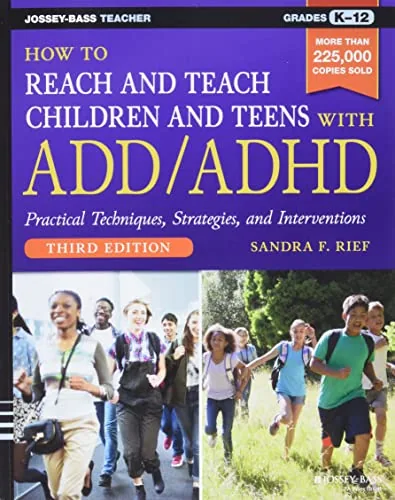
How to Reach and Teach Children and Teens with ADD/ADHD, 3rd Edition
By Sandra F. Rief
About this ebook
How to Reach and Teach Children and Teens with ADD/ADHD, Third Edition, addresses attention-related learning and behavior needs in educational settings. Sandra F. Rief covers classroom organization, accommodations, positive behavior approaches, executive functioning, and collaboration among educators, families, and support professionals, with forms and checklists for considering individual student needs.
Inside this title
Classroom accommodations addressing attention, organization, and task completion
Current listed price $13.99Regular price $23.00Digital ebook
Rief examines how attention disorders can affect academic work, behavior, organization, and self-regulation from early childhood through the secondary years. The discussion links these difficulties with classroom arrangements, instructional adjustments, and behavioral supports, including reinforcement, modified assignments, and approaches to reducing distraction.
Organization, time management, and other executive functioning skills receive attention alongside cooperation among teachers, parents, medical professionals, and school support staff. The book also discusses individualized education programs and Section 504 plans within the context of its edition. Forms and checklists provide a practical structure for documenting concerns and considering accommodations, making the text relevant to general and special education teachers and those supporting their work.
Study guide included
Inside How to Reach and Teach Children and Teens with ADD/ADHD, 3rd Edition.
A practical guide for teaching students with attention difficulties from early childhood through the secondary years. Rief connects classroom organization, accommodations, positive behavior support, and executive functioning with collaboration among educators, families, and specialists, providing forms and checklists that help teachers document concerns and plan individual supports.
Rief treats attention disorders as affecting academic work, behavior, organization, and self-regulation in connected ways. Classroom arrangement and instructional adjustments address distraction and task completion, while positive reinforcement and modified assignments support participation. A substantial section on executive functioning covers organization, time management, and self-monitoring. The book also examines cooperation among teachers, parents, medical professionals, and school support staff, and it discusses individualized education programs and Section 504 plans within the framework of its edition. Forms and checklists give the material a practical shape, allowing teachers to observe, record, and respond to individual students rather than applying one approach uniformly.
How Attention Affects Learning
The book begins with the ways attention disorders can influence academic work, behavior, and self-regulation. Recognizing these patterns helps teachers interpret difficulties accurately and respond to causes rather than symptoms alone.
Recognize attention-related patterns
Distinguish behavior from effort
Connect difficulties to support
Topic 1
Classroom Organization and Accommodations
Physical arrangement, routines, and instructional adjustments reduce distraction and support task completion. The text presents accommodations as deliberate design choices that fit the classroom rather than as exceptions granted case by case.
Arrange the classroom
Adjust instruction
Reduce distraction deliberately
Topics 2–3
Positive Behavior and Self-Regulation
Behavior support emphasizes reinforcement and skill building over punishment. The book describes positive approaches that help students regulate attention and behavior, connecting expectations with the support needed to meet them.
Use positive reinforcement
Teach self-regulation
Set supportive expectations
Topics 4–5
Executive Functioning Skills
Organization, time management, and planning are treated as teachable skills rather than fixed traits. The text offers ways to build these abilities and to structure tasks so students can practice them with support.
Teach organization
Build time management
Scaffold planning skills
Topic 6
Collaboration Across Home and School
Consistent support depends on adults communicating. The book examines cooperation among teachers, families, medical professionals, and support staff, presenting collaboration as a practical necessity for students whose needs span settings.
Coordinate with families
Communicate with specialists
Keep supports consistent
Topic 7
Documentation and Individual Plans
Forms, checklists, and formal plans give concerns a record and a response. The text discusses individualized education programs and Section 504 plans as part of a broader documentation practice, helping teachers contribute evidence and implement accommodations.
Document observations
Understand IEP and 504 processes
Implement planned supports
Topic 8
Topic map
Attention disorders and academic learningTopic 1
Classroom organization and environmentTopic 2
Instructional accommodationsTopic 3
Positive reinforcement and behavior supportsTopic 4
Self-regulation strategiesTopic 5
Organization, time management, and planningTopic 6
Family and professional collaborationTopic 7
IEPs, Section 504, and documentationTopic 8
Key takeaways
Attention difficulties affect learning, behavior, and organization together, so supports should address all three.
Accommodations and positive behavior approaches work best when designed into the classroom.
Documentation and coordination with families and specialists make individual supports consistent.
General and special education teachers, teaching assistants, and school support staff working with children and teens with ADD/ADHD, along with parents and professionals who contribute to individualized planning.
Topics covered
ADD ADHD
classroom accommodations
positive behavior support
executive functioning
self-regulation
IEP
Section 504
Sandra Rief
Questions about this ebook.
Edition, audience, and study-guide details at a glance.
What is How to Reach and Teach Children and Teens with ADD/ADHD, 3rd Edition about?
How to Reach and Teach Children and Teens with ADD/ADHD, Third Edition, addresses attention-related learning and behavior needs in educational settings. Sandra F. Rief covers classroom organization, accommodations, positive behavior approaches, executive functioning, and collaboration among educators, families, and support professionals, with forms and checklists for considering individual student needs.
Which edition of How to Reach and Teach Children and Teens with ADD/ADHD, 3rd Edition is this?
This listing is for the 3rd edition. Check the title, ISBN, and book details above before ordering, especially if your course or reading list names a specific edition.
Who is How to Reach and Teach Children and Teens with ADD/ADHD, 3rd Edition for?
General and special education teachers, teaching assistants, and school support staff working with children and teens with ADD/ADHD, along with parents and professionals who contribute to individualized planning.
Does this page include a study guide?
Yes. This page includes an original study guide with six thematic sections, key takeaways, and a topic map for structured reading.