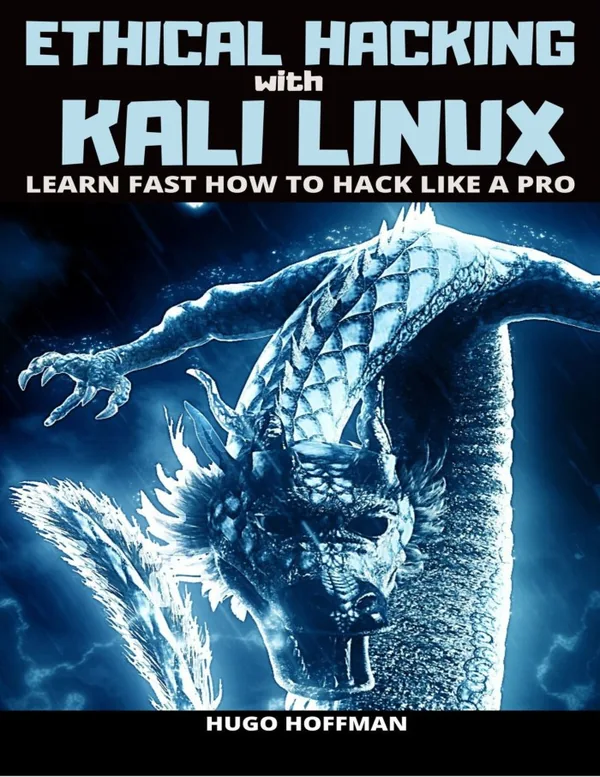
Ethical Hacking with Kali Linux introduces penetration testing concepts through the Kali Linux environment. Hugo Hoffman writes for beginning and intermediate learners with basic Linux and networking knowledge, covering lab setup, reconnaissance, network and web application testing, wireless security, reporting, and the legal context of authorized security assessment.
Inside this title
Kali Linux installation and configuration for security testing labs
Current listed price $12.00Regular price $31.00Digital ebook
The book begins with preparing a Kali Linux environment and builds toward the stages of a penetration test. Reconnaissance and scanning introduce ways to understand a target system, while later sections discuss vulnerability assessment, exploitation concepts, and the interpretation of security weaknesses. Wireless testing provides a substantial part of the coverage.
Web application topics include injection flaws, cross-site scripting, and request forgery, with discussion of familiar testing tools. The text also considers how findings are documented and how legal boundaries shape authorized work. Students, IT professionals, and career changers can use the material to study the vocabulary and workflow of penetration testing, linking individual tools with an organized assessment process.
Study guide included
Inside Ethical Hacking with Kali Linux.
A practical introduction to penetration testing through Kali Linux, aimed at learners with basic Linux and networking knowledge. Hoffman covers lab setup, reconnaissance, scanning, vulnerability assessment, wireless and web application testing, and reporting, while keeping the legal boundaries of authorized security work in view.
The book begins by preparing a Kali Linux environment and then follows the stages of a penetration test. Reconnaissance and scanning show how a target system is understood before weaknesses are assessed. Later sections discuss vulnerability assessment, exploitation concepts, and how findings are interpreted. Wireless testing receives substantial coverage, and web application topics include injection flaws, cross-site scripting, and request forgery with familiar tools. Documentation of results and the legal scope of authorized work are treated as part of the process, connecting individual tools to an organized assessment.
Building a Kali Testing Lab
A controlled lab is the starting point for safe practice. The text explains installing and configuring Kali Linux and arranging systems that can be tested without harm. Readers learn why isolation, snapshots, and explicit authorization come before any technical probing or scanning of a target.
Install and configure Kali Linux
Isolate systems for safe testing
Establish authorization before testing
Topic 1
Reconnaissance and Network Scanning
Information gathering precedes exploitation. The book describes reconnaissance, scanning, and packet analysis as ways to map a target and understand its services. Readers see how findings at this stage shape later assessment decisions and narrow the list of plausible weaknesses worth testing within the authorized scope.
Gather information about a target
Scan services and analyze packets
Use findings to plan assessment
Topics 2–3
Vulnerability Assessment and Exploitation Concepts
Weaknesses are identified and then interpreted rather than merely listed. The text explains vulnerability assessment and the concepts behind exploitation, emphasizing understanding over blind tool use. Readers connect a discovered flaw to its practical significance and to what an authorized report should explain about it.
Identify and interpret discovered vulnerabilities
Understand exploitation concepts and limits
Connect flaws to practical security risk
Topics 4–5
Wireless Network Security Testing
Wireless testing forms a substantial part of the coverage. The book examines the concepts and tools used to assess wireless networks and their configuration. Readers learn how wireless weaknesses differ from those on wired networks and why physical proximity and radio behavior change the assessment.
Assess wireless network configuration
Use tools for wireless testing
Distinguish wireless from wired risks
Topic 6
Web Application Flaws and Tools
Web testing is introduced through common flaw families, including injection, cross-site scripting, and request forgery. The text pairs concepts with familiar tools so readers can see how testing is performed. Emphasis falls on recognizing and interpreting the flaw rather than memorizing a payload or a single command.
Study injection and scripting flaws
Understand request forgery risks
Interpret findings produced by web tools
Topic 7
Reporting and Legal Scope
Findings matter only when they are communicated and understood. The book discusses documenting results and the legal boundaries that define authorized testing. Readers learn that professional assessment includes clarity about scope, permission, evidence, and the audience who will act on the report and what remediation the reader recommends.
Document findings clearly and reproducibly
Respect legal and authorized testing scope
Communicate results to decision-making stakeholders
Topic 8
Topic map
Kali installation and lab setupTopic 1
ReconnaissanceTopic 2
Network scanning and packet analysisTopic 3
Vulnerability assessmentTopic 4
Exploitation conceptsTopic 5
Wireless testingTopic 6
Web application flawsTopic 7
Reporting and legal scopeTopic 8
Key takeaways
Establish explicit authorization and an isolated lab before performing any security testing.
Connect individual tools to an organized assessment workflow rather than running them blindly.
Treat clear reporting and legal scope as part of professional penetration testing.
Beginning and intermediate learners with basic Linux and networking knowledge, IT professionals moving toward security work, and students studying practical, authorized penetration testing and assessment.
Topics covered
Kali Linux
penetration testing
network scanning
wireless security
web application testing
vulnerability assessment
ethical hacking
Questions about this ebook.
Edition, audience, and study-guide details at a glance.
What is Ethical Hacking with Kali Linux about?
Ethical Hacking with Kali Linux introduces penetration testing concepts through the Kali Linux environment. Hugo Hoffman writes for beginning and intermediate learners with basic Linux and networking knowledge, covering lab setup, reconnaissance, network and web application testing, wireless security, reporting, and the legal context of authorized security assessment.
Who is Ethical Hacking with Kali Linux for?
Beginning and intermediate learners with basic Linux and networking knowledge, IT professionals moving toward security work, and students studying practical, authorized penetration testing and assessment.
Does this page include a study guide?
Yes. This page includes an original study guide with six thematic sections, key takeaways, and a topic map for structured reading.