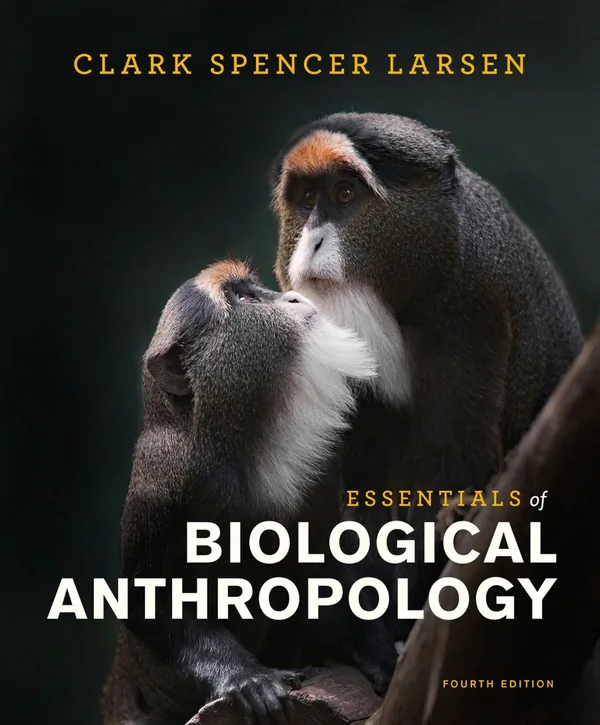
Essentials of Biological Anthropology, 4th Edition examines human evolution and variation through the theme of adaptation. Clark Spencer Larsen connects evolutionary theory, genetics, primate behavior, the fossil record, and bioarchaeology. Intended for introductory college courses, the text relates biological evidence to questions about human origins, past lives, health, and environmental change.
Inside this title
Adaptation connects evolutionary theory, genetics, and human variation
Current listed price $12.99Regular price $24.00Digital ebook
Adaptation links the book's treatment of evolutionary mechanisms with its account of humans and other primates. Natural selection, mutation, gene flow, and genetic drift introduce population change, while genetics and gene expression connect those processes with biological variation. Primate behavior and ecology provide a comparative perspective.
The fossil record traces human origins, including early hominins and the emergence of Homo sapiens. Bioarchaeology examines skeletal and other evidence for diet, disease, migration, and past living conditions. Illustrations and applications to medicine, nutrition, and forensic science connect the field with broader questions. Introductory anthropology students can use the fourth edition to examine how different kinds of evidence contribute to explanations of human biology.
Study guide included
Inside Essentials of Biological Anthropology, 4th Edition.
Larsen uses adaptation as the thread that ties evolutionary theory, genetics, primate behavior, the fossil record, and bioarchaeology together. Rather than treating human origins as a single story, the fourth edition shows how different kinds of evidence—living populations, bones, and ancient remains—answer overlapping questions about how people came to be as they are.
The book begins with the evolutionary framework: natural selection, mutation, gene flow, and genetic drift explain how populations change, while DNA and development connect inheritance to observable traits. It then examines variation in living people along geographic and lifetime scales, before turning to primates as a source of comparison for locomotion, social life, and learning. The fossil chapters introduce dating, preservation, and the early hominin record, followed by the spread of Homo and the evidence for contact among modern humans and other groups. The closing chapters use bioarchaeology to ask how food production reshaped diet, settlement, population size, and disease. Throughout, Larsen treats evidence as something to be weighed, not simply reported.
Evolution and inheritance
Darwin's idea of descent with modification gains force when joined to genetics. The text distinguishes genotype from phenotype, showing that observable traits reflect both inheritance and development. Mutation, migration, drift, and selection are introduced as distinct mechanisms, with attention to how they can produce similar patterns.
Genotype and phenotype are not the same
Four mechanisms change allele frequencies
Similar patterns can have different causes
Chs. 2–4
Variation in living people
Human traits vary along geographic gradients and across a lifetime, from physiological adjustment to growth to selection across generations. The chapter argues that trait boundaries do not align into fixed racial categories. Interpretations must consider population history and conditions, not just adult appearance.
Traits vary along gradients, not boxes
Responses operate on different timescales
Ancestry and environment both shape outcomes
Ch. 5
Primates as comparative evidence
Living primates offer comparisons for interpreting anatomy and behavior. Grasping limbs, forward-facing eyes, and prolonged development appear in different combinations tied to ecology. Long-term observation separates repeated social practices from one-off events and shows how learning spreads.
Primate traits link to ecology
Social behavior varies by group
Long-term observation reveals learning
Chs. 6–7
Fossils and early hominins
Fossil interpretation depends on context: taphonomy, stratigraphy, and dating constrain what a specimen can say. Early hominin remains show a branching record rather than a straight line. Mosaic anatomy—mixing climbing and walking features—can fit extinct forms unlike any living species.
Context limits what a fossil means
The hominin record is branching
Mosaic anatomy resists simple labels
Chs. 8–10
Early Homo and modern dispersals
Early Homo is studied alongside stone tools, diet, and expanding range, with the reminder that a species name and a geographic population are different things. Modern human origins draw on anatomy, archaeology, and ancient DNA. Evidence of interbreeding with Neandertals complicates a simple replacement model.
Tools, bones, and dates answer different questions
Modern origins use multiple evidence lines
Interbreeding complicates replacement
Chs. 11–12
Farming and ongoing change
Food production changed the relationship among population size, diet, mobility, and disease. Domestication supported larger communities but also brought narrower diets and new exposures. The book compares local histories, since agriculture arose at different times and in different forms around the world.
Farming altered diet and settlement
Population growth and well-being are separate measures
Agricultural transitions varied locally
Ch. 13
Chapter and section map
Evolution and geneticsChs. 2–3 · pp. 21, 45
Population geneticsCh. 4 · p. 73
Living peopleCh. 5 · p. 103
Living primates and primate socialityChs. 6–7 · pp. 135, 171
Fossils and primate originsChs. 8–9 · pp. 193, 227
Hominins and early HomoChs. 10–11 · pp. 259, 297
Modern people and agricultureChs. 12–13 · pp. 327, 375
Key takeaways
Distinguish developmental, physiological, and genetic explanations before assigning a cause.
Use living primates to frame questions while checking what fossils actually preserve.
Weigh dietary, demographic, and skeletal evidence together before judging the effects of agriculture.
Undergraduate students in introductory biological anthropology, and general readers interested in human evolution, primatology, and bioarchaeology.
Topics covered
biological anthropology
human evolution
genetics and inheritance
primate behavior
fossil record
early hominins
bioarchaeology
human variation
Clark Spencer Larsen
Questions about this ebook.
Edition, audience, and study-guide details at a glance.
What is Essentials of Biological Anthropology, 4th Edition about?
Essentials of Biological Anthropology, 4th Edition examines human evolution and variation through the theme of adaptation. Clark Spencer Larsen connects evolutionary theory, genetics, primate behavior, the fossil record, and bioarchaeology. Intended for introductory college courses, the text relates biological evidence to questions about human origins, past lives, health, and environmental change.
Which edition of Essentials of Biological Anthropology, 4th Edition is this?
This listing is for the 4th edition. Check the title, ISBN, and book details above before ordering, especially if your course or reading list names a specific edition.
Who is Essentials of Biological Anthropology, 4th Edition for?
Undergraduate students in introductory biological anthropology, and general readers interested in human evolution, primatology, and bioarchaeology.
Does this page include a study guide?
Yes. This page includes an original study guide with six thematic sections, key takeaways, and a chapter and section map for structured reading.