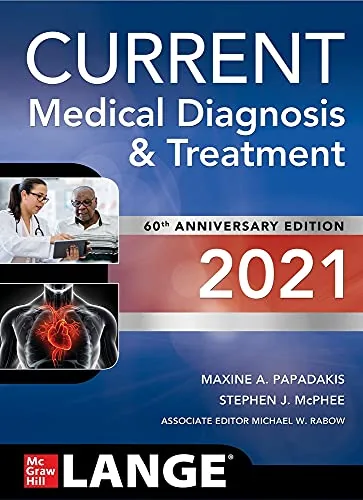
Current Medical Diagnosis & Treatment 2021, 60th Edition presents an annual overview of internal medicine and primary care. Edited by Papadakis, McPhee, and Rabow, it covers symptoms, signs, differential diagnosis, treatment, and prevention across diseases and disorders. Organ-system organization, drug tables, and algorithms support study by clinicians, trainees, and health professions students.
Inside this title
Organ-system coverage of internal medicine and primary care
Current listed price $27.00Regular price $59.00Digital ebook
The 2021 volume of CMDT organizes adult medical conditions by organ system, emphasizing the clinical features used in diagnosis and management. Entries bring together symptoms, signs, differential diagnosis, prevention, and treatment discussions. This structure lets readers compare the presentation and assessment of conditions across internal medicine and primary care.
Drug tables, management algorithms, and references accompany the disease coverage. As the sixtieth edition of an annual series, the volume records the diagnostic and therapeutic material selected for that publication year. It is intended for physicians, residents, medical students, nurse practitioners, physician assistants, and pharmacists studying adult medicine and the approaches described in the 2021 edition.
Study guide included
Inside Current Medical Diagnosis & Treatment 2021, 60th Edition.
This adult-medicine annual ties a presenting problem to a plan that a real person can follow. Papadakis, McPhee, and Rabow weigh risks, preferences, what the person can physically do, and how many medicines they take, so a finding matters only when it alters a decision or a follow-up conversation.
Common symptoms, prevention, perioperative assessment, geriatrics, and palliation form an opening block that lets readers frame a problem before consulting disease chapters. The rest covers organ systems and subjects that surface in primary care, from lungs and heart through kidney, hormone, and infectious disease, plus rheumatology, neurology, oncology, and genetics. Reports, tables, and algorithms speed review. A fictional look at repeated falls shows symptoms, function, medication changes, and personal priorities assembled into one coherent assessment of that encounter. Chapters are meant to be entered from the problem, not read in order.
History, Relationship, and Prevention
The first chapter treats the interview as more than extraction: it builds trust, uncovers what matters to the person, and makes talk about prognosis possible. Prevention then rests on risk review, screening, immunization, and health behavior, all of which must survive real conditions such as access, routine, and competing obligations. Adherence trouble often surfaces only after somebody asks.
Record what they understand
Fit prevention into existing routine
Ask what would get in the way
Ch. 1
From Complaint to Focused Study
This chapter on common symptoms turns a complaint into a direction through targeted questions and examination. With cough, ask about smoking or vaping, job exposure, breathing symptoms, and how long it has lasted. An abnormal value means little until compared with baseline and rival conditions, so the reader asks what a test could change before ordering it.
Give each detail a job
Tie testing to a decision
Prefer review to a broad panel
Ch. 2
Operative Risk, Aging, and Comfort
Perioperative work rests on the history, the physical exam, what the person can do, and which medicines they take, with testing saved for concerns that would change the plan. Geriatrics adds odd presentations and several conditions at once, so a shift in walking or thinking can outweigh a textbook symptom. Palliative care widens the frame to relief, conversation, and a decent quality of life.
Start from what the person could do
Expect odd presentations when older
Name what should be preserved
Ch. 3–5
Breath, Circulation, and Vessels
Lung chapters separate airway problems from other pulmonary processes and link symptoms to measures such as spirometry. Cardiac chapters bring in rhythm, pumping, ischemia, pressure, and vessel disease. An adult with breathlessness may have several contributors at once, so timing, exam, exercise tolerance, and prior illness decide which comparison pays off. Risk and follow-up finish the picture.
Sort breathlessness by mechanism
Assume more than one cause
Split diagnostic from monitoring tests
Ch. 9–14
Gut, Kidney, and Metabolism
Digestive and liver chapters connect symptoms and lab patterns to likely locations. Endoscopy, imaging, and laboratory work each answer a different question. Kidney assessment rests on duration, filtration, urine findings, medicines, and associated conditions, and one number needs an earlier comparison before it means much. Chapters on hormones, diabetes, lipids, and nutrition then add long monitoring and treatments that interact.
Ask which organ a value describes
Compare with earlier results
Watch for interacting treatments
Ch. 15–16, 21–23, 26–29
Infection and the Wider Scope
Infectious-disease chapters sort illness by syndrome, organism, and host, and treat stubborn unexplained fever as a cue for directed work rather than a single answer. Exposure, immunity, geography, and tempo decide which options deserve attention, while antimicrobial material weighs resistance, likely organisms, and toxicity. Rheumatology, neurology, psychiatry, oncology, and genetics complete the primary care scope.
Common Problems in Infectious Diseases & Antimicrobial TherapyCh. 30
Key takeaways
Let the interview connect a clinical question to what the patient values and can actually manage.
Ask what a result would change before treating it as clinically meaningful.
Track how well someone manages each day and what treatment costs them, beside disease numbers, when judging progress.
Clinicians in adult primary care and internal medicine, residents, and students in the health professions who want a practical, yearly, organ-organized clinical reference for diagnosis, treatment, prevention, and follow-up.
Topics covered
internal medicine
primary care reference
differential diagnosis
preventive care
perioperative evaluation
geriatric assessment
palliative care
antimicrobial therapy
Questions about this ebook.
Edition, audience, and study-guide details at a glance.
What is Current Medical Diagnosis & Treatment 2021, 60th Edition about?
Current Medical Diagnosis & Treatment 2021, 60th Edition presents an annual overview of internal medicine and primary care. Edited by Papadakis, McPhee, and Rabow, it covers symptoms, signs, differential diagnosis, treatment, and prevention across diseases and disorders. Organ-system organization, drug tables, and algorithms support study by clinicians, trainees, and health professions students.
Which edition of Current Medical Diagnosis & Treatment 2021, 60th Edition is this?
This listing is for the 60th edition. Check the title, ISBN, and book details above before ordering, especially if your course or reading list names a specific edition.
Who is Current Medical Diagnosis & Treatment 2021, 60th Edition for?
Clinicians in adult primary care and internal medicine, residents, and students in the health professions who want a practical, yearly, organ-organized clinical reference for diagnosis, treatment, prevention, and follow-up.
Does this page include a study guide?
Yes. This page includes an original study guide with six thematic sections, key takeaways, and a chapter and section map for structured reading.