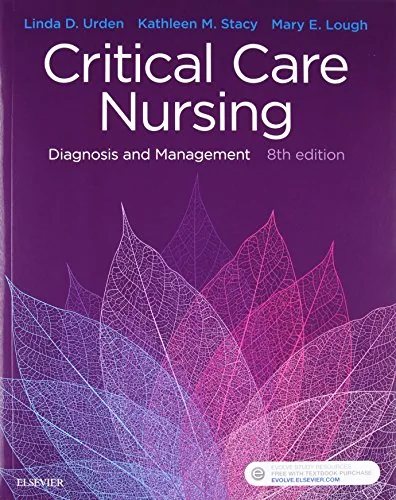
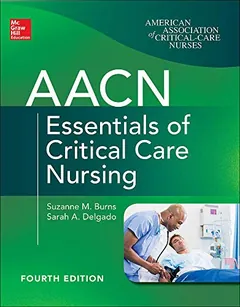
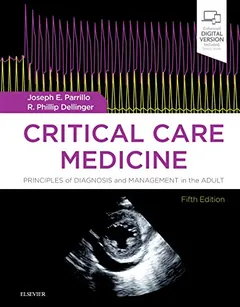
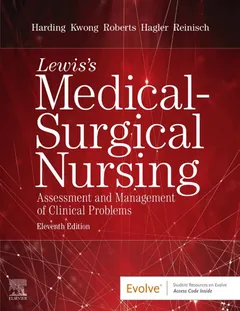
Critical Care Nursing: Diagnosis and Management, Eighth Edition, examines the assessment and nursing management of critically ill patients. Urden, Stacy, and Lough organize conditions by body system, connecting pathophysiology, monitoring, pharmacology, and collaborative care for nursing students and clinicians studying intensive care, including its psychosocial and ethical dimensions.
Inside this title
System-based assessment and nursing management of critical illness
Current listed price $32.99Regular price $92.00Digital ebook
Assessment, diagnosis, planning, intervention, and evaluation provide the clinical framework for this critical care text. Cardiovascular instability and respiratory failure introduce topics such as hemodynamic monitoring and mechanical ventilation. Neurological conditions, renal dysfunction, electrolyte disturbances, and the medications used in intensive care extend the system-based coverage.
The nursing perspective also includes sepsis, infection prevention, patient safety, and the coordination of care with other professionals. Discussions of family support and end-of-life issues place technical interventions within the experience of patients and those close to them. The eighth edition is intended for students taking critical care courses and nurses reviewing the clinical concepts, assessment methods, and management issues associated with high-acuity care.
Study guide included
Inside Critical Care Nursing: Diagnosis and Management, 8th Edition.
A study companion to the eighth edition's system-by-system treatment of critically ill adults. It stresses turning bedside observations into documented care problems, checking trends against a known baseline, and keeping comfort, family communication, and ethical questions inside the same clinical reasoning loop.
The book opens with professionalism and the basics of practice, then moves through organ systems in a steady order: structure and physiology, bedside assessment, imaging and laboratory studies, specific disorders, and treatment. Each chapter asks the reader to connect pathophysiology with what the nurse actually sees, records, and reports. Later units cover multisystem problems such as injury, shock, and sepsis, plus populations whose baseline changes what a finding means. Nursing management plans appear as worked models, letting readers trace how a finding becomes a prioritized concern, an observable outcome, and a documented response. The guide treats the text as a reasoning framework rather than a protocol list.
Assessment, judgment, and the nursing process
The opening unit treats high-acuity practice as a loop rather than a checklist. An observation earns its place when compared with baseline, tied to a named care problem, and written so colleagues can follow it. Chapters on pain, sedation, delirium, nutrition, education, and care near the end of life make clear that comfort and communication belong to clinical work, not beside it.
Compare each new finding with a recorded baseline
Name the care problem behind every reported change
Record the setting and timing behind every measurement
Treat family teaching and symptom relief as clinical tasks
Unit I · Chapters 1–10
Cardiovascular signals and perfusion trends
Cardiovascular content ties circulatory physiology to what monitors, tracings, and bedside exams. No single number describes perfusion, so the unit keeps returning to context: symptoms, timing, recent treatment changes, and whether the patient was moving or resting. Ischemic heart disease, heart failure, arrhythmias, and vascular problems appear alongside the nursing work of noticing complications and reporting what shifted before offering a cause.
Anchor every hemodynamic reading in its measurement context
Track trends instead of reacting to isolated values
Describe the shift first, then offer a possible reason
Check telemetry signals against the patient's actual state
Unit II · Chapters 11–15
Pulmonary function, support, and response
Respiratory nursing separates oxygenation, ventilation, and the visible work of breathing, because a reassuring figure on one axis can hide trouble on another. The unit ties assessment and diagnostic procedures to specific disorders and their management, then asks what changed after support was adjusted. Observations taken under different settings are not interchangeable, so the record needs to say when and how each one was collected.
Distinguish oxygenation problems from ventilation problems
Note support settings whenever recording a respiratory value
Describe observed effort, not just monitor output
Flag views or readings limited by the patient's position
Unit III · Chapters 16–20
Neurologic, kidney, and metabolic assessment
Focused exams only compare when the conditions match. The neurologic chapters stress describing what was tested, what the patient did, and what might have influenced the response, such as sedation. Renal, digestive, and hormonal content extends the same discipline to fluid status, lab trends, and nutritional needs. One odd value is treated as a question, not a verdict, and the picture grows as data and bedside responses add up.
State the conditions that surrounded each neurologic exam
Separate a new deficit from a different testing method
Read fluid and laboratory trends against their timing
Avoid letting one abnormal value settle a diagnosis
Units IV–VII
Multisystem crises and coordinated priorities
Injury, sepsis, shock, burns, and failure of several organs can move multiple systems at once, and a plan must hold those problems together without blurring them. The unit asks for distinct observations behind each concern and distinct outcomes the team can actually evaluate. Donor care, transplant, and blood or cancer emergencies add specialties and time pressure, which makes a structured handoff part of the clinical skill being taught.
Keep separate observations for each system involved
Write outcomes a colleague could actually verify
Assign an owner to every pending result at handoff
Name which specialist expects which follow-up
Unit VIII · Chapters 33–37
Special populations and perianesthesia recovery
Age, pregnancy, and baseline function change which findings carry weight. The unit on special populations covers pregnant patients, children, and older adults, where a caregiver's account of usual behavior can be the most reliable comparison available. The chapter on perianesthesia care sets assessment inside a sequence of anesthesia, surgery, and recovery, so recent drugs and procedures become part of how alertness, breathing, and comfort are read.
Anchor findings to the patient's own baseline function
Ask caregivers what is usual for this person
Trace the sequence of events around anesthesia
State which findings still need follow-up at transfer
Unit IX · Chapters 38–41
Chapter and section map
Foundations of Critical Care NursingUnit I · p. 1
Cardiovascular AlterationsUnit II · p. 161
Pulmonary AlterationsUnit III · p. 411
Neurologic AlterationsUnit IV · p. 520
Kidney AlterationsUnit V · p. 608
Multisystem AlterationsUnit VIII · p. 764
Special PopulationsUnit IX · p. 923
Nursing Management Plans of CareAppendix A · p. 1006
Key takeaways
Note when and how each measurement was taken, or the next nurse cannot judge the trend.
Turn each observation into a named care problem with an outcome someone else can verify.
Carry patient and family concerns into the handoff alongside physiologic findings and pending results.
Critical care nursing students, clinicians moving into intensive care roles, and instructors who want a teachable model of diagnosis, documentation, evaluation, and safe handoff practice.
Topics covered
critical care nursing
nursing process
hemodynamic monitoring
respiratory assessment
multisystem illness
care transitions
nursing care plans
patient assessment
Other editions of this title.
Compare editions, prices, and book details before you choose.
Edition, audience, and study-guide details at a glance.
What is Critical Care Nursing: Diagnosis and Management, 8th Edition about?
Critical Care Nursing: Diagnosis and Management, Eighth Edition, examines the assessment and nursing management of critically ill patients. Urden, Stacy, and Lough organize conditions by body system, connecting pathophysiology, monitoring, pharmacology, and collaborative care for nursing students and clinicians studying intensive care, including its psychosocial and ethical dimensions.
Which edition of Critical Care Nursing: Diagnosis and Management, 8th Edition is this?
This listing is for the 8th edition. Check the title, ISBN, and book details above before ordering, especially if your course or reading list names a specific edition.
Who is Critical Care Nursing: Diagnosis and Management, 8th Edition for?
Critical care nursing students, clinicians moving into intensive care roles, and instructors who want a teachable model of diagnosis, documentation, evaluation, and safe handoff practice.
Does this page include a study guide?
Yes. This page includes an original study guide with six thematic sections, key takeaways, and a chapter and section map for structured reading.