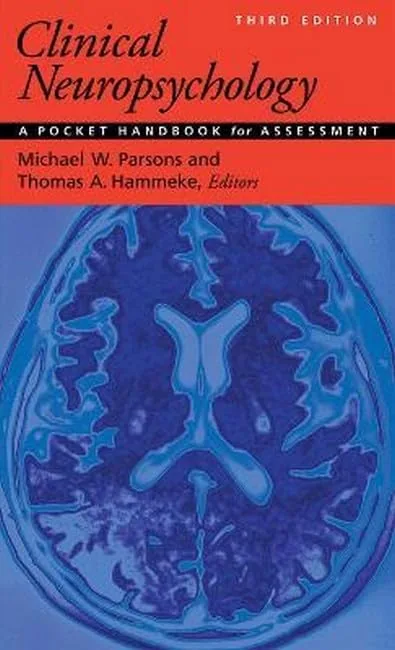
Clinical Neuropsychology: A Pocket Handbook for Assessment, 3rd Edition
By Michael W. Parsons, Thomas A. Hammeke
About this ebook
Clinical Neuropsychology: A Pocket Handbook for Assessment, 3rd Edition surveys neuropsychological evaluation from history-taking to interpretation and differential diagnosis. Intended for clinicians and graduate trainees, the compact reference addresses assessment in brain injury, dementia, stroke, epilepsy, and related neurological or psychiatric presentations.
Inside this title
Interview, history-taking, test selection, and neuropsychological interpretation
Current listed price $14.99Regular price $27.00Digital ebook
The handbook connects the stages of a neuropsychological evaluation: interview, clinical history, test selection, administration, and interpretation. It considers how findings relate to neurological syndromes and how other information, including imaging and laboratory results, contributes to the assessment picture.
Condition-focused material covers traumatic brain injury, dementia, stroke, epilepsy, and psychiatric disorders with neurological features. Differential questions involving dementia, delirium, and depression illustrate the importance of interpreting cognitive findings in clinical context. The third edition's compact reference approach suits neuropsychologists and advanced trainees, while neurology and psychiatry residents, rehabilitation professionals, and researchers can use it to orient themselves to the methods and reasoning of neuropsychological assessment.
Study guide included
Inside Clinical Neuropsychology: A Pocket Handbook for Assessment, 3rd Edition.
Parsons and Hammeke compress neuropsychological evaluation into a portable reference that follows the work from interview through interpretation. Condition-focused sections on brain injury, dementia, stroke, and epilepsy keep the clinical reasoning tied to the presentations that clinicians actually meet in practice.
The handbook connects the stages of a neuropsychological evaluation: interview, clinical history, test selection, administration, and interpretation. Findings are related to neurological syndromes, and other information, including imaging and laboratory results, is folded into the assessment picture rather than treated separately. Condition chapters cover traumatic brain injury, dementia, stroke, epilepsy, and psychiatric disorders with neurological features. Differential questions involving dementia, delirium, and depression show why cognitive results must be read in clinical context. The compact third edition is built for quick consultation, yet it keeps the sequence of reasoning intact so a reader can follow how a conclusion was reached.
Evaluation as a connected sequence
The handbook treats evaluation as linked stages rather than a list of tests. Interview, history, selection, administration, and interpretation each depend on the ones before them. Keeping the sequence visible helps a reader understand that a score means little until it is placed in a chain of clinical decisions.
Linked stages of evaluation
Each step depends on the last
Scores within a chain
Topic 1
History comes before testing
Clinical history and interview are given real weight, not treated as preamble. What a patient reports, and what records show, shape which tests make sense and how results should be read. The chapter argues that good test selection begins with understanding the person and the question.
Interview and reported history
Records that shape test choice
Understanding the person before measuring
Topic 2
Reading cognitive findings carefully
Interpretation is presented as reasoning about patterns rather than reading individual scores in isolation. The chapter connects findings to neurological syndromes and to other data such as imaging and laboratory results. A pattern gains meaning from context, and the same score can point in different directions depending on the history behind it.
Patterns over single scores
Findings tied to syndromes
Imaging and lab context
Topic 3
Patterns in neurological conditions
Condition chapters describe how assessment looks in traumatic brain injury, dementia, stroke, and epilepsy. Each presentation raises different questions about which functions to examine and what results are expected. Organizing by condition lets the reader connect method to the clinical problem that prompted the referral.
Assessment after traumatic brain injury
Dementia, stroke, and epilepsy patterns
Referral shapes the method
Topic 4-5
Separating similar clinical presentations
Differential questions involving dementia, delirium, and depression illustrate why cognitive findings always need clinical context. Overlapping presentations can produce similar test results for very different underlying reasons. The chapter trains attention on the distinctions that change interpretation, and therefore the final clinical recommendation that follows.
Dementia, delirium, and depression
Overlap in test results
Distinctions that change advice
Topic 6
Context beyond the test score
The handbook keeps returning to the point that a number is not a diagnosis. Interpretation draws on history, observed behavior, other clinical data, and the question that started the referral. This stance makes the pocket format useful without encouraging the shortcut of reading scores mechanically.
Numbers are not diagnoses
History and observed behavior
The referral question returns
Topic 7
Topic map
Interview and Clinical HistoryTopic 1
Choosing and Administering TestsTopic 2
Interpreting Cognitive FindingsTopic 3
Traumatic Brain InjuryTopic 4
Dementia, Stroke, and EpilepsyTopic 5
Differential Diagnosis in ContextTopic 6
Combining Imaging and Lab DataTopic 7
Key takeaways
A neuropsychological evaluation is a sequence of dependent decisions, and skipping the history undermines everything that follows.
Individual scores gain meaning only when read as patterns against the clinical question and other data.
Similar cognitive findings can arise from very different conditions, so differential reasoning must stay explicit.
Neuropsychologists and advanced trainees, plus neurology and psychiatry residents, rehabilitation professionals, and researchers who need a practical clinical orientation to neuropsychological assessment methods and interpretation.
Topics covered
neuropsychological assessment
clinical history
test interpretation
traumatic brain injury
dementia assessment
differential diagnosis
cognitive findings
pocket handbook
Questions about this ebook.
Edition, audience, and study-guide details at a glance.
What is Clinical Neuropsychology: A Pocket Handbook for Assessment, 3rd Edition about?
Clinical Neuropsychology: A Pocket Handbook for Assessment, 3rd Edition surveys neuropsychological evaluation from history-taking to interpretation and differential diagnosis. Intended for clinicians and graduate trainees, the compact reference addresses assessment in brain injury, dementia, stroke, epilepsy, and related neurological or psychiatric presentations.
Which edition of Clinical Neuropsychology: A Pocket Handbook for Assessment, 3rd Edition is this?
This listing is for the 3rd edition. Check the title, ISBN, and book details above before ordering, especially if your course or reading list names a specific edition.
Who is Clinical Neuropsychology: A Pocket Handbook for Assessment, 3rd Edition for?
Neuropsychologists and advanced trainees, plus neurology and psychiatry residents, rehabilitation professionals, and researchers who need a practical clinical orientation to neuropsychological assessment methods and interpretation.
Does this page include a study guide?
Yes. This page includes an original study guide with six thematic sections, key takeaways, and a topic map for structured reading.