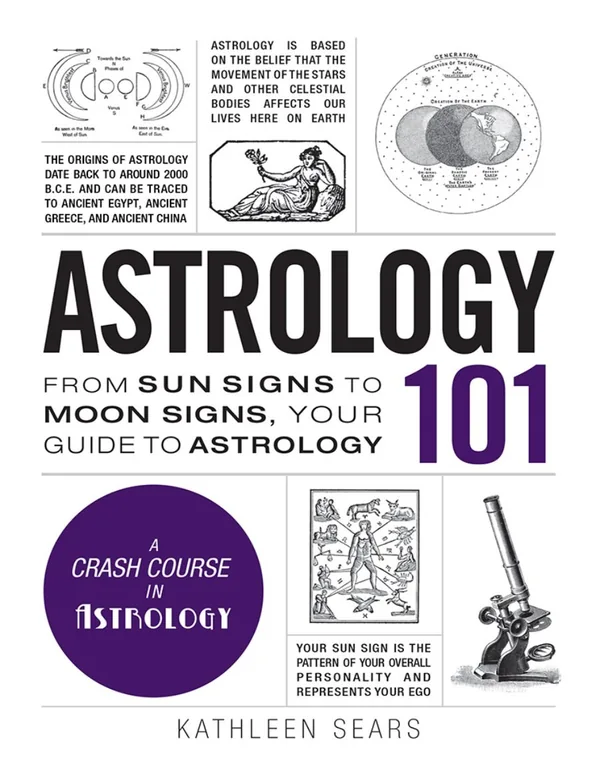
Astrology 101 introduces astrology's history, terminology, and interpretive practices for beginners. Kathleen Sears explains zodiac signs, planets, houses, and natal charts in an accessible primer from the Adams 101 series. The book presents the components of astrological interpretation through short explanations, examples, and facts about the tradition.
Inside this title
Zodiac signs, planets, and houses introduce astrology's main interpretive elements
Current listed price $2.99Regular price $5.00Digital ebook
Sun signs provide one starting point for a wider introduction to the language of astrology. Sears also examines moon signs, planets, and houses, explaining how these elements are brought together in the interpretation of a natal chart. Historical material places the system within the tradition from which its familiar terms emerged.
The primer uses approachable explanations and examples to introduce concepts without assuming previous study. Readers interested in astrology as a cultural practice or a framework for personal reflection can explore how its different components relate to one another. Its introductory scope suits those seeking a vocabulary for understanding charts and astrological discussions.
Study guide included
Inside Astrology 101: From Sun Signs to Moon Signs, Your Guide to Astrology.
Sears opens astrology to newcomers by explaining its vocabulary before asking them to interpret anything. Sun signs, moon signs, planets and houses are introduced separately, then brought together in the natal chart, with historical context showing where the familiar terms came from.
The primer is organized around the parts of an astrological chart. It starts with sun signs, the entry point most readers already recognize, then widens to moon signs, the planets and the twelve houses. Each element is explained on its own before the book shows how they combine in chart interpretation. Historical material explains the tradition that produced these categories, so the vocabulary arrives with some background rather than as bare definitions. Short explanations and examples keep the pace gentle for readers with no prior study. It works as a first book for people who want to follow astrological discussion or treat the system as a framework for reflection.
Sun Signs as the Entry Point
The sun sign is the most familiar piece of astrology, and the book uses it to introduce the wider system. It explains what the sign describes and why it is only one factor, preparing readers for the additional layers that follow.
Sun signs are the common starting reference
A sign is one element among several
Familiarity makes it a useful teaching entry
Topics 1–2
Moon Signs and Inner Life
Moon signs add a second dimension, shifting attention from outward identity toward emotional patterns. The book treats them as a distinct interpretive layer, showing why two people with the same sun sign can still be described differently.
Moon signs describe an emotional register
They complement rather than repeat the sun sign
Layering signs produces a fuller picture
Topic 3
Planets as Agents
Planets are presented as the active components of a chart, each associated with a kind of impulse or function. Understanding what each planet stands for is treated as necessary before interpretation, because the same sign means different things depending on which planet occupies it.
Each planet carries a distinct function
Planet and sign are read together
Positions modify a planet's expression
Topic 4
Houses and Life Areas
Houses divide the chart into areas of experience, and the book explains them as a spatial framework rather than a list to memorize. Readers learn how a house locates a planet's activity in a particular domain of life.
Houses map areas of experience
Placement gives a planet its setting
The framework organizes interpretation
Topic 5
The Historical Tradition
Historical background places the terminology within the tradition that developed it. Sears treats astrology as a cultural practice with a history, which helps readers understand why the system is organized the way it is.
Astrology has a documented history
Terms carry inherited meanings
Context clarifies the system's structure
Topic 1
Putting a Chart Together
The final interpretive work is combining signs, planets and houses into a reading of a natal chart. The book stresses that interpretation is synthetic rather than a lookup of isolated meanings, and uses examples to show the elements interacting.
Interpretation combines separate elements
Examples show the parts interacting
Beginners should build vocabulary first
Topics 6–7
Topic map
What Astrology Claims and How It BeganTopic 1
The Twelve Sun SignsTopic 2
Moon Signs and Emotional PatternsTopic 3
Planets and Their FunctionsTopic 4
The Twelve HousesTopic 5
Assembling and Reading a Natal ChartTopic 6
Common Misreadings and Beginner PitfallsTopic 7
Key takeaways
Learn the parts separately before attempting a whole chart.
A sign means little until you know which planet and house it occupies.
The history is part of the vocabulary, not an optional appendix.
Complete beginners, curious readers of horoscopes, and anyone who wants a working vocabulary for following astrological discussion or natal chart interpretation.
Topics covered
astrology for beginners
sun signs
moon signs
natal chart
zodiac houses
planets in astrology
Kathleen Sears
astrology 101
Questions about this ebook.
Edition, audience, and study-guide details at a glance.
What is Astrology 101: From Sun Signs to Moon Signs, Your Guide to Astrology about?
Astrology 101 introduces astrology's history, terminology, and interpretive practices for beginners. Kathleen Sears explains zodiac signs, planets, houses, and natal charts in an accessible primer from the Adams 101 series. The book presents the components of astrological interpretation through short explanations, examples, and facts about the tradition.
Who is Astrology 101: From Sun Signs to Moon Signs, Your Guide to Astrology for?
Complete beginners, curious readers of horoscopes, and anyone who wants a working vocabulary for following astrological discussion or natal chart interpretation.
Does this page include a study guide?
Yes. This page includes an original study guide with six thematic sections, key takeaways, and a topic map for structured reading.