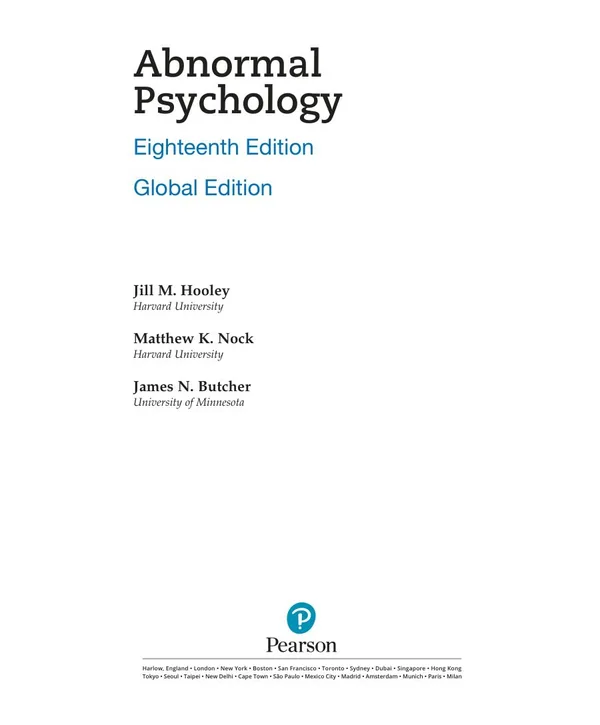
Abnormal Psychology, 18th Edition, Global Edition explores mental disorders through research, clinical cases, and biopsychosocial explanations. Hooley, Nock, and Butcher address diagnostic concepts, assessment, cultural context, and interventions across major categories of psychopathology. Psychology students can examine the relationships among symptoms, causes, and treatment within this edition's educational framework.
Inside this title
Research and clinical cases organized around major disorder categories
Current listed price $23.00Regular price $49.00Digital ebook
This Global Edition presents the scientific study of psychopathology through questions about symptoms, origins, assessment, and intervention. The biopsychosocial model links genetic and neurobiological factors with psychological processes and environmental influences. Anxiety, mood, psychotic, and personality disorders are among the categories considered.
Case studies connect research discussion with examples of clinical presentations. The eighteenth edition also addresses DSM-5 diagnostic concepts, interviewing and assessment, psychotherapy, pharmacological treatments, and the role of culture in understanding mental disorders. Comorbidity and ethical considerations extend the discussion beyond individual diagnostic categories. Students in abnormal psychology courses can use the material to compare explanatory models and consider evidence across different approaches.
Study guide included
Inside Abnormal Psychology, 18th Edition - Global Edition.
Abnormal Psychology, 18th Edition, Global Edition, pairs the classification of mental disorders with the developmental, cultural and social context that qualifies every clinical conclusion. Jill M. Hooley, Matthew K. Nock and James N. Butcher write for psychology students who need to weigh evidence as well as recognize symptoms.
Definitions, research approaches and the history of clinical explanation come first, followed by causal viewpoints and assessment. Disorder chapters then cover stress, anxiety, mood, somatic and eating problems, personality, substance use, psychosis, childhood conditions and cognitive change. Treatment and societal issues close the book. Recurring examples ask how far the evidence supports a conclusion and what that conclusion means for the person described. The global edition keeps cultural and developmental context visible, particularly where prevalence estimates and diagnostic thresholds travel across settings.
Definitions, culture and research
The opening chapter sets unusualness, distress, impairment and social expectation side by side, using an example of extreme generosity to ask when an uncommon act becomes a symptom. Diagnostic definitions provide shared language while setting, development and daily effect still govern meaning. Incidence and prevalence are separated, and research designs are read for sampling, comparison, effect size and replication.
Interpret indicators within a setting
Separate frequency from explanation
Check definitions before comparing rates
Ch. 1 · Overview and Research Approaches
Causal viewpoints and clinical assessment
Historical interpretations lead into biological, psychological and sociocultural viewpoints, with vulnerability distinguished from the stressor that changes timing and protective factors explaining divergent outcomes. Assessment combines interviews, observation, testing and medical information whose value depends on reliability, validity and fit with the person's background. Diagnosis summarizes a pattern; formulation describes how it developed and what sustains it.
Separate predisposition from trigger
Check reliability and fit
Note how a label affects access
Chs. 2–4 · History, causal factors and diagnosis
Stress, panic and mood changes
Stress chapters connect events, interpretation, physiology and support, all of which bear on physical and psychological health. Panic, anxiety and obsessive-compulsive presentations share distress and avoidance, but the trigger, the feared outcome and the response sequence separate them. Depression and bipolar conditions are compared through episode history and patterns of activity, energy and mood, with the course clarifying cross-sectional overlap.
Locate stress in circumstances
Compare symptoms with course
Use timelines to sort overlap
Chs. 5–7 · Stress, anxiety, mood and suicide
Somatic, eating and substance presentations
Somatic and dissociative conditions call for careful description of bodily symptoms, memory and awareness, while eating disorders and obesity are read through behavior, health, social influence and biology together. Substance conditions reflect immediate reward or relief, repeated exposure and shifting social context. Personality patterns are broader and more persistent, and the chapter keeps long-term course separate from a recent situation.
Separate experience from interpretation
Compare persistence across settings
Weigh immediate benefit against later cost
Chs. 8–12 · Somatic, eating, personality and substance topics
Psychosis, childhood and cognitive change
Schizophrenia and other psychotic disorders are described through unusual belief, altered perception and reduced motivation or expression, with course and effect on relationships and work treated as essential. Genetic, developmental and social evidence answer different questions. Childhood conditions are read against developmental expectations, while neurocognitive problems require a baseline, the timing of change and medical context.
Read psychosis across domains
Compare development with later change
Ask whether ability was lost or never present
Chs. 13–15 · Psychosis and lifespan disorders
Treatment, institutions and rights
Treatment chapters compare therapies by proposed process, evidence and outcome, noting that controlled results describe studied conditions while preference, comorbidity and access shape real use. Benefits may be measured for symptoms, function or both, and durability matters. Societal and legal topics treat responsibility, commitment and rights as separate from diagnosis, inviting careful reading of a decision's purpose and consequences.
Compare evidence and fit
Check which outcomes were measured
Examine authority separately from need
Chs. 16–17 · Psychological treatment and societal issues
Chapter and section map
Overview and Research Approachesp. 25
Causal Factors and Viewpointsp. 77
Clinical Assessment and Diagnosisp. 120
Mood Disorders and Suicidep. 232
Schizophrenia and Other Psychotic Disordersp. 464
Neurocognitive Disordersp. 508
Psychological Treatmentp. 573
Societal and Legal Issuesp. 609
Key takeaways
Compare sampling, definition and time window before setting two prevalence figures side by side.
Keep predisposing factors, immediate triggers and the processes that sustain difficulty distinct from one another.
Check developmental and cultural expectations before applying a diagnostic label to a person's behavior.
Psychology students in abnormal psychology courses, including international cohorts, and instructors who want diagnosis taught with cultural and evidentiary caution throughout, from definitions to treatment policy.
Topics covered
abnormal psychology
global edition
prevalence and incidence
causal factors
anxiety and mood disorders
psychosis
lifespan disorders
treatment evidence
Questions about this ebook.
Edition, audience, and study-guide details at a glance.
What is Abnormal Psychology, 18th Edition - Global Edition about?
Abnormal Psychology, 18th Edition, Global Edition explores mental disorders through research, clinical cases, and biopsychosocial explanations. Hooley, Nock, and Butcher address diagnostic concepts, assessment, cultural context, and interventions across major categories of psychopathology. Psychology students can examine the relationships among symptoms, causes, and treatment within this edition's educational framework.
Which edition of Abnormal Psychology, 18th Edition - Global Edition is this?
This listing is for the 18th edition. Check the title, ISBN, and book details above before ordering, especially if your course or reading list names a specific edition.
Who is Abnormal Psychology, 18th Edition - Global Edition for?
Psychology students in abnormal psychology courses, including international cohorts, and instructors who want diagnosis taught with cultural and evidentiary caution throughout, from definitions to treatment policy.
Does this page include a study guide?
Yes. This page includes an original study guide with six thematic sections, key takeaways, and a chapter and section map for structured reading.