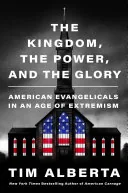
The Kingdom, the Power, and the Glory investigates the relationship between American evangelical Christianity and political power. Tim Alberta follows pastors, congregants, and political figures to examine nationalism, internal church divisions, and changing religious loyalties. The book addresses readers of political journalism, religious studies, and American public life.
Inside this title
Reporting on evangelical churches and American political mobilization
Current listed price $9.99Regular price $22.00Digital ebook
Tim Alberta reports from churches and political gatherings to explore how evangelical identity intersects with partisan allegiance. His account places individual experiences alongside the movement's political history, including the legacy of the Moral Majority and the realignments associated with the Trump era. Interviews provide different perspectives on the tensions between religious conviction and institutional power.
The narrative considers pastoral leadership, political mobilization, conspiracy theories, and disagreements about the purpose of the church. It also follows people who have reconsidered their place within evangelical communities. Clergy, students of religion and politics, and general nonfiction readers can use the book to examine the arguments and experiences shaping these divisions.
Study guide included
Inside The Kingdom, the Power, and the Glory.
Alberta reports from congregations, not from a distance. Pastors, congregants and political figures describe how evangelical identity became bound to partisan allegiance, what the Moral Majority left behind, and how the Trump years divided churches over support, silence and opposition.
Alberta reports from congregations and political gatherings rather than from a desk, and the book is built from those encounters. Individual stories are set against the movement's political history, from the Moral Majority through the realignments of the Trump years. Pastors, congregants and public figures give conflicting accounts of what faithfulness requires and what institutional power costs. The narrative follows doctrinal argument, mobilization, conspiracy thinking and disagreement over the church's purpose, and it stays with people who have left or are reconsidering their place.
Reporting from churches and rallies
Alberta's method is immersion. He attends services, listens to sermons, and interviews pastors and congregants where they live and worship. The reporting sets individual stories against the movement's political history, so that a single congregation's conflict can be read as an instance of a larger argument about what the church is for.
Immersion supplies the book's evidence
Local conflict reflects wider arguments
Sermons are read as political speech
Topic 1
Religious nationalism and partisan identity
The book examines how evangelical identity became entangled with partisan allegiance, and what that entanglement costs. When religious belonging and political identity reinforce each other, disagreement about policy can feel like a challenge to faith. Alberta traces this dynamic without reducing the people he interviews to a single motive.
Religious and political identity reinforce
Policy disagreement feels like faith challenge
Interview subjects are not reduced to motives
Topic 2
Legacy of the Moral Majority
The Moral Majority supplies the historical hinge. Its mobilization established a template in which evangelical organization could be translated into electoral influence, and later figures inherited both the machinery and the expectations it created. Alberta uses this history to explain why present divisions are not simply about one candidate or one election.
Mobilization created an electoral template
Later leaders inherited its expectations
Present conflict has deeper roots
Topic 3
Realignment in the Trump years
The Trump era is examined as a period of realignment rather than a rupture from nothing. Congregations divided over support, silence and opposition, and pastors faced pressure from both directions. The reporting shows how the same theological vocabulary could be used to justify very different political stances, which is part of why the disagreements proved so difficult to contain.
Realignment, not rupture from nowhere
Pastors faced pressure from both sides
Shared vocabulary justified opposing stances
Topic 4
Pastoral leadership and internal division
Pastors occupy the book's most difficult position. They are expected to speak for their congregations, keep them together, and answer to a wider denominational and political world. Alberta documents the strategies clergy used, including avoidance, partial candor and direct confrontation, and the costs each carried for their ministry and their families.
Clergy answer to congregation and wider world
Avoidance and candor both carry costs
Divisions reach into pastoral families
Topics 5–6
Leaving, staying and reconsidering
The book follows people who have left evangelical communities and people who have stayed while changing what they believe about the church's political role. Neither group is presented as the obvious conclusion. Their accounts show that leaving is usually a process with grief, relationships and practical consequences, and that staying can also be a form of protest.
Leaving is a process, not an event
Staying can be a form of protest
Grief and relationships attend both paths
Topics 7–8
Topic map
Churches and Political GatheringsTopic 1
Evangelical Identity and PartyTopic 2
The Moral Majority LegacyTopic 3
The Trump RealignmentTopic 4
Pastoral LeadershipTopic 5
Doctrine and DivisionTopic 6
Conspiracy and MobilizationTopic 7
Leaving and ReconsideringTopic 8
Key takeaways
Distinguish what pastors say publicly from what congregants report in private conversations.
Follow the historical thread from the Moral Majority to present party alignment.
Read the accounts of people leaving without treating them as the book's verdict.
Readers of political journalism, clergy and lay church members, and students of religion and American public life following contemporary debates about evangelicalism and political power.
Topics covered
American evangelicalism
religion and politics
religious nationalism
Tim Alberta
church divisions
Moral Majority
political journalism
white evangelicals
Questions about this ebook.
Edition, audience, and study-guide details at a glance.
What is The Kingdom, the Power, and the Glory about?
The Kingdom, the Power, and the Glory investigates the relationship between American evangelical Christianity and political power. Tim Alberta follows pastors, congregants, and political figures to examine nationalism, internal church divisions, and changing religious loyalties. The book addresses readers of political journalism, religious studies, and American public life.
Who is The Kingdom, the Power, and the Glory for?
Readers of political journalism, clergy and lay church members, and students of religion and American public life following contemporary debates about evangelicalism and political power.
Does this page include a study guide?
Yes. This page includes an original study guide with six thematic sections, key takeaways, and a topic map for structured reading.