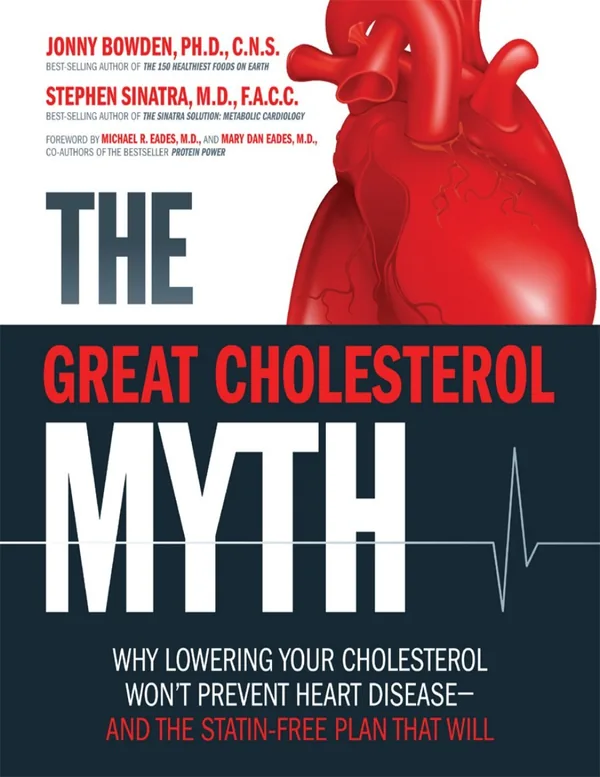
The Great Cholesterol Myth presents Jonny Bowden and Stephen Sinatra's critique of cholesterol-centered explanations of heart disease. Written for general readers interested in cardiovascular health debates, it examines their views on inflammation, lipid measures, statins, diet, supplements, stress, and lifestyle through a proposed four-part approach to prevention.
Inside this title
Authors critique cholesterol-centered accounts of cardiovascular disease risk
Current listed price $6.99Regular price $12.00Digital ebook
Bowden and Sinatra question the emphasis placed on cholesterol measurements and discuss other factors they consider relevant to cardiovascular risk, including triglycerides, fibrinogen, homocysteine, and inflammation. Their argument brings laboratory markers into a broader discussion of how heart disease is understood and communicated to patients.
The authors also evaluate statin treatment from their perspective and propose a framework involving food choices, lifestyle, supplements, and stress management. These positions are presented as the book's arguments rather than established medical consensus. Readers interested in popular health writing, contrasting approaches to risk, or the history of cholesterol debates can use the volume to examine the authors' reasoning and its implications for conversations about cardiovascular care.
Study guide included
Inside The Great Cholesterol Myth.
Bowden and Sinatra argue that cholesterol numbers have been given more weight than they deserve in explaining heart disease. Their case shifts attention to inflammation and other laboratory markers, questions statin treatment, and proposes prevention built from food, supplements, lifestyle and stress management. The book is advocacy, not neutral consensus.
The authors begin by challenging the emphasis on cholesterol measurement as a predictor of cardiovascular trouble. They discuss triglycerides, fibrinogen, homocysteine and inflammation as factors they consider more informative, and they examine statins through their own reading of the evidence. From that critique comes a four-part prevention proposal covering diet, supplementation, daily habits and stress. The text is written for a lay audience and makes its case through argument and anecdote rather than systematic review. Read as a stated position, it is useful for understanding how the cholesterol debate is framed and where critics of standard guidance locate their objections.
Questioning the cholesterol focus
The authors challenge the weight placed on cholesterol measurement in explaining heart disease. They argue that the number has been treated as more decisive than the evidence supports, and they set out to reframe risk around other processes. This opening move defines the book as a critique rather than a clinical manual.
Cholesterol measurement given too much weight
Risk reframed around other processes
A critique, not a treatment manual
Topic 1
Inflammation as the central argument
Inflammation becomes the authors' preferred explanation for cardiovascular trouble. They present it as a process that cholesterol numbers do not capture, and use that claim to argue for a different account of how disease develops. The position is stated as their interpretation rather than a settled finding.
Inflammation as an alternative explanation
What cholesterol measures miss
Presented as the authors' interpretation
Topic 2
Other markers they emphasize
Triglycerides, fibrinogen and homocysteine are brought forward as laboratory measures the authors consider more informative than cholesterol alone. The discussion explains why each is thought relevant and how it fits their broader argument about risk. These markers serve as evidence for reframing the conversation.
Triglycerides as a discussed marker
Fibrinogen and homocysteine in the argument
Markers supporting a reframing of risk
Topic 3
Statins under scrutiny
Statins are examined through the authors' reading of the evidence, with attention to benefits, side effects and the way trial results are communicated. Their skepticism is presented as an argument to be weighed, and readers are reminded that this stance differs from mainstream guidance.
Benefits and side effects weighed
How trial results are communicated
A stance that differs from mainstream guidance
Topic 4
Food and dietary choices
Diet forms one pillar of the authors' prevention proposal. They discuss food choices they consider supportive of cardiovascular health and criticize dietary advice built mainly on lowering cholesterol. The recommendations follow their broader thesis about inflammation and risk.
Diet as a prevention pillar
Food choices tied to their thesis
Critique of cholesterol-centered dietary advice
Topic 5
Supplements, lifestyle and stress
The remaining pillars cover supplements, daily habits and stress management. The authors describe these as practical measures a reader can adopt, and they tie each to their account of cardiovascular risk. The framework is offered as a coherent alternative rather than a set of isolated tips.
Supplements within the proposal
Lifestyle habits as prevention
Stress management as a pillar
Topics 6-7
Topic map
The Cholesterol DebateTopic 1
Inflammation and Cardiovascular RiskTopic 2
Triglycerides, Fibrinogen and HomocysteineTopic 3
Statins in the Authors' ArgumentTopic 4
Diet and Food ChoicesTopic 5
Supplements and LifestyleTopic 6
Stress and the Four-Part Prevention FrameworkTopic 7
Key takeaways
Treat the book as advocacy; its claims are the authors' interpretation, not medical consensus.
The critique is about which markers get attention, not a rejection of cardiovascular risk itself.
The prevention framework follows from the argument, so read the critique before the recommendations.
General readers following popular health writing, people curious about the cholesterol debate, and readers who want to examine a contrarian argument on cardiovascular risk.
Topics covered
the great cholesterol myth
jonny bowden
stephen sinatra
cholesterol and heart disease
inflammation and cardiovascular risk
statins debate
triglycerides and homocysteine
Questions about this ebook.
Edition, audience, and study-guide details at a glance.
What is The Great Cholesterol Myth about?
The Great Cholesterol Myth presents Jonny Bowden and Stephen Sinatra's critique of cholesterol-centered explanations of heart disease. Written for general readers interested in cardiovascular health debates, it examines their views on inflammation, lipid measures, statins, diet, supplements, stress, and lifestyle through a proposed four-part approach to prevention.
Who is The Great Cholesterol Myth for?
General readers following popular health writing, people curious about the cholesterol debate, and readers who want to examine a contrarian argument on cardiovascular risk.
Does this page include a study guide?
Yes. This page includes an original study guide with six thematic sections, key takeaways, and a topic map for structured reading.