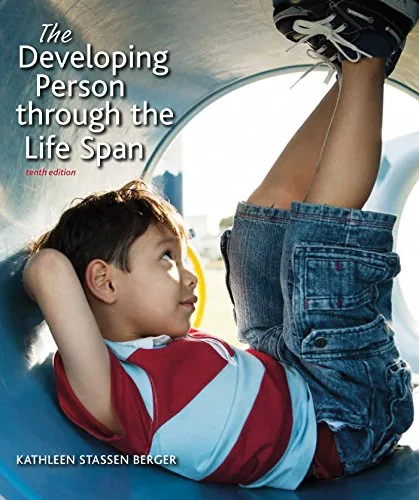
The Developing Person Through the Life Span, tenth edition, examines physical, cognitive, and psychosocial development from prenatal life through death. Kathleen Stassen Berger combines developmental theories, research, and examples in a chronological structure. It serves life-span psychology students and readers in education, healthcare, counseling, and social work studying development across different ages and contexts.
Inside this title
Physical, cognitive, and psychosocial development within each life stage
Current listed price $11.99Regular price $22.00Digital ebook
Each age period brings together changes in the body, thinking, and social experience. Theories associated with Piaget, Erikson, and Vygotsky offer contrasting ways to interpret those changes, while genetic and environmental influences connect development with its broader conditions. Attachment, parenting, peer relationships, and cognitive milestones appear within this chronological account.
The tenth edition also addresses emerging adulthood, brain development, cross-cultural perspectives, changing families, aging, and end-of-life issues. Learning objectives, review questions, summaries, and key terms support study of the research and concepts. The result is a course text for students who need to follow human development across the whole lifespan while keeping biological, cognitive, and social processes in view.
Study guide included
Inside The Developing Person Through the Life Span, 10th Edition.
This edition presents development as three interlocking strands—body, thought, and relationships—unfolding across an entire lifetime. The same transition can look different in another family, school, culture, or decade. Berger keeps returning to evidence, asking readers to notice how a study was built before accepting what it appears to show.
Berger starts with theory, how studies are designed, heredity, and life before birth, then works through age-based chapters that repeatedly compare bodily, mental, and social evidence. One section gives special attention to the social world of the middle years of childhood, alongside material on the teen years and the phase when adults are still forming, where identity is tied to opportunity. Later chapters continue through employment, care work, and growing older, and a closing section examines death, bereavement, and public mourning. The design rewards comparison: because each stage is examined in the same domains, readers can see both what shifts and what persists.
Tell development from cohort effects
A gap between age groups may stem from how a study was run or from the era people grew up in. Observation, surveys, and controlled experiments answer different questions, and a correlation may raise a hypothesis without proving cause. Cross-sectional work compares groups at one moment; longitudinal work follows people over time. Schooling, technology, and work experience create cohort gaps that can masquerade as ageing.
Ask how the comparison groups were assembled
Separate age from birth cohort
Check whether opportunity was equal
Part I, Chapters 1–2
Connect genes, birth, and infancy
Berger distinguishes inherited material from expressed traits and adds gene interaction and epigenetic influence. Even closely similar individuals meet differing conditions before birth and different later experience. The stages from germinal to embryonic to fetal involve distinct processes, and timing shapes risk. Arrival is a shift for caregivers too, and infancy ties movement, attention, memory, and speech to responsive social exchange.
Distinguish inherited information from expression
Note the timing of prenatal influences
Treat attachment and temperament as separate
Chapters 3–7, The Beginnings and The First Two Years
Read the childhood social world
Early childhood adds physical control, pretend play, speech, and executive control, with Piaget centred on the child's current logic and Vygotsky on what guidance unlocks. Middle childhood brings reasoning about things that can be seen, along with memory tactics and formal teaching. Peer groups give chances to cooperate and compare; they may also generate exclusion and bullying.
Compare how a child performs in known and new settings
Look at peer processes, not labels
Ask what support changes the outcome
Parts III–IV, Chapters 8–13
Tie identity to opportunity
Sleep, body image, brain change, and puberty all meet classroom and peer life. Someone can plan well in class and still act rashly among friends, so the setting matters as much as the capacity. Identity grows through commitments to people, beliefs, ethnic belonging, study, and employment, and exploration lasts longer where schooling, jobs, and family help make postponement possible.
Compare the same person across settings
Distinguish exploration from commitment
Ask what resources make delay possible
Parts V–VI, Chapters 14–19
Weigh capability against adaptation
Adult research compares skills and yardsticks, among them stored knowledge and processing speed, and comparisons across ages sometimes disagree with studies that follow the same people, especially when cohort or practice effects intrude. Expertise can sustain strong performance even while particular tasks slow. Selective optimisation with compensation shows how people keep valued goals by changing strategy or accepting support, and housing, transport, and tools shape what remains possible.
Compare measures, not a single score
Note cohort and practice effects
Judge support by the goal it preserves
Parts VII–VIII, Chapters 20–25
Examine dying and mourning
Children and adults bring different ideas and histories to death, and the epilogue places cultural views and family decisions beside biological change. Preferences may centre on easing suffering, having company, or keeping faith with cherished values and ritual. Grief belongs to the individual; mourning takes social and cultural form. Responses shift over time and with relationships, so a theory should organise variation rather than prescribe it.
Separate stated wishes from observer assumptions
Distinguish grief from mourning
Expect varied timing and expression
Epilogue, Death and Dying
Chapter and section map
Science, Theories, Genetics, and BirthChs. 1–4
The First Two YearsChs. 5–7
Early ChildhoodChs. 8–10
Middle Childhood and the Social WorldChs. 11–13
Adolescence and Emerging AdulthoodChs. 14–19
Adulthood and Late AdulthoodChs. 20–25
Death and DyingEpilogue
Key takeaways
Rule out cohort, practice, and task effects before treating a gap between ages as developmental.
Watch children in known and new settings before drawing conclusions about what they can do.
Ask whether an adaptation brings back a valued activity, not just whether it lifts a score.
Life-span psychology students and readers in education, healthcare, counselling, and social work who need a chronological account of development across ages, cultures, and contexts of everyday life.
Topics covered
life-span development
developmental stages
research design
genetics and infancy
childhood social world
adolescent identity
adult development
grief and mourning
Other editions of this title.
Compare editions, prices, and book details before you choose.
Edition, audience, and study-guide details at a glance.
What is The Developing Person Through the Life Span, 10th Edition about?
The Developing Person Through the Life Span, tenth edition, examines physical, cognitive, and psychosocial development from prenatal life through death. Kathleen Stassen Berger combines developmental theories, research, and examples in a chronological structure. It serves life-span psychology students and readers in education, healthcare, counseling, and social work studying development across different ages and contexts.
Which edition of The Developing Person Through the Life Span, 10th Edition is this?
This listing is for the 10th edition. Check the title, ISBN, and book details above before ordering, especially if your course or reading list names a specific edition.
Who is The Developing Person Through the Life Span, 10th Edition for?
Life-span psychology students and readers in education, healthcare, counselling, and social work who need a chronological account of development across ages, cultures, and contexts of everyday life.
Does this page include a study guide?
Yes. This page includes an original study guide with six thematic sections, key takeaways, and a chapter and section map for structured reading.