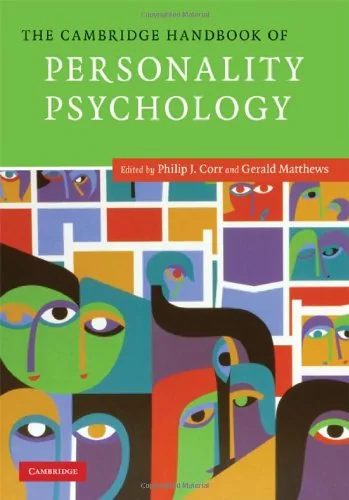
The Cambridge Handbook of Personality Psychology, 1st Edition
Edited by Philip J. Corr, Gerald Matthews
About this ebook
The Cambridge Handbook of Personality Psychology brings together research on the biological, developmental, cognitive, and social dimensions of personality. Edited by Philip J. Corr and Gerald Matthews, this first-edition reference examines measurement, theory, findings, and applications for graduate students, researchers, and practitioners studying individual differences across psychological disciplines.
Inside this title
Biological, developmental, cognitive, and social accounts of personality
Current listed price $31.00Regular price $76.00Digital ebook
Personality is examined at several levels in this edited research handbook, from genes and brain systems to relationships and political attitudes. Chapters introduce scientific foundations, compare principal theories and findings, and identify questions for future work. Molecular genetics and functional neuroimaging appear alongside psychometric and social-cognitive approaches in the volume's 2009 research context.
The coverage includes development across the lifespan, personality taxonomies, assessment, attention, memory, motivation, and emotional processes. Clinical links and applications in occupational, health, and forensic psychology extend the discussion beyond basic research. Graduate readers can consult it for an introduction to particular areas, while researchers can compare how different traditions explain and investigate individual differences.
Study guide included
Inside The Cambridge Handbook of Personality Psychology, 1st Edition.
An edited reference that refuses to reduce personality to one explanation. Corr and Matthews assemble biological, developmental, cognitive, and social strands, then connect measurement and theory to clinical, occupational, health, and forensic use. Chapters also mark where questions remain open.
The handbook works at several levels at once. Genes and brain systems sit beside relationships and political attitudes, and psychometric traditions are placed next to social-cognitive ones. Chapters review what is known, compare competing accounts, and point to unresolved problems. Coverage runs through development across the lifespan, taxonomies of traits, assessment methods, attention, memory, motivation, and emotion. Applied sections show how individual differences matter in clinical, workplace, health, and legal settings. Graduate students can sample an area; researchers can set traditions against each other. The 2009 context includes molecular genetics and functional neuroimaging alongside established approaches.
Personality at Multiple Levels
The handbook treats personality as a phenomenon that shows up in genes, brains, behavior, relationships, and culture. No single level is granted final authority.
Biological, psychological, and social levels
Levels that inform rather than replace one another
Integration as an open research problem
The framing for the whole volume.
Biological Foundations
Molecular genetics and functional neuroimaging appear as tools for asking how individual differences are embodied. The coverage is cautious about moving from a correlate to a cause.
Genetic contributions to traits
Brain systems associated with differences
Interpretive limits of biological evidence
Read for method as much as for findings.
Development and Structure
Personality is followed across the lifespan, and taxonomies organize the traits under discussion. Stability and change are both treated as findings to explain rather than assumptions.
Continuity and change over time
Trait taxonomies and their disagreements
Developmental processes that shape differences
The structural backbone of the field.
Measurement and Assessment
Psychometric questions sit at the center because claims about personality depend on how it is measured. Reliability, validity, and the choice of instrument constrain what can be concluded.
Psychometric properties of assessments
Self-report and its alternatives
Measurement choices shaping theory
Essential before trusting any trait claim.
Cognition, Motivation, Emotion
Attention, memory, motivation, and emotion connect disposition to process. These chapters ask how a trait becomes a pattern of noticing, remembering, and responding.
Attentional and memory differences
Motivational processes
Emotional regulation and reactivity
The bridge from structure to mechanism.
Applied Settings
Clinical, occupational, health, and forensic applications show what individual-difference research is used for. Each setting raises its own questions about prediction and fairness.
Clinical formulation and treatment
Workplace selection and performance
Health and legal contexts
Where theory meets consequences.
Topic map
Topic 1Theme 1
Topic 2Theme 2
Topic 3Theme 3
Topic 4Theme 4
Topic 5Theme 5
Topic 6Theme 6
Key takeaways
Personality research is multi-level, and integration remains unfinished.
Measurement choices shape what theories can claim.
Applied settings turn individual-difference findings into decisions about people.
Graduate students, researchers, and practitioners studying individual differences.
Topics covered
Cambridge Handbook of Personality Psychology
Philip Corr Gerald Matthews
personality psychology reference
individual differences research
personality measurement and assessment
biological basis of personality
personality development lifespan
applied personality psychology
Questions about this ebook.
Edition, audience, and study-guide details at a glance.
What is The Cambridge Handbook of Personality Psychology, 1st Edition about?
The Cambridge Handbook of Personality Psychology brings together research on the biological, developmental, cognitive, and social dimensions of personality. Edited by Philip J. Corr and Gerald Matthews, this first-edition reference examines measurement, theory, findings, and applications for graduate students, researchers, and practitioners studying individual differences across psychological disciplines.
Which edition of The Cambridge Handbook of Personality Psychology, 1st Edition is this?
This listing is for the 1st edition. Check the title, ISBN, and book details above before ordering, especially if your course or reading list names a specific edition.
Who is The Cambridge Handbook of Personality Psychology, 1st Edition for?
Graduate students, researchers, and practitioners studying individual differences.
Does this page include a study guide?
Yes. This page includes an original study guide with six thematic sections, key takeaways, and a topic map for structured reading.