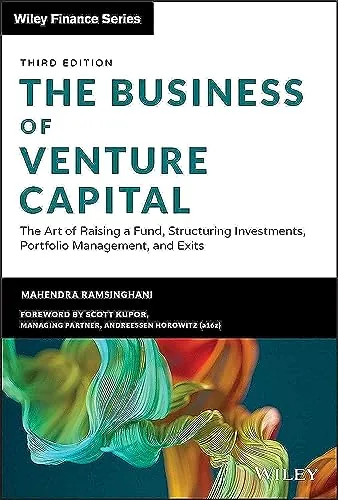
The Business of Venture Capital: The Art of Raising a Fund, Structuring Investments, Portfolio Management, and Exits, 3rd Edition
By Mahendra Ramsinghani
About this ebook
The Business of Venture Capital, Third Edition, follows the work of a venture firm from fund formation through investment and exit. Mahendra Ramsinghani examines limited partner fundraising, sourcing, due diligence, term sheets, portfolio support, and distributions for investment professionals, aspiring fund managers, and business students studying venture capital operations.
Inside this title
Fund formation and limited partner fundraising begin the lifecycle
Current listed price $26.00Regular price $58.00Digital ebook
The fund lifecycle provides the organizing thread for this guide. Early topics include developing an investment thesis, establishing a fund's legal and operational structure, and raising capital from limited partners. The discussion then moves into sourcing opportunities, screening companies, conducting due diligence, and negotiating the terms of an investment.
Post-investment chapters consider board participation, operational support, portfolio monitoring, risk, and follow-on financing. Exit routes include acquisitions, public offerings, and secondary sales, with attention to distributions. Examples connect these activities to the decisions involved in running a venture firm. The third edition offers practitioners and MBA readers a view across connected stages of fund management rather than concentrating on a single deal-making task.
Study guide included
Inside The Business of Venture Capital: The Art of Raising a Fund, Structuring Investments, Portfolio Management, and Exits, 3rd Edition.
Ramsinghani follows the whole arc of a venture firm, from persuading limited partners to writing checks and eventually returning capital. The book is organized around stages rather than isolated tricks, so each decision is seen in relation to the fund's life.
The lifecycle supplies the narrative. A firm begins with a thesis and a legal and operational structure, then raises money from limited partners. Attention shifts to finding companies, screening them, performing due diligence, and negotiating terms. After the investment, the work becomes board involvement, operational help, monitoring, risk, and follow-on rounds. Exits through acquisition, public offering, or secondary sale lead to distributions. Examples tie these activities to the judgments a venture firm actually makes. Practitioners and MBA readers get a connected view of fund management, while the third edition keeps a single transaction from dominating the account.
The Fund Lifecycle as Organizing Frame
The book's structure mirrors a fund's life. Raising, investing, supporting, and exiting are treated as linked stages, so a choice made early constrains what is possible later.
Stages are connected rather than modular
Early structure shapes later options
Fund-level thinking sits above deal-level tactics
The map for the rest of the book.
Thesis and Fund Formation
A fund begins with a view about where opportunity lies and a structure that can pursue it. Legal and operational decisions made at formation affect governance, incentives, and credibility.
Articulating an investment thesis
Legal and operational structure
Aligning the fund's design with its strategy
Read before the fundraising material.
Raising from Limited Partners
Fundraising is a sales process with unusually informed buyers. The text covers how managers present a strategy, address track record, and build relationships with institutional investors.
What limited partners evaluate
Materials and meetings that support a raise
Long relationships versus a single close
The bridge from formation to investing.
Sourcing, Screening, and Due Diligence
Deal flow depends on networks and deliberate sourcing, not passive waiting. Screening narrows the field, and due diligence tests the claims that survived the first pass.
Building repeatable deal flow
Screening criteria and quick rejection
Diligence questions that matter for the thesis
The investing core of the book.
Terms, Valuation, and Negotiation
Term sheets translate an agreement into economics and control. Valuation is only one line; governance, preferences, and protections determine how outcomes are shared.
Economics versus control provisions
How terms allocate risk
Negotiation as a repeated relationship
Read with a sample term sheet in hand.
Support, Follow-On, Exits, Distributions
Post-investment work includes board participation, operational help, monitoring, and decisions about follow-on capital. Exits and distributions close the loop back to limited partners.
Board roles and operational support
Reserves and follow-on strategy
Acquisition, IPO, and secondary routes
Where the fund's promises are tested.
Topic map
Topic 1Theme 1
Topic 2Theme 2
Topic 3Theme 3
Topic 4Theme 4
Topic 5Theme 5
Topic 6Theme 6
Key takeaways
Venture capital is a fund business, not only a deal business.
Term sheet economics and control provisions both shape outcomes.
Exits and distributions are part of the strategy from the start.
Investment professionals, aspiring fund managers, and MBA students studying venture capital.
Topics covered
The Business of Venture Capital 3rd Edition
Mahendra Ramsinghani venture capital
venture fund formation
limited partner fundraising
due diligence and term sheets
venture portfolio management
startup exits and distributions
VC fund operations guide
Questions about this ebook.
Edition, audience, and study-guide details at a glance.
What is The Business of Venture Capital: The Art of Raising a Fund, Structuring Investments, Portfolio Management, and Exits, 3rd Edition about?
The Business of Venture Capital, Third Edition, follows the work of a venture firm from fund formation through investment and exit. Mahendra Ramsinghani examines limited partner fundraising, sourcing, due diligence, term sheets, portfolio support, and distributions for investment professionals, aspiring fund managers, and business students studying venture capital operations.
Which edition of The Business of Venture Capital: The Art of Raising a Fund, Structuring Investments, Portfolio Management, and Exits, 3rd Edition is this?
This listing is for the 3rd edition. Check the title, ISBN, and book details above before ordering, especially if your course or reading list names a specific edition.
Who is The Business of Venture Capital: The Art of Raising a Fund, Structuring Investments, Portfolio Management, and Exits, 3rd Edition for?
Investment professionals, aspiring fund managers, and MBA students studying venture capital.
Does this page include a study guide?
Yes. This page includes an original study guide with six thematic sections, key takeaways, and a topic map for structured reading.