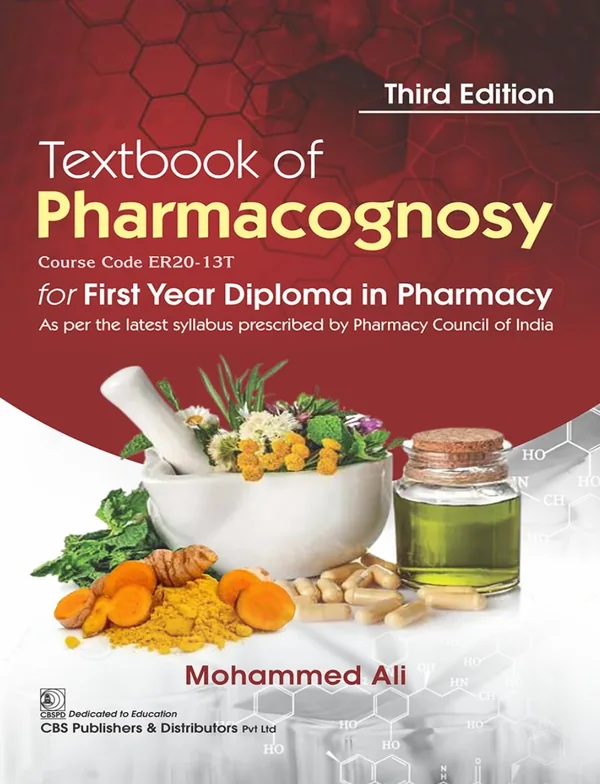
Textbook of Pharmacognosy: For First Year Diploma in Pharmacy, Third Edition
By Mohammed Ali
About this ebook
Mohammed Ali's Textbook of Pharmacognosy, Third Edition, examines crude drugs through their biological sources, chemical constituents, and uses. Written for pharmacy students and related readers, it connects traditional medicine and herbal formulations with phytochemical investigation, extraction, analytical methods, standardization, and the quality control of natural products.
Inside this title
Biological sources and chemical constituents of crude drugs
Current listed price $23.00Regular price $40.00Digital ebook
Plant, animal, and marine sources provide the starting point for studying crude drugs in this pharmacognosy text. Classification and origin lead into the chemistry of alkaloids, glycosides, flavonoids, terpenoids, and other constituents, with attention to how substances are extracted, isolated, and characterized.
Traditional systems including Ayurveda, Siddha, and Unani are discussed alongside Ayurvedic formulations, herbal cosmetics, and health products. The analytical material covers methods such as HPTLC, HPLC, and GC-MS in the examination of herbal drugs and preparations. This combination of botanical, chemical, and formulation perspectives suits pharmacy coursework and readers studying how natural materials are identified, processed, and assessed for quality.
Study guide included
Inside Textbook of Pharmacognosy: For First Year Diploma in Pharmacy, Third Edition.
A pharmacy text that works outward from the biological source of a crude drug to its chemistry, preparation, and quality. Ali covers plant, animal, and marine materials, the constituents they contain, the traditional systems that use them, and the analytical techniques that verify them, giving first-year diploma students a connected view of natural products.
The third edition begins with where crude drugs come from. Plant, animal, and marine sources are classified and traced to their origins, which then leads into the chemistry of alkaloids, glycosides, flavonoids, terpenoids, and other constituents. Extraction, isolation, and characterization are presented as steps in handling a natural material. Traditional systems such as Ayurveda, Siddha, and Unani are discussed together with Ayurvedic formulations, herbal cosmetics, and health products. Analytical coverage includes HPTLC, HPLC, and GC-MS as tools for examining herbal drugs and preparations. Botanical, chemical, and formulation perspectives combine to serve pharmacy coursework and readers interested in how natural materials are identified, processed, and assessed.
Sources and Classification of Crude Drugs
The study begins with origin. Plant, animal, and marine materials are classified and traced to their biological sources, giving each drug an identity before its chemistry is considered. This grounding makes later discussion of constituents and uses more precise.
Identify biological sources
Classify crude drugs by origin
Relate source to drug identity
Topics 1–2
Chemistry of Constituents
Constituents explain what a crude drug does. Alkaloids, glycosides, flavonoids, terpenoids, and related groups are examined as chemical families with characteristic behavior. The chapter connects molecular structure to the properties that matter in pharmacy.
Name major constituent groups
Relate structure to properties
Connect chemistry with drug activity
Topic 3
Extraction and Isolation
Getting a substance out of a plant or animal material is a technical process. Extraction, isolation, and characterization are presented as a sequence, each step affecting what is finally obtained. Readers learn to treat preparation as inseparable from the chemistry it serves.
Select an extraction approach
Isolate target constituents
Characterize the isolated material
Topic 4
Traditional Systems and Formulations
Traditional medicine provides both context and practice. Ayurveda, Siddha, and Unani are discussed alongside Ayurvedic formulations, showing how natural materials are combined and used within established systems. This connects pharmacognosy to living therapeutic traditions.
Describe the major traditional systems
Relate formulations to their systems
Understand traditional use of crude drugs
Topic 5
Herbal Cosmetics and Health Products
Natural materials appear in products beyond medicines. Herbal cosmetics and health products extend the discussion into consumer preparations, where the same botanical and chemical knowledge applies. This broadens the student's sense of where pharmacognosy is used.
Identify herbal cosmetic categories
Relate constituents to product function
Recognize quality concerns in consumer products
Topic 6
Analytical Methods and Quality Control
Verification closes the sequence. HPTLC, HPLC, and GC-MS are introduced as tools for examining herbal drugs and preparations, and standardization is treated as the means of ensuring consistent quality. The analytical chapter ties botanical identity and chemistry to dependable products.
Apply HPTLC, HPLC, and GC-MS
Interpret analytical profiles
Standardize herbal preparations
Topic 7
Topic map
Plant, animal, and marine sourcesTopic 1
Classification and origin of crude drugsTopic 2
Alkaloids, glycosides, flavonoids, and terpenoidsTopic 3
Extraction, isolation, and characterizationTopic 4
Ayurveda, Siddha, and Unani traditionsTopic 5
Herbal formulations, cosmetics, and health productsTopic 6
HPTLC, HPLC, GC-MS, and standardizationTopic 7
Key takeaways
A crude drug is understood through its source, its chemistry, and how it is prepared, as one connected chain.
Traditional systems and modern formulations both depend on knowing which constituents are present.
Standardization and analytical testing are what make a natural product reliable enough to use.
First-year diploma pharmacy students studying pharmacognosy, and readers interested in medicinal plants, herbal formulations, and natural product quality control.
Topics covered
pharmacognosy
crude drugs
phytochemistry
alkaloids and glycosides
extraction and isolation
Ayurveda and Unani
herbal formulations
HPTLC and HPLC
standardization
Questions about this ebook.
Edition, audience, and study-guide details at a glance.
What is Textbook of Pharmacognosy: For First Year Diploma in Pharmacy, Third Edition about?
Mohammed Ali's Textbook of Pharmacognosy, Third Edition, examines crude drugs through their biological sources, chemical constituents, and uses. Written for pharmacy students and related readers, it connects traditional medicine and herbal formulations with phytochemical investigation, extraction, analytical methods, standardization, and the quality control of natural products.
Which edition of Textbook of Pharmacognosy: For First Year Diploma in Pharmacy, Third Edition is this?
This listing is for the 3rd edition. Check the title, ISBN, and book details above before ordering, especially if your course or reading list names a specific edition.
Who is Textbook of Pharmacognosy: For First Year Diploma in Pharmacy, Third Edition for?
First-year diploma pharmacy students studying pharmacognosy, and readers interested in medicinal plants, herbal formulations, and natural product quality control.
Does this page include a study guide?
Yes. This page includes an original study guide with six thematic sections, key takeaways, and a topic map for structured reading.