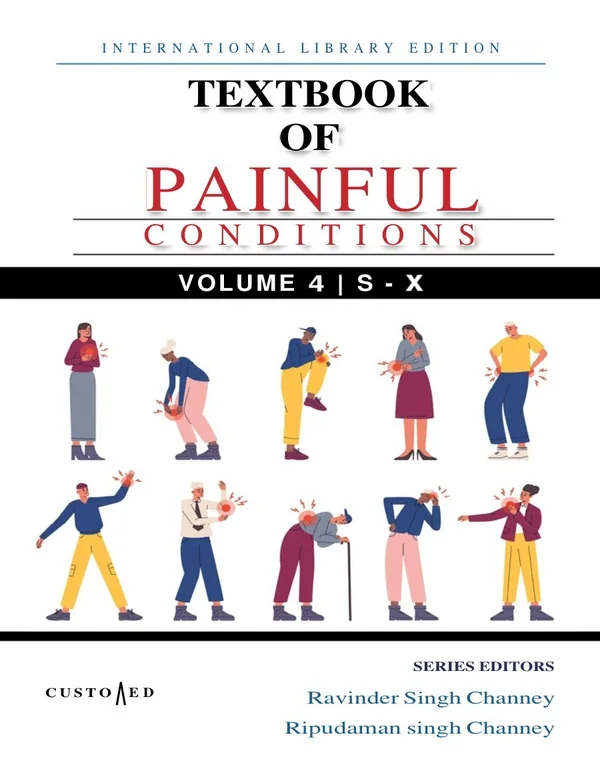
Textbook of Painful Conditions: Volume 4 (S-X), 1st Edition
By Ravinder Singh Channey, Ripudaman Singh Channey
About this ebook
Textbook of Painful Conditions: Volume 4 covers pain syndromes alphabetically from S to X for pain physicians, rehabilitation specialists, therapists, and trainees. Its consistent entry format brings together clinical presentation, testing, differential diagnosis, treatment approaches, functional consequences, and medico-legal considerations, including less commonly encountered conditions.
Inside this title
Alphabetical coverage of painful conditions from S to X
Current listed price $29.99Regular price $60.00Digital ebook
Conditions such as sacroiliac joint pain, saphenous neuralgia, temporomandibular disorders, and xiphodynia fall within this volume's alphabetical span. Each entry connects symptoms and signs with the investigation and diagnostic questions that arise when assessing a painful presentation.
The chapter structure also addresses conservative and interventional treatment approaches, documentation concerns, and the physical, psychological, and social effects of pain. Differential diagnosis tables, testing schedules, and clinical observations support consultation by topic rather than requiring a sequential reading. The fourth volume of the series is suited to clinicians and trainees studying chronic pain assessment across several specialties.
Study guide included
Inside Textbook of Painful Conditions: Volume 4 (S-X), 1st Edition.
Pain does not arrange itself by specialty, and this reference organises it alphabetically instead. Volume four covers conditions from S to X, giving each a consistent entry that moves from presentation and testing through differential diagnosis, treatment options, functional consequences and documentation, including rare presentations a clinician may meet only occasionally.
The alphabetical span runs from sacroiliac joint pain and saphenous neuralgia through temporomandibular disorders to xiphodynia, and the entry format stays constant so that a reader can find the same categories in every condition. Symptoms and signs lead into the investigations and diagnostic questions that follow a painful presentation, and differential diagnosis tables help separate conditions that look alike. Treatment coverage ranges across conservative management and interventional procedures, without treating either as the automatic answer. Documentation and medico-legal considerations appear alongside the clinical material, and the physical, psychological and social effects of pain are kept in view. The design supports consultation by topic rather than sequential reading, which suits a working clinician.
A fixed entry structure
Consistency is the organising principle. Every condition is presented through the same sequence of categories, which lets a reader who has used one entry navigate any other without relearning the layout.
Each condition follows the same sequence
Consistent categories aid navigation
The format supports lookup rather than reading
Topic 1
Presentation and clinical testing
Symptoms and signs come first, followed by the investigations that a painful presentation invites. The material connects what the patient reports with what a clinician can examine and measure.
Symptoms and signs open each entry
Investigations follow the presentation
Examination findings are tied to reports
Topics 2-3
Differential diagnosis
Painful conditions overlap, so separating them is a distinct task. Tables and clinical observations help a reader work through alternatives and recognise where two conditions could produce similar findings.
Overlapping presentations require separation
Tables organise competing possibilities
Similar findings do not mean the same cause
Topic 4
Conservative and interventional treatment
Treatment is covered across a range rather than as a single pathway. Conservative care and interventional procedures are both described, with the implication that selection depends on the condition and the patient rather than on a default.
Conservative care and interventions both appear
Selection depends on the case
No single pathway fits every patient
Topics 5-6
Functional impact of pain
Pain is examined for its physical, psychological and social consequences, not only as a sensory symptom. This keeps function and daily life within the clinical picture.
Physical effects extend beyond sensation
Psychological and social consequences matter
Function belongs in the assessment
Topic 7
Documentation and medico-legal issues
Records and legal considerations are treated as part of pain practice. The book addresses what should be documented and why the clinical record matters when a case is reviewed later.
Documentation is part of clinical practice
Records support later review
Medico-legal concerns accompany treatment
Topic 7
Topic map
How Each Entry Is StructuredTopic 1
Symptoms, Signs and Clinical PresentationTopic 2
Testing and Investigation SchedulesTopic 3
Differential Diagnosis TablesTopic 4
Conservative Treatment ApproachesTopic 5
Interventional ProceduresTopic 6
Functional Impact, Documentation and Medico-Legal IssuesTopic 7
Key takeaways
The alphabetical arrangement makes the volume a lookup reference rather than something read in sequence.
A constant entry structure lets a clinician move between conditions without adjusting to a new layout.
Differential diagnosis and documentation are treated as clinical skills, not administrative extras.
Pain physicians, rehabilitation specialists, therapists and trainees who assess chronic pain, including clinicians in other specialties consulting on unfamiliar conditions.
Topics covered
Textbook of Painful Conditions Volume 4
pain conditions S to X reference
pain differential diagnosis
chronic pain assessment textbook
pain testing and treatment approaches
pain documentation and medico-legal issues
Ravinder Singh Channey
Questions about this ebook.
Edition, audience, and study-guide details at a glance.
What is Textbook of Painful Conditions: Volume 4 (S-X), 1st Edition about?
Textbook of Painful Conditions: Volume 4 covers pain syndromes alphabetically from S to X for pain physicians, rehabilitation specialists, therapists, and trainees. Its consistent entry format brings together clinical presentation, testing, differential diagnosis, treatment approaches, functional consequences, and medico-legal considerations, including less commonly encountered conditions.
Which edition of Textbook of Painful Conditions: Volume 4 (S-X), 1st Edition is this?
This listing is for the 1st edition. Check the title, ISBN, and book details above before ordering, especially if your course or reading list names a specific edition.
Who is Textbook of Painful Conditions: Volume 4 (S-X), 1st Edition for?
Pain physicians, rehabilitation specialists, therapists and trainees who assess chronic pain, including clinicians in other specialties consulting on unfamiliar conditions.
Does this page include a study guide?
Yes. This page includes an original study guide with six thematic sections, key takeaways, and a topic map for structured reading.