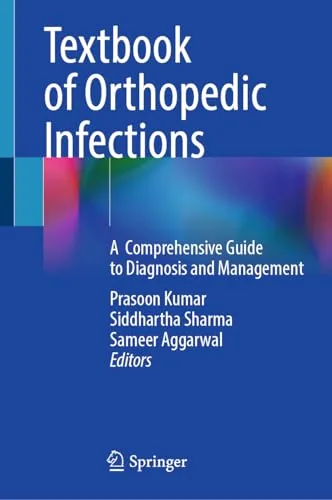
Edited by Prasoon Kumar, Siddhartha Sharma, Sameer Aggarwal
About this ebook
Textbook of Orthopedic Infections examines musculoskeletal infection through microbiology, imaging, pharmacology, and surgery. Edited by Prasoon Kumar, Siddhartha Sharma, and Sameer Aggarwal, it is intended for orthopedic trainees and clinicians studying osteomyelitis, septic arthritis, implant-related infection, and the diagnostic and management approaches associated with these conditions.
Inside this title
Osteomyelitis and septic arthritis classification, pathophysiology, and diagnostic assessment
Current listed price $38.99Regular price $109.00Digital ebook
The book considers infectious disease across bone, joints, implants, and orthopedic surgical sites. Classification and pathophysiology establish a basis for discussing osteomyelitis and septic arthritis, followed by diagnostic approaches that bring imaging together with microbiological investigation and molecular methods for identifying pathogens.
Treatment topics include antimicrobial selection, biofilms, resistance, and surgical debridement in acute and chronic infections. Periprosthetic joint infection receives attention through one-stage and two-stage revision approaches, while further discussions address implants used in trauma and spine surgery. The combination of diagnostic, pharmacological, and operative perspectives makes the volume relevant to specialist study and multidisciplinary discussion of complex musculoskeletal infection cases.
Study guide included
Inside Textbook of Orthopedic Infections.
A reference on infection in bone, joint, and implanted material, written for trainees and clinicians who manage these cases. Kumar, Sharma, and Aggarwal bring microbiology, imaging, antimicrobial pharmacology, and operative technique into one frame, so diagnosis and treatment are considered together across osteomyelitis, septic arthritis, and infections around orthopedic devices.
The volume is organized around the settings where musculoskeletal infection appears: bone, joints, implants, and surgical sites. Classification and pathophysiology establish terms and mechanisms, after which diagnostic chapters combine imaging with microbiological and molecular identification of organisms. Treatment discussions weigh antimicrobial selection against biofilm behavior and resistance, and place surgical debridement alongside medical therapy in acute and chronic disease. Periprosthetic joint infection is addressed through one-stage and two-stage revision strategies, with separate attention to implants used in trauma and spine surgery. The combined diagnostic, pharmacological, and operative perspective supports specialist study and multidisciplinary case discussion.
Classification and Pathophysiology
Clear categories come before treatment decisions. The text sets out how musculoskeletal infections are classified and how the underlying disease process unfolds in bone and joint tissue. These definitions give later chapters a shared vocabulary and explain why the same organism can produce very different clinical pictures.
Define the main infection categories
Describe pathophysiology in bone and joint
Connect mechanism with clinical presentation
Topic 1
Diagnosis: Imaging and Microbiology
Diagnosis draws on more than one source of evidence. Imaging is presented alongside microbiological investigation, with molecular methods added for pathogen identification. The chapter emphasizes assembling findings rather than relying on a single test, which matters when infection is low-grade or obscured by previous treatment.
Select appropriate imaging
Interpret microbiological investigation
Use molecular methods for identification
Topic 2
Osteomyelitis and Septic Arthritis
Two core conditions receive focused treatment. Osteomyelitis and septic arthritis are examined through their clinical course, diagnostic features, and the principles that guide management. Keeping them side by side helps readers compare how infection behaves in bone as opposed to joint space.
Recognize osteomyelitis presentations
Assess the septic joint
Compare management principles for each
Topic 3
Antimicrobials, Biofilms, and Resistance
Drug therapy is treated as a strategic problem rather than a prescription. The text considers antimicrobial selection while accounting for biofilm formation and resistance, both of which complicate treatment of device-associated infection. These factors explain why prolonged or combined therapy is sometimes required.
Choose antimicrobials with rationale
Explain how biofilms protect organisms
Account for resistance in planning therapy
Topic 4
Debridement in Acute and Chronic Infection
Surgical debridement is presented as a companion to medical treatment, with differences between acute and chronic settings. The chapter explains what debridement aims to achieve and why timing and thoroughness influence outcome. This gives the operative perspective equal weight with pharmacology.
State the goals of debridement
Distinguish acute from chronic management
Relate surgical timing to outcome
Topic 5
Periprosthetic Infection and Revision
Infection around a joint replacement is handled through revision strategy. One-stage and two-stage approaches are set out with their respective reasoning, allowing readers to see how patient and organism factors shape the choice. The discussion connects device infection to the broader themes of biofilm and resistance.
Compare one-stage and two-stage revision
Match strategy to clinical factors
Plan around device removal and reimplantation
Topics 6–7
Topic map
Classification and pathophysiology of musculoskeletal infectionTopic 1
Imaging, microbiology, and molecular diagnosisTopic 2
Osteomyelitis and septic arthritisTopic 3
Antimicrobial therapy, biofilms, and resistanceTopic 4
Surgical debridement in acute and chronic infectionTopic 5
Periprosthetic joint infection and revisionTopic 6
Implant infection in trauma and spine surgeryTopic 7
Key takeaways
Musculoskeletal infection is diagnosed by assembling imaging, microbiology, and clinical evidence rather than one test.
Biofilm and resistance change the calculus of antimicrobial therapy and often demand surgical adjuncts.
Revision strategy for an infected implant depends on patient, organism, and device factors considered together.
Orthopedic trainees and practicing clinicians who manage bone and joint infection, plus multidisciplinary teams involved in complex musculoskeletal cases.
Topics covered
orthopedic infections
osteomyelitis
septic arthritis
periprosthetic joint infection
biofilm
antimicrobial resistance
surgical debridement
implant infection
musculoskeletal infection
Questions about this ebook.
Edition, audience, and study-guide details at a glance.
What is Textbook of Orthopedic Infections about?
Textbook of Orthopedic Infections examines musculoskeletal infection through microbiology, imaging, pharmacology, and surgery. Edited by Prasoon Kumar, Siddhartha Sharma, and Sameer Aggarwal, it is intended for orthopedic trainees and clinicians studying osteomyelitis, septic arthritis, implant-related infection, and the diagnostic and management approaches associated with these conditions.
Who is Textbook of Orthopedic Infections for?
Orthopedic trainees and practicing clinicians who manage bone and joint infection, plus multidisciplinary teams involved in complex musculoskeletal cases.
Does this page include a study guide?
Yes. This page includes an original study guide with six thematic sections, key takeaways, and a topic map for structured reading.