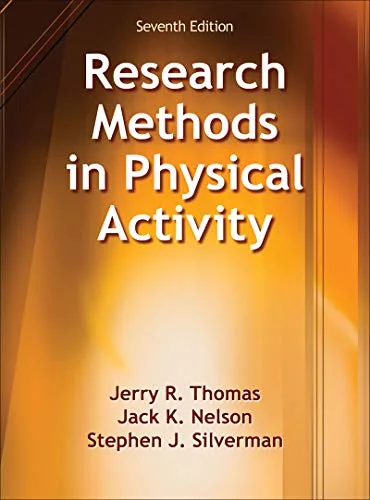
Research Methods in Physical Activity, 7th Edition
By Jerry R. Thomas, Jack K. Nelson, Stephen J. Silverman
About this ebook
Research Methods in Physical Activity, 7th Edition, introduces research design and analysis for exercise science, kinesiology, and physical education. Jerry R. Thomas, Jack K. Nelson, and Stephen J. Silverman cover quantitative, qualitative, and mixed methods, connecting questions and hypotheses with measurement, statistics, ethics, and research writing.
Inside this title
Physical activity examples connect research questions with study design
Current listed price $8.99Regular price $15.00Digital ebook
Physical activity research supplies the examples and problems for this methods text. Readers begin with defining a research problem, reviewing literature, and developing hypotheses before considering experimental, quasi-experimental, and descriptive designs. Measurement selection and validation connect the design of a study with the quality of the evidence it produces.
Statistical coverage includes analysis of variance, regression, and nonparametric methods. Qualitative approaches introduce interviews, observation, and content analysis, with mixed methods widening the range of possible designs. Ethical considerations and the preparation of proposals, reports, and manuscripts connect investigation with its communication. The book supports students planning studies and readers evaluating research in movement-related disciplines.
Study guide included
Inside Research Methods in Physical Activity, 7th Edition.
Thomas and colleagues help readers assemble physical activity research whose parts agree: a clear question, the participants involved, the instruments selected, the design adopted, and the conclusion offered. Laboratory, field, and archival approaches all receive attention, with steady emphasis on making the production of evidence visible.
Early chapters move through the research process and a literature search, then into designing a method and handling ethics, followed by statistics and measurement, then activity, sport, and behavior get examined. A closing part traces a project from its proposal to a published article. Every chapter stresses judgment: trust in a study grows when its evidence can be inspected and its interpretation bounded. Worked examples about running, golf, and campus recreation keep the material concrete and show where a design choice limits what can be claimed.
From curiosity to answerable question
A topic drawn from experience or theory becomes researchable once the group, the behavior, and the contrast are specified. Searching the literature shows where support exists and where evidence thins, and it reveals how earlier work measures and watches similar behavior. Precise definitions matter, and the authors separate assumptions from deliberate boundaries and limitations. Scoping choices, such as restricting an age band, shape what a project controls and how far its findings travel.
Name population, behavior, comparison
Map what the literature already shows
Separate assumptions from limitations
Part I, Chapters 1–3
Methods a reader can inspect
Recruitment, measurement, procedure, and protection need to cohere. The text asks researchers to describe who takes part, how people are recruited, what each condition involves, and the way records will be examined. It also urges thinking through how demanding a protocol is for the intended group, since a procedure that works with trained adults may fail elsewhere. Ethical duties, including consent, data storage, authorship, and misconduct, belong in the plan rather than being added later.
Describe each condition and record
Gauge burden for the group
Plan ethics before data collection
Part I, Chapters 4–5
What scores mean and how sure
Reliability asks whether a measure gives consistent scores; validity asks which conclusion those numbers can bear for a given population and purpose. In activity research, results may hinge on observers, instruments, and tasks, so agreement among testers and measurement error show why small shifts need context. The authors want distributions and spread described before hypothesis tests, and separate statistical surprise from practical importance, noting that power rests on design, variance, and group size.
Check consistency across raters
Ask what scores justify
Report effect and uncertainty
Part II, Chapters 6–7 and 11
Analysis that fits the design
Scatterplots should come first, since shape, spread, and outliers vanish once a pattern is squeezed into one figure. Regression uses measured variables to forecast an outcome, yet adjusting for covariates neither rules out rivals nor shows what a change would do. Comparisons pair observations or use separate groups, with variance analysis for several means, covariance methods for chosen predictors, and rank or count techniques for other structures. Say why that approach fits the design.
Plot the pattern before the number
Separate prediction from causation
Justify the method by design
Part II, Chapters 8–10
Traditions matched to the question
Surveys and observation record what people do or believe; population designs examine activity and outcome patterns where random allocation fails. Experiments sharpen comparison through allocation and control, quasi-experiments rely on other features to address rivals, and syntheses compare studies by stating how work was located. Qualitative work uses interviews, observation, and repeated coding to describe experience, while historical and philosophical inquiry reads sources and premises. Mixed methods need a plan for joining numbers with context.
Pick the tradition the question needs
Make search and selection explicit
Plan how strands will connect
Part III, Chapters 12–20
A report others can audit
A proposal turns a problem into steps a reader can assess: purpose, design rationale, data to gather, and how the analysis will resolve the question. Realistic planning exposes staffing, recruitment, gear, and paperwork. In the report, methods should let someone follow what was done, tables and figures should display results that matter without listing every figure, and the discussion should tie findings back to the original aim, admit limits, and keep results distinct from explanation.
Turn purpose into concrete steps
Show results that answer the aim
Keep findings apart from explanation
Part IV, Writing the Research Report
Chapter and section map
Overview of the Research ProcessPart I
Statistical and Measurement Concepts in ResearchPart II
Relationships of VariablesCh. 8
Measuring Research VariablesCh. 11
Types of ResearchPart III
Writing the Research ReportPart IV
Key takeaways
Decide what activity result matters before picking a tool or a test.
Weigh consistency and validity against the specific group, setting, and claim you intend.
State how big a difference is and where the design stops supporting interpretation.
Graduate and undergraduate students in kinesiology, exercise science, and physical education, along with practitioners who need to read studies critically or plan a first independent project.
Topics covered
research methods
physical activity
exercise science
study design
measurement validity
qualitative research
statistical analysis
research ethics
Questions about this ebook.
Edition, audience, and study-guide details at a glance.
What is Research Methods in Physical Activity, 7th Edition about?
Research Methods in Physical Activity, 7th Edition, introduces research design and analysis for exercise science, kinesiology, and physical education. Jerry R. Thomas, Jack K. Nelson, and Stephen J. Silverman cover quantitative, qualitative, and mixed methods, connecting questions and hypotheses with measurement, statistics, ethics, and research writing.
Which edition of Research Methods in Physical Activity, 7th Edition is this?
This listing is for the 7th edition. Check the title, ISBN, and book details above before ordering, especially if your course or reading list names a specific edition.
Who is Research Methods in Physical Activity, 7th Edition for?
Graduate and undergraduate students in kinesiology, exercise science, and physical education, along with practitioners who need to read studies critically or plan a first independent project.
Does this page include a study guide?
Yes. This page includes an original study guide with six thematic sections, key takeaways, and a chapter and section map for structured reading.