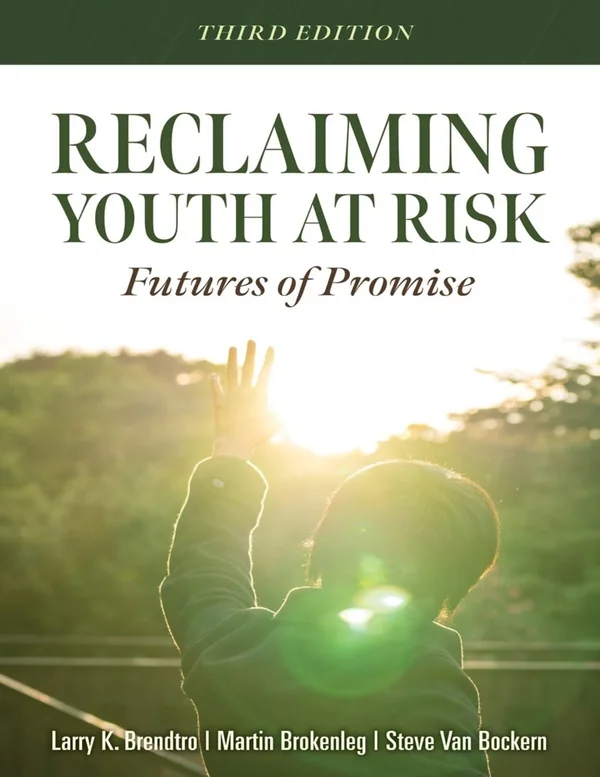
Reclaiming Youth at Risk: Futures of Promise, 3rd Edition
By Larry K. Brendtro, Martin Brokenleg, Steve Van Bockern
About this ebook
Reclaiming Youth at Risk: Futures of Promise, Third Edition, presents the Circle of Courage framework for supporting young people experiencing adversity. Larry K. Brendtro, Martin Brokenleg, and Steve Van Bockern connect belonging, mastery, independence, and generosity with Indigenous perspectives, resilience research, trauma, and strengths-focused youth development for educators and practitioners.
Inside this title
Circle of Courage values of belonging, mastery, independence, generosity
Current listed price $8.00Regular price $13.00Digital ebook
The Circle of Courage supplies four organizing values for this discussion of youth development: belonging, mastery, independence, and generosity. The authors connect these values with Native American perspectives and research on resilience, considering how relationships and environments shape a young person's sense of competence, responsibility, and connection.
The third edition brings trauma, brain development, and culturally responsive practice into the framework. Examples examine building trust, responding to conflict, and creating classrooms or programs that recognize strengths and opportunities to contribute. Educators, counselors, and youth workers can use the book to reflect on how organizational expectations and everyday interactions support participation, learning, and agency among young people facing difficulty.
Study guide included
Inside Reclaiming Youth at Risk: Futures of Promise, 3rd Edition.
Young people in difficulty are not problems to be managed but strengths to be reclaimed. The Circle of Courage names four values, belonging, mastery, independence and generosity, and shows how homes, classrooms and programs can either nourish them or damage them.
Brendtro, Brokenleg and Van Bockern build their framework from Native American perspectives and from research on resilience, then apply it to the everyday work of adults who raise, teach and counsel young people. Each of the four values is examined for what it contributes to a young person's sense of connection, competence, responsibility and worth. The third edition adds trauma, brain development and culturally responsive practice, and it turns repeatedly to concrete situations: earning trust, handling conflict, and designing settings where contribution is possible. The tone is hopeful without being sentimental, and the book asks practitioners to examine their own expectations and routines as part of the environment a child experiences.
The Circle of Courage
The framework organizes youth development around four values that are treated as fundamental needs rather than optional virtues. Belonging, mastery, independence and generosity are presented as interconnected, so weakness in one area tends to show up in the others.
Four values form one framework
The values interact rather than stand alone
They describe needs, not rewards
Topic 1
Belonging
Belonging concerns the experience of being accepted and valued by a group. The text considers how exclusion, disrupted relationships and unstable settings erode it, and what adults can do to rebuild trust with young people who have learned not to expect it.
Belonging is a basic developmental need
Exclusion and instability erode trust
Rebuilding connection takes consistency
Topic 2
Mastery
Mastery is the sense of growing competence that comes from meeting real challenges. The discussion warns against both hollow praise and tasks so easy they teach nothing, arguing that young people need genuine opportunities to develop skill.
Competence grows from real challenge
Empty praise does not build mastery
Skill develops through practice
Topic 3
Independence
Independence involves developing judgment and a measure of control over one's life. The authors connect it to responsibility rather than self-sufficiency alone, and they examine how rules and expectations can either support autonomy or provoke resistance.
Independence grows with responsibility
Control and choice support autonomy
Rigid rules can invite resistance
Topic 4
Generosity
Generosity gives young people a chance to contribute rather than only receive help. The text treats it as a source of worth and connection, since being useful to others counters the sense of being a burden that many troubled youth carry.
Contribution builds a sense of worth
Helping others counters being seen as a burden
Generosity connects the other values
Topic 5
Trauma, culture and environments of promise
The third edition brings trauma, brain development and cultural responsiveness into the framework. It asks practitioners to consider how stress affects learning and behavior, and to design classrooms and programs where recognition, safety and contribution are built into daily routines.
Trauma shapes learning and behavior
Culturally responsive practice matters
Environments can be designed for strengths
Topics 6-7
Topic map
The Circle of Courage FrameworkTopic 1
Belonging and ConnectionTopic 2
Mastery and CompetenceTopic 3
Independence and ResponsibilityTopic 4
Generosity and ContributionTopic 5
Trauma and Brain DevelopmentTopic 6
Culturally Responsive Practice and EnvironmentsTopic 7
Key takeaways
The four Circle of Courage values are interdependent, so work on one area usually touches the others.
Strengths-based practice means creating real chances for competence and contribution, not just offering encouragement.
The third edition asks practitioners to look at their own settings and routines as part of a young person's environment.
Educators, counselors, youth workers and administrators who support young people facing adversity, and students studying positive youth development and culturally responsive practice.
Topics covered
Reclaiming Youth at Risk 3rd Edition
Circle of Courage
Brendtro Brokenleg Van Bockern
belonging mastery independence generosity
resilience in youth
trauma-informed practice
culturally responsive youth work
positive youth development
Questions about this ebook.
Edition, audience, and study-guide details at a glance.
What is Reclaiming Youth at Risk: Futures of Promise, 3rd Edition about?
Reclaiming Youth at Risk: Futures of Promise, Third Edition, presents the Circle of Courage framework for supporting young people experiencing adversity. Larry K. Brendtro, Martin Brokenleg, and Steve Van Bockern connect belonging, mastery, independence, and generosity with Indigenous perspectives, resilience research, trauma, and strengths-focused youth development for educators and practitioners.
Which edition of Reclaiming Youth at Risk: Futures of Promise, 3rd Edition is this?
This listing is for the 3rd edition. Check the title, ISBN, and book details above before ordering, especially if your course or reading list names a specific edition.
Who is Reclaiming Youth at Risk: Futures of Promise, 3rd Edition for?
Educators, counselors, youth workers and administrators who support young people facing adversity, and students studying positive youth development and culturally responsive practice.
Does this page include a study guide?
Yes. This page includes an original study guide with six thematic sections, key takeaways, and a topic map for structured reading.