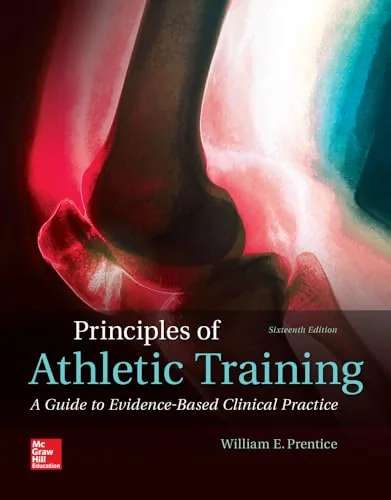
Principles of Athletic Training, sixteenth edition, examines injury prevention, evaluation, management, and rehabilitation within an evidence-based practice framework. William E. Prentice links research, clinical judgment, and patient considerations with sports injury care. Athletic training students and related sports medicine learners encounter conditioning, therapeutic modalities, nutrition, documentation, and professional responsibilities.
Inside this title
Injury prevention, conditioning, protective equipment, and environmental risk
Current listed price $10.99Regular price $20.00Digital ebook
Foundational chapters establish the athletic trainer's role before moving into prevention, conditioning, protective equipment, and environmental risk. Injury evaluation follows a systematic approach across the extremities, spine, and head, with SOAP documentation supporting the organization of findings. Acute injuries and chronic overuse conditions appear within this broader process of assessment and management.
Rehabilitation coverage addresses therapeutic exercise and modalities including cold, heat, electrical stimulation, and ultrasound. Nutrition, legal responsibilities, informed consent, and ethical questions extend the focus beyond physical treatment techniques. The sixteenth edition is designed for athletic training education and provides sports medicine and exercise science students with a connected account of the decisions involved in injury care.
Study guide included
Inside Principles of Athletic Training: A Guide to Evidence-Based Clinical Practice, 16th Edition.
Prentice treats athletic training as continuous care rather than a single event: prevention, acute response, structured evaluation, rehabilitation, and a considered return to sport. The sixteenth edition ties each decision to research evidence, clinical judgment, and the circumstances of the person being cared for, across school, clinic, and worksite settings.
Six parts move from professional scope and program administration into risk reduction, tissue injury, emergency care, and rehabilitation. Prevention chapters weigh fitness, conditioning, nutrition, environment, and protective equipment against the demands of a given activity. Evaluation chapters separate the on-field primary survey from the off-field examination. Regional chapters move from the foot and shin through the knee and hip, then the shoulder, arm, and spine, applying the same reasoning, and closing chapters widen attention to illness, skin, and general medical concerns. A classroom simulation about an ankle return shows how functional observations are weighed.
Scope, ethics and program planning
The opening chapters define who athletic trainers are, where they work, and how their duties shift with population, resources, and legal scope. Continuity depends on working links with doctors and other providers. Administration covers facilities, staffing, records, injury surveillance, insurance, and documented responsibility, so that a plan names who responds where and how information travels to the next service.
Define scope before assigning duties
Write down who answers at each venue
Review incident records for patterns
Part I, Chapters 1–3
Screening, conditioning and environmental load
Preparation begins with screening and an honest picture of what the sport demands. Strength, mobility, endurance, skill, and nutrition are trained with planned load changes so the body adapts rather than breaks down. Warm weather, cold, thin air, and travel alter the cost of the same session and may force different scheduling. Braces, strapping, and taping help only when fit, placement, and the movement pattern suit the task.
Judge exposure, not fitness alone
Change load in planned steps
Reassess when conditions shift
Part II, Chapters 4–8
Force, tissue and the healing timeline
Trauma can arrive as one sudden force or as accumulated repetition, and nerve, tendon, muscle, ligament, and bone each answer differently. Direction, timing, and how often the load repeats narrow which structures deserve attention, though mechanism alone never settles a diagnosis. Inflammation and repair progress unevenly in soft tissue and in bone. Symptom onset, later change, and activity response help separate a single event from a gradual problem.
Use mechanism to choose questions
Date the onset and each change
Leave mechanism short of diagnosis
Part III, Chapters 9–10
Emergency plans and systematic examination
On-field care puts the written emergency plan ahead of any single evaluation, and the first survey clears urgent threats before a second pass gathers detail once conditions permit. Roles, communication, and ambulance access belong to the plan and need rehearsal. Off the field, history taking, inspection, palpation, movement, strength, and special tests each add a piece, but every test carries limits in consistency, accuracy, and how results are read.
Rehearse roles before the season
Clear threats before detail
Record uncertainty, not just findings
Part IV, Chapters 12–14
Modalities, exercise and return decisions
Therapeutic modalities and exercise are chosen for a stated purpose: easing discomfort, restoring range, building strength, or rehearsing a job-specific movement, matched to the stage of healing. A written plan states the target and its measurement, so the team can adjust when results diverge. Readiness is not read from one strength number or a calendar. Functional performance, symptoms, sport demands, and the athlete's fear or frustration all matter.
Tie each modality to a goal
Measure the change you promised
Ask about hesitation, not just pain
Part IV, Chapters 11 and 15–17
Regional anatomy and wider medical concerns
Regional chapters move from the foot and lower leg through the knee and hip, then shoulder, elbow, wrist, and spine, linking anatomy, common mechanisms, examination findings, and management choices. Because different tissues can produce a similar complaint, the explanation must fit both mechanism and findings. The final part adds head and face, chest and abdomen, skin, infection precautions, and other general conditions, since participation problems are not always injuries.
Fit the story to the anatomy
Consider illness behind a complaint
Document what needs another professional
Parts V–VI, Chapters 18–29
Chapter and section map
The Athletic Trainer as a Health Care Providerp. 2
Environmental Considerationsp. 158
Mechanisms and Characteristics of Musculoskeletal and Nerve Traumap. 246
On-the-Field Acute Care and Emergency Proceduresp. 305
Off-the-Field Injury Evaluationp. 344
Using Therapeutic Exercise in Rehabilitationp. 430
The Ankle and Lower Legp. 545
Additional General Medical Conditionsp. 926
Key takeaways
Draft an emergency plan for each venue, naming roles, communication, and access before anyone needs it.
Let the injury mechanism guide your questions, then test the explanation against examination findings.
Set functional observations beside real participation demands and let the care team decide the next stage.
Athletic training and sports medicine students, plus practicing clinicians who want an evidence-based framework for prevention, sideline response, evaluation, rehabilitation, and referral across school, clinic, and industrial settings.
Topics covered
athletic training
sports injury
injury prevention
clinical evaluation
therapeutic modalities
injury rehabilitation
emergency action plan
evidence-based practice
Questions about this ebook.
Edition, audience, and study-guide details at a glance.
What is Principles of Athletic Training: A Guide to Evidence-Based Clinical Practice, 16th Edition about?
Principles of Athletic Training, sixteenth edition, examines injury prevention, evaluation, management, and rehabilitation within an evidence-based practice framework. William E. Prentice links research, clinical judgment, and patient considerations with sports injury care. Athletic training students and related sports medicine learners encounter conditioning, therapeutic modalities, nutrition, documentation, and professional responsibilities.
Which edition of Principles of Athletic Training: A Guide to Evidence-Based Clinical Practice, 16th Edition is this?
This listing is for the 16th edition. Check the title, ISBN, and book details above before ordering, especially if your course or reading list names a specific edition.
Who is Principles of Athletic Training: A Guide to Evidence-Based Clinical Practice, 16th Edition for?
Athletic training and sports medicine students, plus practicing clinicians who want an evidence-based framework for prevention, sideline response, evaluation, rehabilitation, and referral across school, clinic, and industrial settings.
Does this page include a study guide?
Yes. This page includes an original study guide with six thematic sections, key takeaways, and a chapter and section map for structured reading.