Models of Grief
Several theoretical lenses are offered so that counselors can choose among explanations rather than rely on one account of bereavement.
- Attachment and loss
- The dual process model
- Meaning-making and continuing bonds
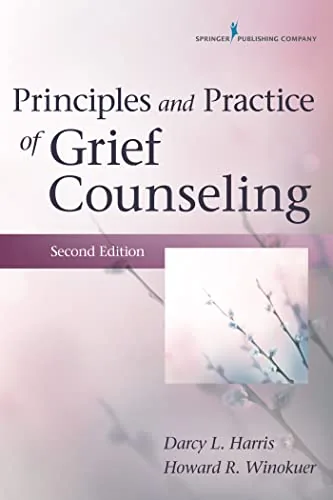
Principles and Practice of Grief Counseling, Second Edition, links bereavement theory with counseling assessment and intervention. Darcy L. Harris and Howard R. Winokuer address individual, family, and group work, cultural and ethical questions, and practitioner self-care for counseling students, mental health professionals, and others providing support around loss.
Digital ebook. No physical book.
Loss and bereavement are examined through both counseling psychology and grief studies in this introductory text. Attachment theory, the dual process model, and meaning-making approaches give readers different ways to understand responses to loss. The authors relate these models to assessment and the selection of counseling interventions.
Attention to ethical responsibilities and cultural context accompanies the discussion of work with individuals, families, and groups. The book also considers the experience of the practitioner, including compassion fatigue, vicarious trauma, and self-care. It is suited to undergraduate and graduate teaching as well as reference for counselors, social workers, hospice staff, chaplains, and community bereavement facilitators.
Bereavement counseling grounded in theory and practice. Darcy L. Harris and Howard R. Winokuer relate attachment, dual process, and meaning-making models to assessment and intervention with individuals, families, and groups, while addressing cultural context, ethical duties, and the toll that loss work takes on practitioners.
The book introduces bereavement work through counseling psychology and grief studies. Attachment theory, the dual process model, and meaning-making approaches give readers several lenses for understanding how people respond to loss. Those lenses are then connected to assessment and to choosing interventions. Individual, family, and group formats each receive attention, with cultural context and ethical responsibilities treated as part of competent practice. A further strand concerns the practitioner: compassion fatigue, vicarious trauma, and self-care are discussed as occupational realities rather than afterthoughts. The result is an introductory teaching text that also serves as a reference for people already supporting the bereaved.
Several theoretical lenses are offered so that counselors can choose among explanations rather than rely on one account of bereavement.
Assessment is presented as the bridge between theory and intervention, requiring attention to the person's situation and resources.
Work with individuals is described through relationship building and interventions suited to the client's needs.
Loss affects relationships, so counseling may involve families and groups where shared meaning and communication are addressed.
Cultural context and ethical responsibilities are treated as integral to competent practice rather than separate topics.
The counselor's own exposure to loss and distress is acknowledged as part of the work.
Counseling students, mental health professionals, social workers, hospice staff, chaplains, and community bereavement facilitators.
Edition, audience, and study-guide details at a glance.
Principles and Practice of Grief Counseling, Second Edition, links bereavement theory with counseling assessment and intervention. Darcy L. Harris and Howard R. Winokuer address individual, family, and group work, cultural and ethical questions, and practitioner self-care for counseling students, mental health professionals, and others providing support around loss.
This listing is for the 2nd edition. Check the title, ISBN, and book details above before ordering, especially if your course or reading list names a specific edition.
Counseling students, mental health professionals, social workers, hospice staff, chaplains, and community bereavement facilitators.
Yes. This page includes an original study guide with six thematic sections, key takeaways, and a topic map for structured reading.
More books from this subject area.