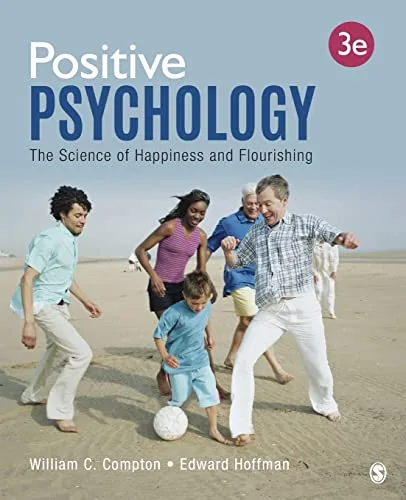
Positive Psychology: The Science of Happiness and Flourishing, 3rd Edition
By William C. Compton, Edward Hoffman
About this ebook
Positive Psychology: The Science of Happiness and Flourishing, 3rd Edition, surveys research on well-being, positive emotions, strengths, and meaningful lives. William C. Compton and Edward Hoffman connect individual happiness with relationships, culture, and institutions. The text supports psychology students and counseling professionals examining the theories, evidence, and applications of positive psychology.
Inside this title
Happiness and flourishing are examined through psychological theory and research
Current listed price $13.99Regular price $25.00Digital ebook
The scientific study of flourishing supplies the organizing question for this psychology text. Historical foundations and major theories lead into research on life satisfaction, optimism, gratitude, hope, character strengths, and resilience. Explanations consider the roles of personal circumstances, individual differences, and intentional activities in accounts of well-being.
The scope extends beyond individuals to relationships, communities, workplaces, and other institutions. Cultural variations and clinical applications provide contexts for examining both the possibilities and limitations of positive psychology. Case studies, self-assessment questionnaires, and reflection exercises invite engagement with the material. The book is suited to undergraduate or graduate study and to counseling readers exploring research on human strengths.
Study guide included
Inside Positive Psychology: The Science of Happiness and Flourishing, 3rd Edition.
Compton and Hoffman survey the scientific study of flourishing, from life satisfaction and positive emotions to character strengths, resilience and meaning. Individual well-being is placed within relationships, culture and institutions, so happiness is examined as a researched phenomenon rather than a self-help promise.
The organizing question is what makes a life go well, and the book answers it with theory and evidence. Historical foundations lead into major models of well-being, then into research on life satisfaction, optimism, gratitude, hope and resilience. The text distinguishes circumstances, individual differences and intentional activity as contributors, which keeps the discussion from reducing well-being to temperament. The scope widens from individuals to relationships, communities, workplaces and institutions, since flourishing is shaped by settings as well as traits. Cultural variation and clinical applications test the limits of the findings. Cases, questionnaires and reflection exercises make the material active, and the result suits both coursework and counseling readers.
Foundations and Major Theories
The book opens with the history and central theories of positive psychology, establishing what the field studies and how it differs from earlier psychology's focus on dysfunction. These frameworks organize everything that follows.
The field studies flourishing, not only disorder
Theories define what well-being means
History explains the field's questions
Topic 1
Positive Emotions and Satisfaction
Positive emotions and life satisfaction are examined through research rather than assertion. The book asks what these experiences involve, how they are measured, and what evidence supports their role in a good life.
Positive emotions are studied empirically
Satisfaction is measured, not assumed
Evidence qualifies common claims
Topic 2
Optimism, Gratitude and Hope
Optimism, gratitude and hope are treated as distinct constructs with their own research traditions. The book connects them to well-being while noting that each has limits and conditions.
Each construct has its own evidence base
They overlap but are not identical
Benefits depend on context
Topic 3
Strengths and Resilience
Character strengths and resilience shift attention from feeling good to functioning well. The book examines how strengths are identified and how people recover from adversity, without treating resilience as unlimited.
Strengths describe capacities
Resilience involves recovery under stress
Neither is purely innate
Topic 4
Relationships and Institutions
Well-being is situated in relationships, communities, workplaces and institutions. The book argues that flourishing is social as well as personal, which changes what interventions might target.
Relationships shape well-being
Institutions set conditions
Flourishing is not purely individual
Topics 5–6
Culture, Practice and Limits
Cultural variation and clinical application test the field's claims. The book considers where positive psychology travels well and where it needs qualification, and uses exercises and cases to make reflection part of the study.
Culture affects what counts as flourishing
Clinical use requires caution
Reflection exercises engage the reader
Topics 6–7
Topic map
Foundations and Major TheoriesTopic 1
Positive Emotions and Life SatisfactionTopic 2
Optimism, Gratitude and HopeTopic 3
Character Strengths and ResilienceTopic 4
Relationships and Community Well-BeingTopic 5
Culture and Clinical ApplicationsTopic 6
Self-Assessment and ReflectionTopic 7
Key takeaways
Treat well-being claims as research questions, not prescriptions.
Notice the distinction between circumstances, disposition and intentional activity.
Use the questionnaires and cases to test ideas against your own experience.
Psychology students and counseling professionals who want a research-based survey of well-being, strengths and flourishing.
Topics covered
positive psychology
science of happiness
flourishing
character strengths
resilience
gratitude and optimism
well-being research
Compton Hoffman
Questions about this ebook.
Edition, audience, and study-guide details at a glance.
What is Positive Psychology: The Science of Happiness and Flourishing, 3rd Edition about?
Positive Psychology: The Science of Happiness and Flourishing, 3rd Edition, surveys research on well-being, positive emotions, strengths, and meaningful lives. William C. Compton and Edward Hoffman connect individual happiness with relationships, culture, and institutions. The text supports psychology students and counseling professionals examining the theories, evidence, and applications of positive psychology.
Which edition of Positive Psychology: The Science of Happiness and Flourishing, 3rd Edition is this?
This listing is for the 3rd edition. Check the title, ISBN, and book details above before ordering, especially if your course or reading list names a specific edition.
Who is Positive Psychology: The Science of Happiness and Flourishing, 3rd Edition for?
Psychology students and counseling professionals who want a research-based survey of well-being, strengths and flourishing.
Does this page include a study guide?
Yes. This page includes an original study guide with six thematic sections, key takeaways, and a topic map for structured reading.