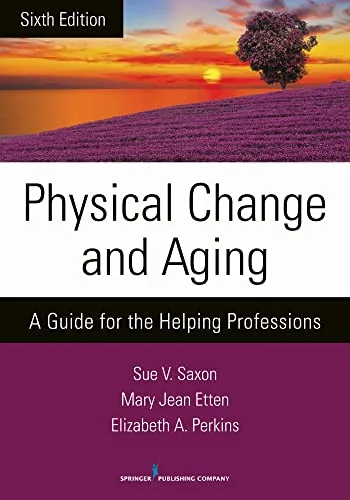
Cover of Physical Change and Aging: A Guide for the Helping Professions, 6th Edition

Physical Change and Aging: A Guide for the Helping Professions, 6th Edition

By Sue V. Saxon, Mary Jean Etten, Elizabeth A. Perkins

About this ebook

Physical Change and Aging, 6th Edition, explains bodily changes in later life for students and practitioners in the helping professions. Sue V. Saxon, Mary Jean Etten, and Elizabeth A. Perkins connect normal aging with common disorders, functional assessment, and psychosocial effects. Body-system organization links biological concepts with interdisciplinary care concerns.

Inside this title
  • Normal aging and common disorders organized by body system
Current listed price $30.99Regular price $75.00Digital ebook
Buy now

Digital ebook. Checkout sends an order request.

Format
Digital ebook
ISBN
9780826198655
Last updated
2026-11-03

What this book covers.

The text distinguishes expected physical changes of aging from disorders that may occur in later life. Its body-system chapters address biological processes, related conditions, preventive considerations, and the implications for daily functioning. Examples include sensory loss, arthritis, osteoporosis, and dementia.

The discussion extends beyond physiology to independence, identity, communication, and emotional wellbeing. Functional assessment and interdisciplinary perspectives help connect a physical change with the broader experience of an older adult and their family. Ethical and cultural questions also receive attention. The sixth edition suits nursing, gerontology, social work, and other helping-profession courses, offering a structured basis for studying the relationships among physical changes, everyday functioning, and support needs.
Study guide included

Inside Physical Change and Aging: A Guide for the Helping Professions, 6th Edition.

Later life brings bodily change, but not every change is disease. Saxon, Etten and Perkins separate expected aging from conditions that need attention, then trace the consequences for function, independence and care. The result is a body-system guide written for the people who support older adults.

The text is organized by body system, and each section pairs normal age-related change with disorders that become more common in later life. Sensory loss, arthritis, osteoporosis and dementia serve as recurring examples, and functional consequences are kept in view rather than left implicit. Nutrition, exercise and fall prevention appear as practical concerns tied to physical capacity. Assessment and interdisciplinary perspectives connect a clinical finding to the older person's daily life and family situation. Psychosocial effects, cultural considerations, communication and ethical questions receive separate attention. The sixth edition is designed for nursing, gerontology, social work and related courses, giving students a structured basis for understanding support needs.

Normal aging versus disorder

The book's central distinction is between changes that belong to aging and conditions that require assessment or treatment. Making that distinction prevents both over-medicalizing ordinary change and dismissing symptoms that signal disease. The comparison recurs in every body-system chapter.

  • Expected change differs from disease
  • Avoid over-medicalizing normal aging
  • Do not dismiss symptoms of disorder
Topic 1

Body-system changes and common conditions

Chapters follow the body's systems and pair biological processes with related conditions. Sensory loss, arthritis, osteoporosis and dementia illustrate how a system's change affects the person beyond the organ involved. Each chapter links mechanism to the practical consequences that caregivers observe.

  • Change is organized by body system
  • Conditions are tied to biological processes
  • Effects extend beyond the affected organ
Topics 2-5

Function, independence and daily life

Physical change matters through what it enables or prevents. The text connects findings to functional assessment, asking how sensory, musculoskeletal and cognitive changes affect everyday tasks. Independence is treated as a practical outcome shaped by environment and support, not a simple yes-or-no status.

  • Function translates change into daily consequence
  • Assessment documents capability
  • Independence depends on environment and support
Topic 6

Nutrition, exercise and fall prevention

These topics appear as practical responses to physical change rather than separate advice columns. Nutrition and exercise are related to maintaining capacity, while fall prevention addresses a common pathway from change to injury. The guidance stays connected to the body-system material that explains why each matters.

  • Nutrition supports physical capacity
  • Exercise relates to maintained function
  • Fall prevention targets a common injury pathway
Topic 6

Psychosocial and emotional dimensions

Aging is not only physical. The book considers identity, emotional wellbeing, family roles and the social meaning of change. These dimensions affect how a person experiences a condition and how they accept help, so they belong in the same account as physiology rather than in a separate chapter of sentiment.

  • Identity and emotion shape experience
  • Family roles change with health
  • Social meaning affects acceptance of help
Topic 7

Communication, culture and ethics

Working with older adults requires communication adapted to sensory and cognitive change. Cultural expectations shape how aging, family duty and care are understood, and ethical questions arise around autonomy, consent and support. The book treats these as professional competencies, not peripheral considerations.

  • Adapt communication to sensory change
  • Culture shapes expectations of care
  • Ethics surround autonomy and consent
Topic 8

Topic map

  • Normal Aging and DiseaseTopic 1
  • Sensory ChangesTopic 2
  • Musculoskeletal ConditionsTopic 3
  • Cardiovascular and Other SystemsTopic 4
  • Cognitive Change and DementiaTopic 5
  • Nutrition, Exercise and Fall PreventionTopic 6
  • Functional Assessment and IndependenceTopic 7
  • Communication, Culture and EthicsTopic 8

Key takeaways

  • Distinguish expected aging from disorder before deciding what a change requires.
  • Trace physical findings to functional consequences for daily living and independence.
  • Treat communication, culture and ethics as core skills in supporting older adults.

Nursing, gerontology, social work and allied health students, plus practitioners in helping professions who support older adults and their families.

Topics covered

  • physical change and aging
  • normal aging
  • gerontology
  • dementia care
  • functional assessment
  • fall prevention
  • older adult care
  • interdisciplinary support

Questions about this ebook.

Edition, audience, and study-guide details at a glance.

What is Physical Change and Aging: A Guide for the Helping Professions, 6th Edition about?

Physical Change and Aging, 6th Edition, explains bodily changes in later life for students and practitioners in the helping professions. Sue V. Saxon, Mary Jean Etten, and Elizabeth A. Perkins connect normal aging with common disorders, functional assessment, and psychosocial effects. Body-system organization links biological concepts with interdisciplinary care concerns.

Which edition of Physical Change and Aging: A Guide for the Helping Professions, 6th Edition is this?

This listing is for the 6th edition. Check the title, ISBN, and book details above before ordering, especially if your course or reading list names a specific edition.

Who is Physical Change and Aging: A Guide for the Helping Professions, 6th Edition for?

Nursing, gerontology, social work and allied health students, plus practitioners in helping professions who support older adults and their families.

Does this page include a study guide?

Yes. This page includes an original study guide with six thematic sections, key takeaways, and a topic map for structured reading.

Keep your curiosity going.

More books from this subject area.

More medicine & health sciences ebooks

Enter your name and email to open a WhatsApp message with your details.