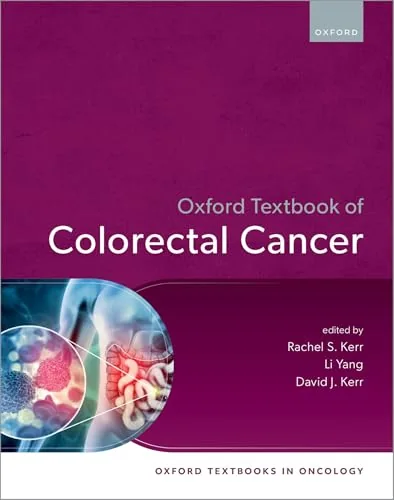
Oxford Textbook of Colorectal Cancer examines the disease from epidemiology and molecular development through diagnosis, multidisciplinary treatment, and survivorship. Edited by Rachel S. Kerr, Li Yang, and David J. Kerr, it connects tumor biology with clinical decisions. The volume is intended for oncology trainees, specialist clinicians, and researchers studying colorectal cancer care.
Inside this title
Connects colorectal tumor biology with screening and clinical decisions
Current listed price $33.99Regular price $98.00Digital ebook
The biological discussion follows pathways from normal epithelium to malignancy, including the adenoma-carcinoma sequence, molecular subtypes, genomic instability, and the tumor microenvironment. Epidemiology and screening place these mechanisms within a wider account of how colorectal cancer develops and is detected. Chapters connect underlying science with questions encountered in clinical work.
Treatment coverage brings surgery, radiotherapy, chemotherapy, targeted agents, and immunotherapy into a multidisciplinary framework. Minimally invasive procedures and metastatic disease are considered alongside follow-up, quality of life, and survivorship. The book gives trainees a structured route through interconnected subjects and offers specialists material for reviewing the contributions of different disciplines. Researchers can examine how biological findings relate to the treatment approaches discussed in the volume.
Study guide included
Inside Oxford Textbook of Colorectal Cancer.
Kerr, Yang, and Kerr follow colorectal cancer from its molecular origins through screening, diagnosis, treatment, and life after treatment. The volume keeps tumor biology and clinical decisions in the same frame, showing how a multidisciplinary team assembles surgery, radiotherapy, systemic therapy, and supportive care.
The book begins with how colorectal cancer develops. The adenoma-carcinoma sequence, molecular subtypes, genomic instability, and the tumor microenvironment are described as mechanisms that shape the disease. Epidemiology and screening then place those mechanisms in a population context. Diagnosis and staging connect findings to treatment decisions. The therapeutic sections bring surgery, radiotherapy, chemotherapy, targeted agents, and immunotherapy into a multidisciplinary plan, with minimally invasive procedures and metastatic disease given their own attention. Later chapters address follow-up, quality of life, and survivorship, so the volume does not stop at treatment. Trainees gain a sequence through connected subjects, and specialists can review how disciplines contribute.
Epidemiology and screening
Population-level patterns and screening programs frame the clinical material. The book situates colorectal cancer within a wider account of who develops it and how it is detected. Screening is treated as a pathway into earlier diagnosis.
Epidemiology describes who is affected
Screening aims at earlier detection
Detection feeds into the diagnostic pathway
Topic 1
Molecular development and tumor biology
The biological section follows the path from normal epithelium to malignancy. The adenoma-carcinoma sequence, molecular subtypes, genomic instability, and the tumor microenvironment are used to explain differences in behavior. These mechanisms recur when treatment is discussed.
The adenoma-carcinoma sequence describes progression
Molecular subtypes differentiate tumors
Genomic instability and the microenvironment shape biology
Topic 2
Diagnosis and staging
Diagnosis translates symptoms and findings into a defined problem. Staging then establishes how far the disease has progressed, which determines the treatment options. The text keeps that link explicit so the biology informs clinical choices.
Diagnosis defines the clinical problem
Staging establishes disease extent
Stage guides treatment selection
Topic 3
Multidisciplinary treatment
Treatment is presented as a combined effort rather than a single modality. Surgery, radiotherapy, chemotherapy, targeted agents, and immunotherapy each have a role, and coordination determines the plan. Minimally invasive procedures sit within that larger framework.
Surgery, radiotherapy, and systemic therapy are combined
Targeted agents and immunotherapy extend the options
Coordination across disciplines shapes the plan
Topics 4–5
Metastatic disease
Metastatic disease receives separate treatment because its management differs from localized cancer. The book considers how the available modalities are applied when the disease has spread. Biology and clinical judgment meet again in these decisions.
Metastatic disease follows a different treatment logic
Systemic therapy plays a larger role
Decisions combine biology and clinical judgment
Topic 6
Survivorship and quality of life
The volume continues past active treatment into follow-up and survivorship. Quality of life and long-term care are treated as legitimate parts of the disease journey. This closing material broadens the definition of successful management.
Follow-up is part of ongoing care
Quality of life is a treatment consideration
Survivorship extends beyond active therapy
Topic 7
Topic map
Epidemiology and ScreeningTopic 1
Molecular Development and Tumor BiologyTopic 2
Diagnosis and StagingTopic 3
Surgery and Minimally Invasive ApproachesTopic 4
Radiotherapy and Systemic TherapyTopic 5
Metastatic DiseaseTopic 6
Survivorship and Quality of LifeTopic 7
Key takeaways
Biology is not background here; it drives the treatment discussion.
The multidisciplinary plan, not any single modality, is the unit of care.
Survivorship and quality of life are part of the clinical account.
Oncology trainees, specialist clinicians, and researchers studying colorectal cancer care who want an integrated view of biology, diagnosis, treatment, and survivorship.
Topics covered
colorectal cancer
tumor biology
screening and diagnosis
multidisciplinary treatment
targeted therapy and immunotherapy
metastatic disease
survivorship
quality of life
Questions about this ebook.
Edition, audience, and study-guide details at a glance.
What is Oxford Textbook of Colorectal Cancer about?
Oxford Textbook of Colorectal Cancer examines the disease from epidemiology and molecular development through diagnosis, multidisciplinary treatment, and survivorship. Edited by Rachel S. Kerr, Li Yang, and David J. Kerr, it connects tumor biology with clinical decisions. The volume is intended for oncology trainees, specialist clinicians, and researchers studying colorectal cancer care.
Who is Oxford Textbook of Colorectal Cancer for?
Oncology trainees, specialist clinicians, and researchers studying colorectal cancer care who want an integrated view of biology, diagnosis, treatment, and survivorship.
Does this page include a study guide?
Yes. This page includes an original study guide with six thematic sections, key takeaways, and a topic map for structured reading.