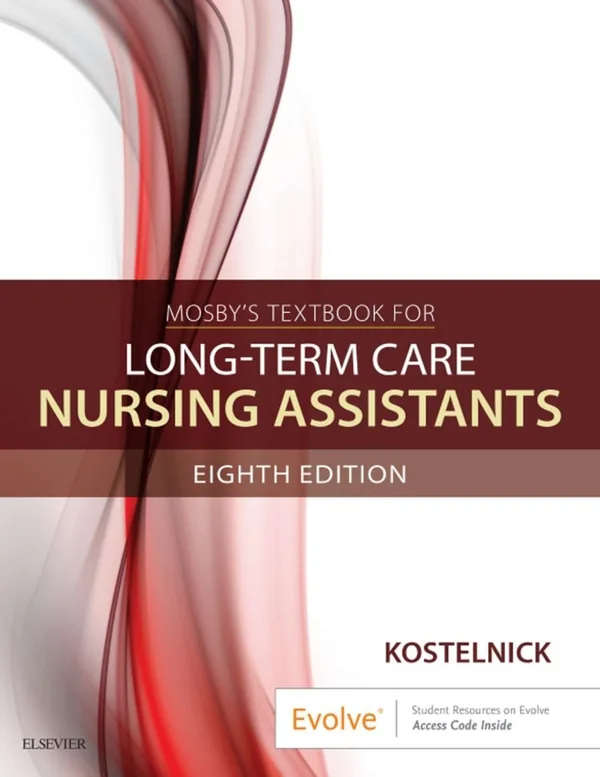
Mosby's Textbook for Long-Term Care Nursing Assistants, 8th Edition
By Clare Kostelnick
About this ebook
Mosby's Textbook for Long-Term Care Nursing Assistants, Eighth Edition, introduces resident care and the responsibilities of nursing assistants in long-term care settings. Clare Kostelnick covers personal care, mobility, safety, infection control, communication, and residents' rights for students and staff, using illustrated explanations and step-by-step procedures to support practical learning.
Inside this title
Personal care procedures for bathing, grooming, feeding, and mobility
Current listed price $18.99Regular price $32.00Digital ebook
Resident needs and everyday care tasks guide this introduction to nursing assistance in long-term care. Bathing, grooming, feeding, mobility, and transfers are presented alongside the safety and infection control considerations involved in providing assistance. Basic anatomy and physiology give context to the care being described.
The book also addresses communication, interpersonal relationships, residents' rights, and ethical care, placing practical procedures within the experience of the person receiving support. Visual explanations, procedural steps, and scenarios help students examine both how tasks are performed and the responsibilities surrounding them. The eighth edition is intended for nursing assistant education, facility training, and review by assistants working with residents who need continuing care.
Study guide included
Inside Mosby's Textbook for Long-Term Care Nursing Assistants, 8th Edition.
Long-term care is a home as well as a clinical setting, and Kostelnick writes for the aide who spends the most time there. The book links delegated tasks with dignity, choice, and sharp observation. Procedures appear alongside the reasons behind each step, so learners can adapt safely when a resident's ability or preference changes.
The text opens with how long-term care is organized and where the nursing assistant fits inside an interdisciplinary team, then moves through rights, ethics, legal duties, and the nursing process. Safety, infection control, falls, and safe handling follow, each tied to everyday routines rather than isolated drills. Personal care chapters treat bathing, dressing, meals, and elimination as chances to preserve function. Later sections survey body systems, wounds, dementia, restorative work, and care for the dying. Procedures broken into steps, review questions, and applied examples help students connect each skill to the reason it matters.
Role, delegation, and the care team
The assistant performs authorized work under nursing direction, inside a plan built for one resident. That makes clarity about scope essential: an unfamiliar, conflicting, or out-of-role request should prompt a question rather than a guess. The documented care process tells an aide where observations go, because assessment, planning, and evaluation belong to the licensed nurse. Reporting becomes useful when it separates what was seen from what the aide thinks.
Confirm the assignment before starting a task
Ask when a request conflicts with training
Report observation separately from interpretation
Chs. 1, 3–5
Rights, ethics, and daily choice
Residents live here, so privacy, communication, and a voice in care are part of the job rather than extras. The book connects individual routines, culture, religion, family, disability, and aging to how a task should be offered. Ethical and legal chapters introduce the ombudsman role and the duty to report suspected abuse. Choice is balanced against safety and the written plan, and private information travels solely by approved routes.
Offer options and explain each step first
Protect privacy during every personal task
Send concerns up the designated chain
Chs. 2, 6–7, 9–10
Environment, falls, and safe movement
Safety is assessed per task and per moment. Lighting, clutter, equipment placement, and access to a call signal all shape risk, and fatigue or a shift in balance can change the support required. Handling chapters separate positioning, transfer, and walking, and they cover mechanical lifts and the requirements for extra help. Restraints are discussed with their costs to mobility and dignity.
Scan the route before the resident stands
Match handling method to the current assessment
Set up equipment and helpers in advance
Chs. 11–15
Personal care that preserves function
Bathing, grooming, dressing, bedmaking, eating, and toileting recur many times a day, which makes them powerful settings for maintaining independence. The assistant prepares supplies, protects privacy, and assists only as far as needed, letting the resident do what they can. Infection prevention runs through all of it: hand hygiene, routine precautions, protective equipment, and separation of clean from used items. Changes often surface here first.
Let the resident finish whatever steps are possible
Keep clean and used supplies apart
Note new difficulty with utensils or skin
Chs. 14, 16–25
Measurements, wounds, and reporting change
Vital signs, specimen collection, and exam assistance depend on method and record keeping. A number gains meaning when the nurse can see when, how, and in what position it was obtained, and how it compares with the resident's baseline. Body-system chapters describe how common illnesses alter breathing, movement, senses, and elimination. Material on wounds and pressure damage explains why positioning and skin checks matter.
Record method, time, position, and activity
Compare each reading with the usual range
Report skin and wound changes promptly
Chs. 26–38
Cognitive change, restorative work, and dying
The final chapters address cognitive change, developmental disability, restorative care, and dying. Communication is adjusted in pace and form, with simple explanations and attention to any break from usual behavior, since a sudden shift differs from the person's normal pattern. Restorative programs use planned, repeated activity to rebuild capability. Assisted living and skilled care serve different purposes. End-of-life content turns toward comfort and respect for residents and families.
Compare today's behavior with the resident's norm
Pace communication to the person's needs
Support chosen steps in restorative routines
Chs. 39–45
Chapter and section map
The nursing assistant working in long-term careCh. 1
Resident rights, ethics, and lawsCh. 2
Assisting with the nursing processCh. 5
Preventing fallsCh. 12
Preventing infectionCh. 14
Body mechanics and safe resident handlingCh. 15
Confusion and dementiaCh. 40
Rehabilitation and restorative nursing careCh. 42
Key takeaways
Let the resident's preference and present ability decide how much help a delegated task requires.
Describe a change against the usual baseline, including time and circumstances, before offering any explanation.
Review the plan, the equipment, and the help available before any transfer or unfamiliar assignment begins.
Nursing assistant students enrolled in a long-term care program, new aides, and experienced staff refreshing skills in resident rights, safe handling, dementia care, everyday documentation, and observation.
Topics covered
long-term care
nursing assistant
resident rights
safe transfers
infection prevention
restorative care
dementia support
care documentation
Questions about this ebook.
Edition, audience, and study-guide details at a glance.
What is Mosby's Textbook for Long-Term Care Nursing Assistants, 8th Edition about?
Mosby's Textbook for Long-Term Care Nursing Assistants, Eighth Edition, introduces resident care and the responsibilities of nursing assistants in long-term care settings. Clare Kostelnick covers personal care, mobility, safety, infection control, communication, and residents' rights for students and staff, using illustrated explanations and step-by-step procedures to support practical learning.
Which edition of Mosby's Textbook for Long-Term Care Nursing Assistants, 8th Edition is this?
This listing is for the 8th edition. Check the title, ISBN, and book details above before ordering, especially if your course or reading list names a specific edition.
Who is Mosby's Textbook for Long-Term Care Nursing Assistants, 8th Edition for?
Nursing assistant students enrolled in a long-term care program, new aides, and experienced staff refreshing skills in resident rights, safe handling, dementia care, everyday documentation, and observation.
Does this page include a study guide?
Yes. This page includes an original study guide with six thematic sections, key takeaways, and a chapter and section map for structured reading.