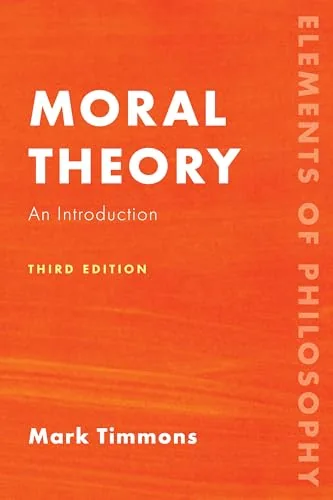
Moral Theory: An Introduction, Third Edition surveys major approaches to normative ethics and the arguments for and against them. Mark Timmons examines divine command theory, relativism, natural law, consequentialism, deontology, virtue ethics, and newer approaches for undergraduate philosophy students and independent readers developing skills in ethical analysis.
Inside this title
Comparative survey of major approaches to normative moral philosophy
Current listed price $17.00Regular price $31.00Digital ebook
Mark Timmons introduces moral theories by explaining their central claims and examining the reasons offered in their support. Religious authority, human nature, consequences, duties, and character provide different starting points for asking what makes an action right. Historical context and criticism help readers compare the assumptions and implications of these approaches.
The third edition extends the survey to moral particularism and feminist ethics alongside the better-known traditions. Discussion questions, further reading suggestions, and explanations of key terminology support course use and independent study. Readers can work through competing arguments without the book requiring allegiance to a single theory, making it suited to introductory ethics courses and sustained personal study of moral philosophy.
Study guide included
Inside Moral Theory: An Introduction, 3rd Edition.
Mark Timmons surveys the major positions in normative ethics without asking readers to adopt one. Relativism, divine command theory, natural law, consequentialism, deontology and virtue ethics are each presented through their central claims and the reasons offered for them. The third edition adds moral particularism and feminist ethics.
The book is organised around the question of what makes an action right, and around the different starting points theorists use to answer it: religious authority, human nature, consequences, duty and character. Each position is explained, then tested through the objections raised against it, and historical context helps readers see how the approaches relate. The third edition widens the comparison with moral particularism and feminist ethics alongside the longer-established traditions. Explanations of key terms, discussion questions and suggestions for further reading make the text usable in introductory courses and in independent study, and the comparative structure lets readers weigh arguments rather than memorise conclusions.
What normative ethics asks
The book begins by defining the question that moral theories try to answer. It distinguishes the search for a standard of right action from other kinds of ethical inquiry. That framing gives readers a common question against which the later theories can be compared.
Normative ethics asks what makes an action right
The question provides a basis for comparison
Moral theory is distinguished from other ethical inquiry
Topic 1
Religious and natural-law foundations
Two approaches ground morality outside human preference: divine command and natural law. The book presents each through its central claims and the support offered for them. Both are then subjected to the objections that shape the debate around them.
Some theories ground morality in religious authority
Natural law appeals to human nature as a standard
Each position is tested against objections
Topic 2
Relativism and its challenges
Relativism is examined as a position about the status of moral judgements rather than a simple tolerance slogan. The book lays out what the view claims and the difficulties raised against it. It appears as one option among others, not as an assumed starting point.
Relativism concerns the status of moral judgements
The position carries specific difficulties
It is assessed comparatively rather than assumed
Topic 3
Consequentialism
Consequentialist theories evaluate actions by their outcomes. The book explains the appeal of judging rightness through results and then considers the objections that follow. Readers see how a single commitment about outcomes generates a family of positions.
Consequentialism judges actions by their results
The approach has an intuitive appeal worth examining
Objections reveal the costs of the position
Topic 5
Deontology and duty
Deontological theories locate rightness in duties and rules rather than consequences. The book sets out the core claims and the reasons offered for them. It then places the view in contrast with outcome-based approaches.
Deontology grounds rightness in duty
Rules and obligations replace outcomes as the standard
The contrast with consequentialism sharpens the debate
Topic 6
Virtue ethics, particularism and feminist ethics
The survey closes with approaches centred on character and on the limits of general rules. Virtue ethics shifts attention to the agent, while moral particularism and feminist ethics raise further questions about method. The third edition includes these alongside the older traditions.
Virtue ethics focuses on character rather than acts alone
Moral particularism questions general rules
Feminist ethics adds a distinct critical perspective
Topic 7
Topic map
The Project of Moral TheoryTopic 1
Divine Command TheoryTopic 2
Moral RelativismTopic 3
Natural Law TheoryTopic 4
ConsequentialismTopic 5
DeontologyTopic 6
Virtue EthicsTopic 7
Moral Particularism and Feminist EthicsTopic 8
Key takeaways
Each theory begins from a different answer to what grounds rightness.
Objections are part of the presentation, not an afterthought.
Comparing theories requires attention to their assumptions as well as their conclusions.
Undergraduate philosophy students in introductory ethics courses, along with independent readers who want to sharpen their ethical analysis and argument.
Topics covered
Moral Theory An Introduction 3rd Edition
Mark Timmons moral theory
normative ethics textbook
consequentialism and deontology
virtue ethics introduction
moral relativism
divine command theory
feminist ethics
Questions about this ebook.
Edition, audience, and study-guide details at a glance.
What is Moral Theory: An Introduction, 3rd Edition about?
Moral Theory: An Introduction, Third Edition surveys major approaches to normative ethics and the arguments for and against them. Mark Timmons examines divine command theory, relativism, natural law, consequentialism, deontology, virtue ethics, and newer approaches for undergraduate philosophy students and independent readers developing skills in ethical analysis.
Which edition of Moral Theory: An Introduction, 3rd Edition is this?
This listing is for the 3rd edition. Check the title, ISBN, and book details above before ordering, especially if your course or reading list names a specific edition.
Who is Moral Theory: An Introduction, 3rd Edition for?
Undergraduate philosophy students in introductory ethics courses, along with independent readers who want to sharpen their ethical analysis and argument.
Does this page include a study guide?
Yes. This page includes an original study guide with six thematic sections, key takeaways, and a topic map for structured reading.