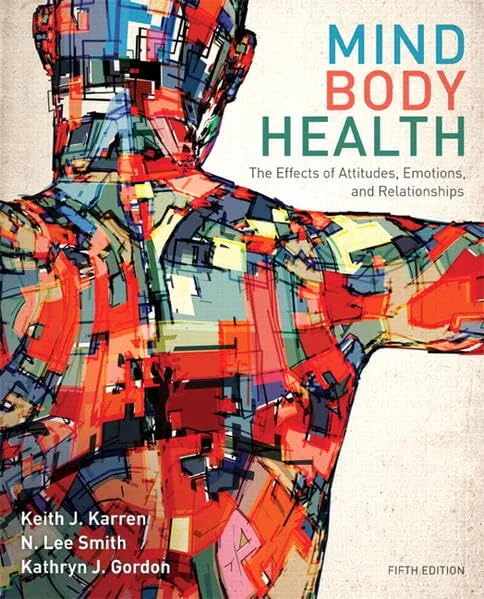
Mind/Body Health: The Effects of Attitudes, Emotions, and Relationships, 5th Edition
By Keith J. Karren, N. Lee Smith, Kathryn J. Gordon, Kathryn J. Frandsen
About this ebook
Mind/Body Health, Fifth Edition examines relationships between psychological experience and physical health. Keith J. Karren, N. Lee Smith, Kathryn J. Gordon, and Kathryn J. Frandsen connect stress, emotions, attitudes, and social relationships with physiological processes for students in health psychology, personal health, behavioral medicine, nursing, and related health education fields.
Inside this title
Psychological and social influences on physiological responses and health
Current listed price $35.99Regular price $94.00Digital ebook
This textbook explores how psychological and social experiences relate to bodily processes. Research from neuroscience, psychoneuroimmunology, and epidemiology provides the basis for discussions of stress, emotional regulation, optimism, social support, and health. Cardiovascular function, immune responses, and longevity appear as contexts for examining those relationships.
The fifth edition also discusses the placebo effect, mind-body approaches, emotional wellness, and psychological influences on health behavior. Its educational focus makes it relevant to health psychology and personal health courses, as well as nursing and public health study. Counselors and health educators can use the material to examine the evidence and concepts behind approaches that consider both psychosocial experience and physical functioning.
Study guide included
Inside Mind/Body Health: The Effects of Attitudes, Emotions, and Relationships, 5th Edition.
Karren, Smith, Gordon and Frandsen examine how attitudes, emotions and relationships register in the body. Stress, optimism, emotional regulation and social support are read alongside cardiovascular, immune and longevity research. The fifth edition serves health psychology, personal health and behavioural medicine courses, and the wider health education field.
The text starts from the premise that psychological and social life are not separate from physiology. Evidence drawn from neuroscience, psychoneuroimmunology and epidemiology supports chapters on stress, emotional regulation, optimism and supportive relationships, with cardiovascular function, immune response and longevity used as contexts for those claims. The fifth edition also takes up the placebo effect, approaches that treat mind and body together, and emotional wellness, along with the psychological side of health behaviour. Its teaching orientation keeps the material usable in health psychology and personal health courses, and in nursing and public health study, while counsellors and health educators can examine the concepts behind psychosocial approaches to physical functioning.
Psychosocial experience and physiology
The book's starting claim is that psychological and social experience is intertwined with bodily function. It draws on several research traditions rather than a single one. This framing prepares readers to treat attitudes and relationships as health variables rather than background detail.
Psychological experience is treated as connected to physiology
Several research traditions inform the discussion
Social factors are part of health, not separate from it
Topic 1
Stress and the body's response
Stress is examined through the physiological pathways it engages rather than as a vague feeling. The book connects stressful experience to specific bodily systems and to the research that studies them. Readers are asked to see stress as a process with mechanisms.
Stress is described through physiological pathways
Bodily systems provide the mechanism for its effects
Research evidence supports the analysis of stress
Topic 2
Emotions, optimism and regulation
Emotions are considered alongside the capacity to regulate them. Optimism appears as an attitude with potential consequences for health, not simply a personality label. The book treats emotional life as something that can be studied and shaped.
Emotional experience is linked to health outcomes
Optimism is treated as an attitude worth examining
Regulation suggests emotion is not fixed
Topic 3
Relationships and social support
Social relationships are presented as a health influence in their own right. Support from others is connected to physiological and longevity research. The book gives relationships the same analytical weight as individual attitudes.
Social support is treated as a health factor
Relationships connect to physiological research
Social and individual factors are studied together
Topic 5
Placebo effects and mind-body approaches
The placebo effect gives the book a concrete case of expectation and belief interacting with physical outcomes. Mind-body approaches are examined in that light. The discussion keeps such phenomena within the scope of research rather than treating them as mere anecdote.
Expectation can accompany measurable physical change
Mind-body approaches are examined as research questions
The placebo effect is a case for careful interpretation
Topic 6
Psychological influences on health behaviour
The final theme turns to behaviour: how emotional and psychological states bear on what people do about their health. Emotional wellness is treated as connected to health practices. The book closes by linking mind-body concepts to the choices studied in health education.
Psychological states relate to health behaviour
Emotional wellness is part of the picture
Mind-body concepts inform health education
Topic 8
Topic map
Introduction to Mind/Body HealthTopic 1
Stress and Physiological ResponseTopic 2
Emotions and Emotional RegulationTopic 3
Optimism and AttitudesTopic 4
Social Relationships and SupportTopic 5
Placebo Effects and Mind-Body ApproachesTopic 6
Emotional WellnessTopic 7
Psychological Influences on Health BehaviourTopic 8
Key takeaways
Attitudes and relationships are treated as variables with measurable physiological correlates.
Stress is examined through pathways, not as a single undifferentiated force.
Mind-body claims are weighed against research traditions that study them.
Students of health psychology, personal health, behavioural medicine and nursing, plus counsellors and health educators studying psychosocial influences on physical health.
Topics covered
Mind/Body Health 5th Edition
Karren Smith Gordon Frandsen
health psychology textbook
stress and physical health
psychoneuroimmunology
behavioural medicine
social support and health
placebo effect
Questions about this ebook.
Edition, audience, and study-guide details at a glance.
What is Mind/Body Health: The Effects of Attitudes, Emotions, and Relationships, 5th Edition about?
Mind/Body Health, Fifth Edition examines relationships between psychological experience and physical health. Keith J. Karren, N. Lee Smith, Kathryn J. Gordon, and Kathryn J. Frandsen connect stress, emotions, attitudes, and social relationships with physiological processes for students in health psychology, personal health, behavioral medicine, nursing, and related health education fields.
Which edition of Mind/Body Health: The Effects of Attitudes, Emotions, and Relationships, 5th Edition is this?
This listing is for the 5th edition. Check the title, ISBN, and book details above before ordering, especially if your course or reading list names a specific edition.
Who is Mind/Body Health: The Effects of Attitudes, Emotions, and Relationships, 5th Edition for?
Students of health psychology, personal health, behavioural medicine and nursing, plus counsellors and health educators studying psychosocial influences on physical health.
Does this page include a study guide?
Yes. This page includes an original study guide with six thematic sections, key takeaways, and a topic map for structured reading.