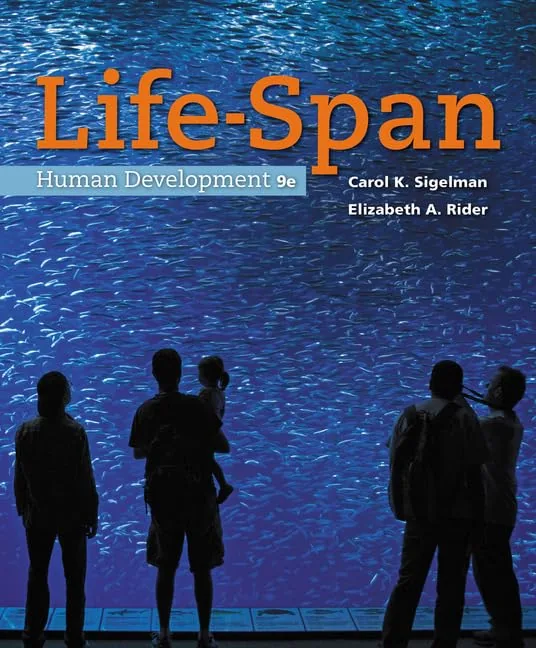
Life-Span Human Development, Ninth Edition explores growth and change from conception through death. Carol K. Sigelman and Elizabeth A. Rider bring biological, psychological, and sociocultural influences together, covering attachment, cognition, identity, relationships, adulthood, and aging for students in developmental psychology, education, nursing, counseling, and human services.
Inside this title
Development from prenatal life through adulthood and bereavement
Current listed price $49.99Regular price $119.00Digital ebook
Sigelman and Rider examine how different influences combine across the life course. Prenatal development, early sensory experiences, attachment, language, and childhood thinking lead into adolescent identity and moral development, followed by adult relationships, work, cognitive changes, and bereavement. The discussion considers continuity as well as developmental transitions.
Culture, poverty, family structure, and historical circumstances supply context for the theories and research. Cross-cultural examples encourage readers to distinguish patterns shared across populations from experiences shaped by particular settings. Case studies and critical thinking questions connect the academic material with applied concerns. The ninth edition fits introductory human development study and students preparing for professions that work with people at different ages.
Study guide included
Inside Life-Span Human Development, 9th Edition.
Sigelman and Rider describe development as change and continuity across a whole life, touching the body, thought, and relationships. Biology, lived experience, culture, and the wider historical moment combine to shape varied trajectories, complete with gains, losses, and chances to adapt. The guide follows that view from conception to death, keeping age, setting, and personal difference in the frame.
An opening treatment covers the life-span view, key theories, and study designs before turning to genetic and prenatal influence. It then follows development through health, the senses, thinking, language, and schooling. Later chapters connect self and social understanding to emotion, attachment, family life, and mental health. A closing chapter then takes up mortality, the process of dying, and mourning. Across all of it, the authors keep asking how age, setting, and individual difference shape what any finding can say about development. Designs and their limits receive as much attention as conclusions.
Development as gain, loss, and continuity
Development covers change and stability in body, cognition, and social life from conception to death, and capacities move on separate timetables. Practice and support alter how an ability gets used, though demands and chances vary by setting. Stages like early adult independence and later retirement reflect institutional arrangements and what a culture expects. The text asks how capacity shifts, who is affected, and which circumstances matter, rather than assuming one arc.
Ask which capacity changes and for whom
Compare theories by what they predict
Note cohort effects in any age comparison
Chs. 1–2 · Understanding Development and Developmental Theories
Genes and context interact from the start
Genetic difference adds to variation within a trait, while environment shapes how a predisposition shows up. Comparisons of families, twins, and adoptees describe population-level influence under given circumstances and cannot forecast any one person's future. Offspring likewise shape and call forth responses, so conduct and surroundings change one another over time. Prenatal effects depend on timing and amount, and later surroundings can redirect a trajectory begun under similar early risk.
Read heritability estimates as population statements
Weigh timing of exposure, not just presence
Look for later support that shifts a path
Chs. 3–4 · Genes, Environment, Prenatal Development and Birth
Growth links perception, movement, and action
Physical growth spans the body, the brain, and health through the life span, and maturation responds to food, sickness, movement, and the circumstances of daily life. A new motor skill changes the things a youngster investigates and the replies that follow. Perception is interpreted within the task: results depend on how information is presented and what action is requested, so a change in perception may entangle with movement skill, focus, and practice.
Connect a physical change to daily activity
Read perception inside the task demands
Check sensory detail before naming a deficit
Chs. 5–6 · Body, Brain, Health, Perception and Action
Cognition reflects strategy, task, and context
Piaget's account stresses shifts in the way children arrange knowledge, while information processing examines attention, recall, and tactics that lift performance. Adults and peers shape what a learner manages to do, and repetition matters too. Chapters on intellect and creativity weigh competing definitions of competence and how each is measured, and scores reflect language, formal education, and the culture a person knows. Domain and task demands mean adult cognition need not change at one rate.
Compare tasks before calling it understanding
Place test scores in cultural context
Expect uneven change across domains
Chs. 7–10 · Cognition, Memory, Intelligence, Language and Education
Self, emotion, and relationships unfold together
Self-concept describes how people characterize themselves, self-esteem their evaluation, and identity adds commitments and roles. Temperament and personality show patterns that persist while still shifting with situations. Caregivers help a small child manage emotion, and that child's conduct shapes the exchange in return. Attachment reflects relationship history and can change, and bonds formed later with friends, partners, and relatives bring both support and new demands.
Separate self-description from self-evaluation
Watch reciprocal influence in caregiver exchanges
Read behavior across more than one setting
Chs. 11–15 · Self, Social Cognition, Attachment and Family
Risk, resilience, and the shape of endings
Developmental psychopathology traces how difficulties and strengths take shape over time. Comparable early experience can yield unlike outcomes, and comparable trouble can stem from unlike histories. One weakness can weigh more heavily during particular stressors, while supportive ties, resources, and altered circumstances can bend a trajectory. The final chapter treats death understanding, choices around dying, and bereavement, noting that responses vary by individual and culture and that support should follow the person's situation.
Trace pathways rather than single causes
Ask what changed when a trajectory shifts
Avoid fixed sequences for grief
Chs. 16–17 · Developmental Psychopathology and Death and Dying
Chapter and section map
Understanding Life-Span Human DevelopmentCh. 1 · p. 3
Theories of Human DevelopmentCh. 2 · p. 31
Genes, Environment, and DevelopmentCh. 3 · p. 59
Body, Brain, and HealthCh. 5 · p. 127
Memory and Information ProcessingCh. 8 · p. 233
Emotions, Attachment, and Social RelationshipsCh. 14 · p. 433
Developmental PsychopathologyCh. 16 · p. 501
The Final Challenge: Death and DyingCh. 17 · p. 533
Key takeaways
Specify the domain, the timeframe, and the setting before making any claim about development.
Use personal history and environment together to explain divergent outcomes from a shared risk.
Keep change inside individuals distinct from contrasts across age groups before you interpret a study.
Students in developmental psychology, education, nursing, counseling, and human services, along with practitioners who want a life-span framework for interpreting behavior across ages and settings.
Topics covered
life-span development
developmental psychology
attachment theory
cognitive development
prenatal influences
identity formation
aging and grief
research designs
Questions about this ebook.
Edition, audience, and study-guide details at a glance.
What is Life-Span Human Development, 9th Edition about?
Life-Span Human Development, Ninth Edition explores growth and change from conception through death. Carol K. Sigelman and Elizabeth A. Rider bring biological, psychological, and sociocultural influences together, covering attachment, cognition, identity, relationships, adulthood, and aging for students in developmental psychology, education, nursing, counseling, and human services.
Which edition of Life-Span Human Development, 9th Edition is this?
This listing is for the 9th edition. Check the title, ISBN, and book details above before ordering, especially if your course or reading list names a specific edition.
Who is Life-Span Human Development, 9th Edition for?
Students in developmental psychology, education, nursing, counseling, and human services, along with practitioners who want a life-span framework for interpreting behavior across ages and settings.
Does this page include a study guide?
Yes. This page includes an original study guide with six thematic sections, key takeaways, and a chapter and section map for structured reading.