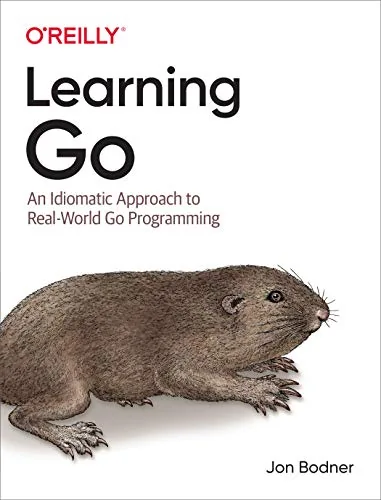
Learning Go: An Idiomatic Approach to Real-World Go Programming, 1st Edition
By Jon Bodner
About this ebook
Learning Go: An Idiomatic Approach to Real-World Go Programming introduces Go to developers with prior programming experience. Jon Bodner explains language fundamentals alongside interfaces, error handling, concurrency, testing, and modules, focusing on the reasons behind common Go patterns and the organization of readable, maintainable programs in the first edition.
Inside this title
Types, structs, and interfaces connected with idiomatic program design
Current listed price $9.99Regular price $20.00Digital ebook
Bodner develops Go from basic types and control flow toward the patterns used to structure larger programs. Structs, interfaces, and error handling receive attention as design choices as well as language features, helping experienced programmers understand conventions that may differ from languages they already know.
Goroutines, channels, and synchronization introduce concurrency, while testing, benchmarking, and profiling connect implementation with evaluation. Modules and project organization round out the discussion of everyday development. The first edition is intended for programmers adopting Go in professional work, combining explanations of syntax with the reasoning behind idiomatic usage. Its emphasis is on understanding program structure and trade-offs through the language's established tools.
Study guide included
Inside Learning Go: An Idiomatic Approach to Real-World Go Programming, 1st Edition.
Bodner assumes prior programming experience and concentrates on why Go looks the way it does. Types, interfaces, error handling, concurrency and testing are explained as design decisions, helping developers carry habits from other languages without fighting the conventions Go expects.
The book develops Go from basic types and control flow toward the patterns used to structure larger programs. Structs and interfaces are treated as design choices as much as language features, and error handling is explained as a convention with consequences for readability. Goroutines, channels and synchronization introduce concurrency, with each mechanism tied to the pattern it serves. Testing, benchmarking and profiling connect implementation to evidence, while modules and project organization address everyday assembly and maintenance. Written for programmers adopting Go professionally, the first edition pairs syntax with the reasoning behind idiomatic usage, so readers learn to understand structure and trade-offs through the language's own tools.
Types and structure
Go's type system is introduced from basic types toward structs and interfaces. The explanation emphasizes how these choices shape the structure of a program rather than only how they are written.
Basic types come first
Structs organize data
Interfaces define behavior
Structure follows design
Topics 1–3
Errors as values
Error handling is presented as a design decision with consequences for readability. The text explains the conventions Go expects and why they differ from exception-based habits.
Errors are returned explicitly
Conventions differ from exceptions
Handling is visible
Readability is a goal
Topic 4
Concurrency with goroutines and channels
Goroutines, channels and synchronization introduce concurrent programming. The material connects each mechanism to a pattern so the reader understands when it applies and what it costs.
Goroutines run work concurrently
Channels carry communication
Synchronization prevents races
Patterns guide use
Topics 5–6
Testing and measurement
Testing, benchmarking and profiling connect code to evidence. The text treats them as part of development rather than as a separate phase.
Tests check behavior
Benchmarks measure performance
Profilers locate cost
Evidence guides change
Topic 7
Modules and organization
Modules and project layout address how larger programs are assembled. The discussion covers the everyday work of organizing code so it remains understandable.
Modules manage dependencies
Layout supports clarity
Projects are organized
Maintenance is considered
Topic 8
Idiomatic trade-offs
Idiomatic Go is explained through the reasons behind its patterns. The reader learns to weigh alternatives and to recognize when a familiar habit from another language fits poorly.
Patterns have reasons
Trade-offs are weighed
Foreign habits may mislead
Conventions aid maintainability
Topics 1–8
Topic map
Types, Variables and Control FlowTopic 1
Structs and MethodsTopic 2
Interfaces and CompositionTopic 3
Error Handling ConventionsTopic 4
Goroutines and ChannelsTopic 5
Synchronization and Concurrency PatternsTopic 6
Testing, Benchmarking and ProfilingTopic 7
Modules and Project OrganizationTopic 8
Key takeaways
Learn why Go's conventions exist before importing habits from other languages.
Treat error handling and interfaces as design decisions, not syntax.
Reach for concurrency only with a pattern in mind and a way to test it.
Experienced programmers adopting Go in professional work, and developers who want an idiomatic grounding in interfaces, error handling, concurrency, testing and module organization.
Topics covered
learning Go
idiomatic Go programming
Go interfaces
Go error handling
goroutines and channels
Go testing and profiling
Go modules
concurrent programming in Go
Questions about this ebook.
Edition, audience, and study-guide details at a glance.
What is Learning Go: An Idiomatic Approach to Real-World Go Programming, 1st Edition about?
Learning Go: An Idiomatic Approach to Real-World Go Programming introduces Go to developers with prior programming experience. Jon Bodner explains language fundamentals alongside interfaces, error handling, concurrency, testing, and modules, focusing on the reasons behind common Go patterns and the organization of readable, maintainable programs in the first edition.
Which edition of Learning Go: An Idiomatic Approach to Real-World Go Programming, 1st Edition is this?
This listing is for the 1st edition. Check the title, ISBN, and book details above before ordering, especially if your course or reading list names a specific edition.
Who is Learning Go: An Idiomatic Approach to Real-World Go Programming, 1st Edition for?
Experienced programmers adopting Go in professional work, and developers who want an idiomatic grounding in interfaces, error handling, concurrency, testing and module organization.
Does this page include a study guide?
Yes. This page includes an original study guide with six thematic sections, key takeaways, and a topic map for structured reading.