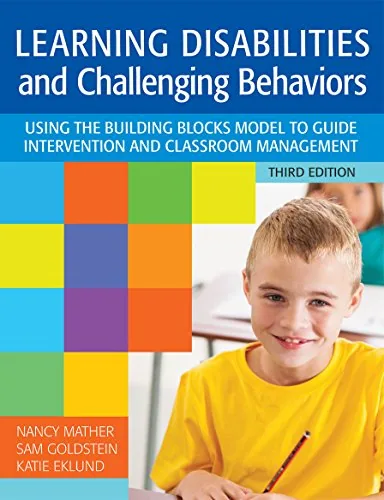
Cover of Learning Disabilities and Challenging Behaviors: Using the Building Blocks Model to Guide Intervention and Classroom Management, 3rd Edition

Learning Disabilities and Challenging Behaviors: Using the Building Blocks Model to Guide Intervention and Classroom Management, 3rd Edition

By Nancy Mather, Sam Goldstein, Katie Eklund

About this ebook

Learning Disabilities and Challenging Behaviors, Third Edition, uses the Building Blocks model to connect learning difficulties with behavior and classroom conditions. Nancy Mather, Sam Goldstein, and Katie Eklund organize assessment and intervention around twelve interacting factors, helping educators and school psychologists examine students' strengths, needs, and patterns of difficulty.

Inside this title
  • Twelve interacting Building Blocks for examining student learning difficulties
Current listed price $27.99Regular price $62.00Digital ebook
Buy now

Digital ebook. Checkout sends an order request.

Format
Digital ebook
ISBN
9781598578379
Last updated
2026-11-03

What this book covers.

The Building Blocks framework considers the factors beneath visible academic and behavioral difficulties. Its three levels address foundations such as attention, self-regulation, emotion, and self-esteem; academic processes including phonological awareness, memory, and executive functions; and applications involving language, motivation, and social cognition.

A questionnaire helps organize observations into a profile of student strengths and needs. The discussion then connects assessment findings with educational goals, classroom management, and intervention planning. Coverage includes Positive Behavioral Interventions and Supports, multi-tiered systems of support, and social-emotional learning. Teachers, special educators, and school psychologists can use the model as a structure for considering academic and behavioral concerns together.
Study guide included

Inside Learning Disabilities and Challenging Behaviors: Using the Building Blocks Model to Guide Intervention and Classroom Management, 3rd Edition.

Mather, Goldstein and Eklund organise learning difficulties and behaviour around the Building Blocks model. Twelve interacting factors connect assessment with intervention, helping educators and school psychologists examine strengths, needs and patterns rather than treating academics and conduct separately. The model spans foundations, academic processes and classroom application.

The Building Blocks framework looks beneath visible academic and behavioural difficulties to the factors that sustain them. Its three levels address foundations such as attention, self-regulation, emotion and self-esteem; academic processes including phonological awareness, memory and executive functions; and applications involving language, motivation and social cognition. A questionnaire helps turn observations into a profile of strengths and needs, which then connects to educational goals, classroom management and intervention planning. Coverage includes Positive Behavioural Interventions and Supports, multi-tiered systems of support and social-emotional learning. Teachers, special educators and school psychologists can use the model as a shared structure for considering academic and behavioural concerns together.

The Building Blocks framework

The model treats learning and behaviour as connected rather than separate concerns. Twelve interacting factors are arranged in three levels, giving educators a structure for seeing how difficulties cluster and reinforce one another.

  • Learning and behaviour are connected
  • Twelve factors interact across three levels
  • The model organises observation
Topic 1

Foundations of attention and regulation

The first level addresses capacities that support learning generally. Attention, self-regulation, emotion and self-esteem are treated as foundations whose condition affects what a student can do academically and behaviourally.

  • Attention underpins classroom learning
  • Self-regulation affects participation
  • Emotion and self-esteem shape engagement
Topic 2

Academic processes

The second level turns to processes that drive academic work. Phonological awareness, memory and executive functions explain why some students struggle with reading or organisation even when effort is present.

  • Phonological awareness affects reading
  • Memory supports learning and recall
  • Executive functions guide planning
Topic 3

Language, motivation and social cognition

The third level links underlying processes to application. Language, motivation and social cognition show how a student's difficulties appear in communication, engagement and relationships with peers and teachers.

  • Language shapes classroom participation
  • Motivation affects persistence
  • Social cognition influences interaction
Topic 4

Assessment and student profiles

A questionnaire turns observation into a profile. Organising findings around strengths and needs allows assessment to guide goals and support rather than simply label a student.

  • A questionnaire structures assessment
  • Profiles identify strengths and needs
  • Assessment informs educational goals
Topic 5

Intervention and classroom management

Assessment leads into planning. Educational goals, classroom management and intervention connect academic progress with behavioural support, drawing on PBIS, multi-tiered systems and social-emotional learning.

  • Intervention follows from assessment
  • Classroom management supports behaviour
  • PBIS, MTSS and SEL guide planning
Topic 6

Topic map

  • The Building Blocks FrameworkTopic 1
  • Attention, Self-Regulation and Self-EsteemTopic 2
  • Phonological Awareness, Memory and Executive FunctionsTopic 3
  • Language, Motivation and Social CognitionTopic 4
  • Assessment and Student ProfilesTopic 5
  • Intervention and Classroom ManagementTopic 6
  • Positive Behaviour, Multi-Tiered Systems and Social-Emotional LearningTopic 7

Key takeaways

  • Treat academic difficulty and challenging behaviour as connected rather than separate.
  • Use a strengths-and-needs profile to turn assessment into goals and support.
  • Combine classroom management with researched frameworks such as PBIS and MTSS.

Teachers, special educators and school psychologists who want a structured model for assessing learning difficulties and planning behavioural and academic support.

Topics covered

  • Learning Disabilities and Challenging Behaviors 3rd Edition
  • Building Blocks model
  • Mather Goldstein Eklund learning disabilities
  • assessment and intervention planning
  • classroom management strategies
  • positive behavioral interventions and supports
  • multi-tiered systems of support
  • social emotional learning

Questions about this ebook.

Edition, audience, and study-guide details at a glance.

What is Learning Disabilities and Challenging Behaviors: Using the Building Blocks Model to Guide Intervention and Classroom Management, 3rd Edition about?

Learning Disabilities and Challenging Behaviors, Third Edition, uses the Building Blocks model to connect learning difficulties with behavior and classroom conditions. Nancy Mather, Sam Goldstein, and Katie Eklund organize assessment and intervention around twelve interacting factors, helping educators and school psychologists examine students' strengths, needs, and patterns of difficulty.

Which edition of Learning Disabilities and Challenging Behaviors: Using the Building Blocks Model to Guide Intervention and Classroom Management, 3rd Edition is this?

This listing is for the 3rd edition. Check the title, ISBN, and book details above before ordering, especially if your course or reading list names a specific edition.

Who is Learning Disabilities and Challenging Behaviors: Using the Building Blocks Model to Guide Intervention and Classroom Management, 3rd Edition for?

Teachers, special educators and school psychologists who want a structured model for assessing learning difficulties and planning behavioural and academic support.

Does this page include a study guide?

Yes. This page includes an original study guide with six thematic sections, key takeaways, and a topic map for structured reading.

Keep your curiosity going.

More books from this subject area.

More education & learning sciences ebooks

Enter your name and email to open a WhatsApp message with your details.