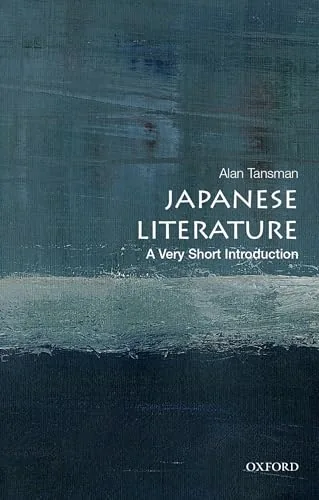
Japanese Literature: A Very Short Introduction surveys Japanese literary history from oral traditions and classical court writing to modern fiction. Alan Tansman introduces poetry, narrative, drama, and criticism within their cultural contexts. The book suits literature and East Asian studies students, travelers, and general readers seeking an entry point into major periods and genres.
Inside this title
Literary history from oral traditions through modern Japanese fiction
Current listed price $4.99Regular price $9.00Digital ebook
Ancient poetry, myth, and the influence of Chinese writing and Buddhism provide the opening context for this survey. Classical court literature, including The Tale of Genji, leads toward medieval war narratives and the popular literary culture of the Edo period. Poetry receives attention through forms such as waka, haiku, and renga, alongside narrative and theatrical traditions.
The discussion follows later encounters with Westernization and the development of modern and contemporary writing. Concepts such as mono no aware and yūgen offer ways to consider recurring aesthetic concerns. Readers new to Japanese literature can use the book's historical and generic connections to place individual works within a broader cultural tradition.
Study guide included
Inside Japanese Literature: A Very Short Introduction.
Alan Tansman's 2023 Oxford introduction reads Japanese writing as a negotiation between vivid sensory texture and wording that remembers earlier texts. Six chapters connect court poetry, classical narrative, modern fiction, verbal play and picture-led narrative, asking how inherited convention lets writers render new experience.
The volume opens with the formation of a literary language shaped by contact with Chinese script and by phonetic writing, then devotes a chapter to Genji and its poems-in-action. Later chapters examine modern attempts at realism, writing that confronts war and catastrophe, and works where pictures, print and performance carry meaning beside prose. A closing chapter asks what the label Japanese literature includes or hides. Older and recent texts stay in dialogue, so each chapter raises a recurring problem of reading, representation and definition rather than marching through a simple chronology.
Language as inherited material
Tansman treats written Japanese as a resource built through contact with Chinese texts and through indigenous phonetic writing. Techniques like kundoku made foreign works legible in Japanese syntax, and that history sharpens attention to the distance between speech and script. Readers are asked to notice the options a writer selects from a repertoire already loaded with association.
Read writing as a chosen inheritance
Attend to speech and script gaps
Notice the options a form allows
Ch. 1
Genji and narrative attention
Murasaki Shikibu's long narrative multiplies viewpoints and embeds poems inside action rather than ornamenting it. An exchange can signal intimacy, reluctance or rivalry through timing and shared allusion, and the reply matters as much as the opening verse. Tansman also asks readers to look past the hero's radiance toward how women were exposed within courtly power, and toward the commentary and translations that have reframed the work.
Read poems as inside the action
Track who may reply
Notice perspective shifts and their cost
Ch. 2
Realism and enchanted perception
Modern Japanese fiction reworked prose to portray everyday existence while asking whether lived experience can be shown plainly. Tansman frames the shift through calls for a fiction centered on human feeling, the naturalist turn toward everyday conditions, and writing that treats poverty and gender as matters of viewpoint. He then names an enchanted realism where concrete objects stay tangible yet open onto memory, illusion, doubt.
Follow the reform of prose
Treat subject matter as perspective
Watch detail turn strange
Ch. 3
Writing violence and witness
Literature about war and catastrophe must represent events while laying bare the constraints on language, memory and vantage point. Tansman reads accounts of the atomic bombing, including work by Ota Yoko and Hara Tamiki, and asks what each speaker can see or say. Fragmentary detail can signal upheaval without pretending the scene is fully knowable, and the distribution of attention can leave some participants out of frame.
Attend to the form of testimony
Weigh what each speaker can observe
Read silences with the setting
Ch. 4
Wordplay, image and popular forms
Effects can arise from images, print layouts, performance and jokes, not only from prose. Tansman describes works where images carry narrative or say what wording cannot, and uses mitate to name the play of likeness, parody and shifted register. He also considers how popular narrative and publishing widened the figures and media available, making circulation, audience and performance part of interpretation.
Read image against text
Identify the visual cue of parody
Include circulation in interpretation
Ch. 5
Defining a national literature
The final chapter asks which boundaries make a literature and what those boundaries do. Language, place, institutions and later readership may diverge, and translation and cross-linguistic exchange belong inside the history rather than outside it. Tansman treats genre labels as interpretations that reveal some comparisons while hiding the conditions of production, and he asks readers to weigh what a category includes.
Separate language, place and readers
Treat translation as part of history
Read genre labels as arguments
Ch. 6
Chapter and section map
A World of WordsCh. 1
The Tale of GenjiCh. 2
Enchanted RealismCh. 3
Writing ViolenceCh. 4
The Spirit of WordplayCh. 5
What Is Japanese Literature?Ch. 6
Key takeaways
Trace a single image from sensation through allusion to its work in the scene.
Treat poetic exchange as social conduct between people of unequal standing.
Test a national category by asking what genre and translation decisions exclude.
Literature and East Asian studies students, travelers and general readers who want a compact, thematically organized entry to major periods and genres of Japanese writing.
Topics covered
Japanese literary history
Tale of Genji
classical Japanese poetry
modern Japanese fiction
enchanted realism
wordplay and mitate
atomic bomb literature
national literature debate
Questions about this ebook.
Edition, audience, and study-guide details at a glance.
What is Japanese Literature: A Very Short Introduction about?
Japanese Literature: A Very Short Introduction surveys Japanese literary history from oral traditions and classical court writing to modern fiction. Alan Tansman introduces poetry, narrative, drama, and criticism within their cultural contexts. The book suits literature and East Asian studies students, travelers, and general readers seeking an entry point into major periods and genres.
Who is Japanese Literature: A Very Short Introduction for?
Literature and East Asian studies students, travelers and general readers who want a compact, thematically organized entry to major periods and genres of Japanese writing.
Does this page include a study guide?
Yes. This page includes an original study guide with six thematic sections, key takeaways, and a chapter and section map for structured reading.