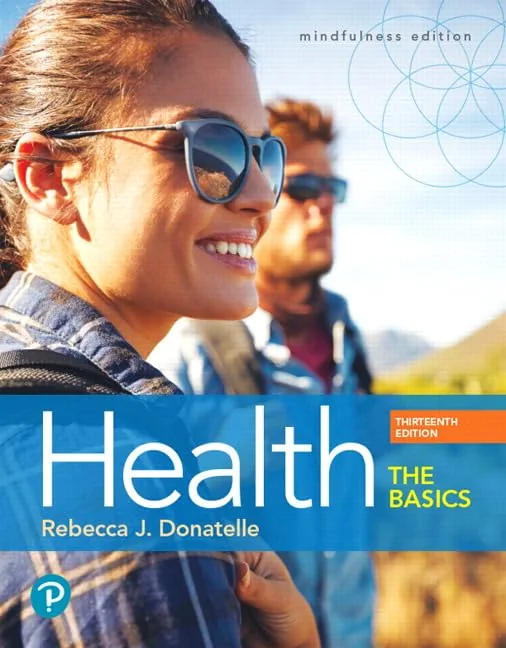
Health: The Basics, thirteenth edition, by Rebecca J. Donatelle introduces personal health for college wellness courses. Its student-focused coverage connects stress, mindfulness, nutrition, exercise, mental health, relationships, substance use, disease prevention, and environmental influences through examples and self-assessments that encourage examination of everyday health decisions.
Inside this title
Personal health topics integrate physical, mental, and social perspectives
Current listed price $7.99Regular price $12.00Digital ebook
Donatelle presents personal health as a connected set of physical, mental, social, and environmental topics. Stress management and mindfulness appear alongside nutrition, fitness, emotional well-being, and the relationships that shape individual experience, giving students several perspectives on daily health choices.
The thirteenth edition also discusses sexual health, substance use, chronic disease prevention, and environmental factors. Examples and self-assessment activities relate course content to situations students may recognize, while the broad subject range suits an introductory health or wellness curriculum. Readers can use the text to develop health vocabulary, compare influences on well-being, and connect separate course topics within a wider account of personal health.
Study guide included
Inside Health: The Basics, 13th Edition.
Donatelle frames personal health as a shifting balance among body, mind, and social circumstance. The guide follows her through strain, rest, relationships, drinking, food, movement, prevention, and care access, showing how self-assessments turn ordinary decisions into evidence a student can examine and adjust.
The guide starts by defining wellness and naming what influences it, then moves through the calls students face around strain, rest, connection, drinking and smoking, food, and movement. Later sections tie those habits to disease prevention, picking care, and environmental exposures people share. Each chapter includes self-checks and prompts for review, so a reader can test a routine against the actual week. An equity thread runs throughout, asking which opportunities a campus or neighborhood supplies, and the closing pages show how personal plans and shared surroundings can reinforce one another.
Reading wellness across several dimensions
Wellness appears here as a cluster of linked dimensions, not a single verdict. Someone may carry no diagnosis at all yet wrestle with rest, isolation, or strain. Seeing how mental, emotional, social, and physical sides rise or fall together helps a reader choose one attainable priority instead of chasing a score or framing health as a fixed label.
Separate a symptom from a broader pattern
Name the dimension that needs attention first
Choose one change a real week allows
Ch. 1 and Health Equity focus
Stress, rest, and recovery as a cycle
The psychological material frames emotional awareness, supportive ties, and asking for support as learnable skills. Strain can sharpen focus for a brief challenge, yet unrelieved demand wears down functioning. The sleep unit ties rest to alertness, mood, and performance, and the material on injury and violence carries the same lens to settings and choices that decide how much harm a person meets.
Describe the demand before the response
Track sleep opportunity alongside next-day focus
Identify supports that make recovery likelier
Ch. 2–5
Relationships, consent, and clear communication
Healthy ties rest on listening, plain speech, and the capacity to name limits. The relationship chapters place those abilities beside the strength of a person's support network. When two people disagree, each can state the worry, spell out how it lands, and ask what the other needs. The sexuality material joins biology with values and consequences, treating consent and trustworthy services as parts of one conversation.
Practice stating a boundary without accusation
Pair biological facts with reliable service access
Make consent part of ordinary dialogue
Ch. 6–7
Patterns behind substance use and change
The addiction chapter looks at how a repeated act can continue even as harm accumulates. Coverage of alcohol and tobacco sets short-term effects against longer ones, social context, and strategies for lowering risk. Noting the times and places of use can surface recurring triggers, like a specific gathering or a rough transition after class. The change material joins readiness, perceived benefit, confidence, and learning from others.
Map the cue, setting, and usual response
Plan one action for the obstacle you expect
Let companions make the alternative easier
Ch. 8–9 and Ch. 1
Nutrition, self-image, and sustainable activity
Nutrition chapters introduce nutrients and eating patterns, then ask readers to weigh food claims against evidence. A pattern spread across several days says more than one meal. Sections on body weight and self-image separate health aims from appearance pressure and warn that fast-change promises merit doubt. Activity becomes sustainable when it fits access, schedule, interest, and present capacity.
Judge eating over days, not one plate
Question promises of rapid transformation
Fit movement to time, cost, and safety
Ch. 10–12
Prevention, care choices, and shared exposure
Diabetes, cancer, heart disease, and infection differ in mechanism and in what prevention can address. A risk factor shifts probability; screening, vaccination, and cutting exposure each solve a different problem. The care unit invites readers to weigh sources and compare claims. Environmental conditions enter the picture as shared exposures beyond what any one household can fix, pointing toward coordinated community action.
Match each prevention tool to its target
Compare care sources before committing
Map shared exposures across a campus
Ch. 13–16
Chapter and section map
Accessing Your HealthCh. 1
Achieving Health EquityFocus section
Improving Your SleepCh. 4
Building Healthy RelationshipsCh. 6
Recognizing and Avoiding AddictionCh. 8
Eating for a Healthier YouCh. 10
Making Smart Health Care ChoicesCh. 15
Promoting Environmental HealthCh. 16
Key takeaways
Assess several parts of wellbeing before committing to one habit you can actually sustain.
Tell a missing fact apart from a missing opportunity when a wellness aim keeps slipping.
Choose prevention tools and information sources that fit the exact question and setting.
College students in personal wellness courses, and instructors who want a structured way to connect everyday habits with prevention, campus conditions, and informed care choices.
Topics covered
personal health
college wellness
health equity
stress and sleep
nutrition basics
substance use prevention
health behavior change
campus health resources
Questions about this ebook.
Edition, audience, and study-guide details at a glance.
What is Health: The Basics, 13th Edition about?
Health: The Basics, thirteenth edition, by Rebecca J. Donatelle introduces personal health for college wellness courses. Its student-focused coverage connects stress, mindfulness, nutrition, exercise, mental health, relationships, substance use, disease prevention, and environmental influences through examples and self-assessments that encourage examination of everyday health decisions.
Which edition of Health: The Basics, 13th Edition is this?
This listing is for the 13th edition. Check the title, ISBN, and book details above before ordering, especially if your course or reading list names a specific edition.
Who is Health: The Basics, 13th Edition for?
College students in personal wellness courses, and instructors who want a structured way to connect everyday habits with prevention, campus conditions, and informed care choices.
Does this page include a study guide?
Yes. This page includes an original study guide with six thematic sections, key takeaways, and a chapter and section map for structured reading.