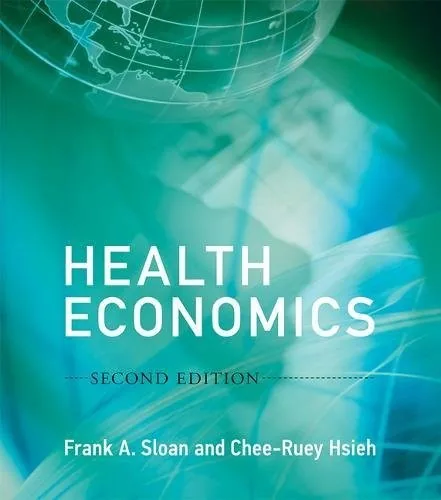
Health Economics, Second Edition by Frank A. Sloan and Chee-Ruey Hsieh combines economic models with empirical evidence about healthcare markets. Written for economics and health policy students and analysts, the book examines health demand, insurance, provider incentives, regulation, economic evaluation, and the financing choices underlying different health systems.
Inside this title
Economic models paired with empirical evidence from healthcare markets
Current listed price $27.99Regular price $55.00Digital ebook
Frank A. Sloan and Chee-Ruey Hsieh organize healthcare institutions around the economic questions they raise. Demand for health, insurance design, hospital competition, physician behavior, and pharmaceutical markets are examined through models and empirical findings. Moral hazard and adverse selection help frame the challenges of distributing risk and designing coverage.
The second edition also considers the Affordable Care Act in its 2017 publication context, together with reimbursement, regulation, and comparisons of health system financing. Cost-effectiveness and cost-benefit analysis provide methods for examining medical interventions and public programs. Students and policy researchers can use the text to connect theory with evidence and to assess the reasoning behind published economic studies.
Study guide included
Inside Health Economics, 2nd Edition.
Sloan and Hsieh pair economic models with empirical evidence from healthcare markets. Insurance design, provider incentives and system financing are examined through both theory and research findings. The second edition is written for economics and health policy students, analysts and researchers who want to connect models with published studies.
The book organises healthcare institutions around the economic questions they raise. Demand for health, insurance design, hospital competition, physician behaviour and pharmaceutical markets are examined through models and empirical findings. Moral hazard and adverse selection frame the challenge of distributing risk and designing coverage. Reimbursement and regulation are treated as levers that alter behaviour. The second edition also situates the Affordable Care Act in its 2017 publication context and compares how health systems are financed, while cost-effectiveness and cost-benefit methods support critical reading of studies.
Models joined to evidence
Theory and empirical work are presented as partners rather than alternatives. Models clarify which relationships matter and what would count as evidence, while studies test whether predicted patterns appear. This pairing gives readers a way to judge the strength of claims about healthcare markets.
Models identify the relationships worth testing
Evidence checks whether predictions hold
Together they support critical appraisal
Topic 1
Demand and insurance design
Demand for health and coverage decisions are analysed together. The design of insurance affects utilisation, risk pooling and the cost of care, so coverage is treated as an economic instrument rather than a purely clinical matter. Adverse selection and moral hazard recur throughout this discussion.
Coverage design shapes utilisation
Risk pooling depends on who enrols
Incentives inside insurance affect cost
Topic 2
Hospitals, physicians and competition
Provider behaviour is examined through organisation, payment and competition. Hospitals compete on dimensions shaped by reimbursement, and physicians respond to the incentives embedded in how they are paid. The text keeps asking how these responses affect cost, quality and access.
Hospital competition depends on payment rules
Physician incentives follow reimbursement design
Provider responses affect cost and quality
Topic 3
Pharmaceutical markets
Drug markets are treated as a distinct case because of patents, research costs and regulation. Pricing, innovation and access pull in different directions, and the book uses economic reasoning to make those tensions explicit rather than to settle them by assertion.
Patents shape pricing and innovation
Research costs affect market structure
Access and incentives create tension
Topic 4
Reimbursement, regulation and financing
Payment systems and rules are presented as the machinery through which policy reaches providers and patients. Different financing arrangements distribute costs and risk differently, and the second edition places the Affordable Care Act within that institutional setting rather than treating it in isolation.
Reimbursement translates policy into incentives
Financing distributes cost and risk
Regulation shapes market conduct
Topics 5–6
Economic evaluation and critical reading
Cost-effectiveness and cost-benefit analysis are introduced as methods for comparing interventions and programmes. The larger aim is appraisal: readers should be able to ask what a study measured, what it assumed and how far its conclusions travel beyond its data.
Evaluation compares costs with outcomes
Assumptions shape study conclusions
Critical reading tests how far findings generalise
Topic 7
Topic map
Economic Models and Empirical EvidenceTopic 1
Demand for Health and Insurance DesignTopic 2
Hospital Competition and Physician BehaviourTopic 3
Pharmaceutical Markets and InnovationTopic 4
Reimbursement and RegulationTopic 5
Health System Financing, the Affordable Care Act and ComparisonsTopic 6
Cost-Effectiveness, Cost-Benefit and Research AppraisalTopic 7
Key takeaways
Use models to decide what evidence would be relevant, then check the evidence.
Insurance design is an economic choice about risk, use and cost.
Critical appraisal asks what a study assumed before accepting its conclusion.
Economics and health policy students, policy analysts and researchers who want a model-and-evidence treatment of healthcare markets and financing.
Topics covered
Health Economics second edition
Sloan Hsieh health economics
healthcare economics models evidence
insurance design adverse selection
provider incentives reimbursement
pharmaceutical markets
health system financing
cost-effectiveness analysis
Questions about this ebook.
Edition, audience, and study-guide details at a glance.
What is Health Economics, 2nd Edition about?
Health Economics, Second Edition by Frank A. Sloan and Chee-Ruey Hsieh combines economic models with empirical evidence about healthcare markets. Written for economics and health policy students and analysts, the book examines health demand, insurance, provider incentives, regulation, economic evaluation, and the financing choices underlying different health systems.
Which edition of Health Economics, 2nd Edition is this?
This listing is for the 2nd edition. Check the title, ISBN, and book details above before ordering, especially if your course or reading list names a specific edition.
Who is Health Economics, 2nd Edition for?
Economics and health policy students, policy analysts and researchers who want a model-and-evidence treatment of healthcare markets and financing.
Does this page include a study guide?
Yes. This page includes an original study guide with six thematic sections, key takeaways, and a topic map for structured reading.