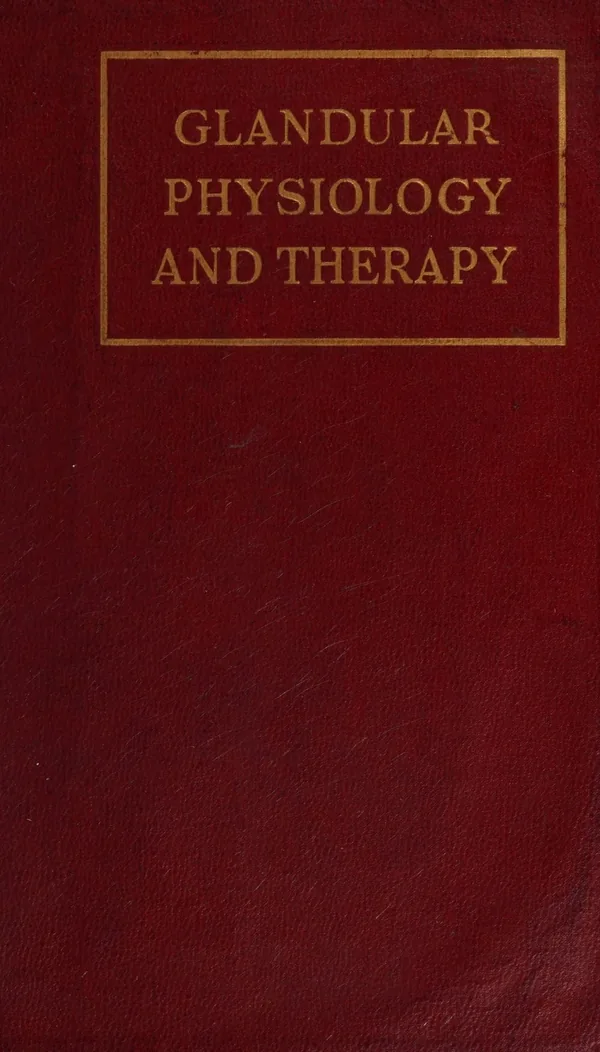
By Council on Pharmacy and Chemistry of the American Medical Association
About this ebook
Glandular Physiology and Therapy is a historical symposium on endocrine anatomy, physiology, and treatment, prepared under the American Medical Association's Council on Pharmacy and Chemistry. Contributions examine major glands, their secretions, and endocrine disorders, offering medical historians and endocrinology readers a view of early hormone-based therapeutics.
Inside this title
Historical accounts of major endocrine gland functions
Current listed price $29.99Regular price $60.00Digital ebook
The symposium examines the endocrine system as it was understood during the development of glandular and hormone therapies. Discussions of the pituitary, thyroid, parathyroid, adrenal, and reproductive glands connect anatomical and physiological knowledge with the clinical interpretation of glandular dysfunction. Therapeutic use of extracts provides a recurring link between laboratory observations and medical practice.
Prepared under the Council on Pharmacy and Chemistry, the collection also reflects an institutional effort to evaluate endocrine treatments. Its interest lies in the concepts, diagnostic reasoning, and therapeutic arguments of its period. Readers studying the history of endocrinology, pharmacy, or medical evidence can examine how an emerging specialty described its scientific foundations and treatment choices.
Study guide included
Inside Glandular Physiology and Therapy.
This historical AMA symposium gathers period accounts of endocrine glands and the therapeutic use of glandular extracts. It is a record of how early hormone-based treatment was described and defended rather than a current clinical manual, and it serves readers tracing the emergence of endocrinology as a specialty.
Prepared under the American Medical Association's Council on Pharmacy and Chemistry, the collection examines the endocrine system as it was then understood. Contributions address the pituitary, thyroid, parathyroid, adrenal, and reproductive glands, linking anatomy and physiology to the interpretation of glandular dysfunction. A recurring thread is the use of extracts in treatment, which ties laboratory observation to clinical practice. The symposium also reflects an institutional attempt to weigh endocrine therapies and their evidence. Readers in medical history, pharmacy history, and endocrinology can study the concepts, diagnostic reasoning, and therapeutic arguments of the period.
Pituitary Gland and Its Secretions
Contributions on the pituitary treat it as a central regulator whose secretions influence other glands. The discussion connects anatomical description with observed effects of excess or deficiency, and it considers how pituitary function was inferred from clinical signs. Therapeutic questions about extracts appear alongside physiological explanation, showing how treatment thinking and basic understanding developed together in the period.
Pituitary anatomy and relationships
Effects of pituitary secretions
Clinical signs of dysfunction
Extract therapy and its rationale
Topic 1 - Pituitary gland physiology
Thyroid and Parathyroid Function
The thyroid and parathyroid sections address metabolism, calcium regulation, and the clinical pictures associated with disordered function. Readers see how observers linked glandular changes to symptoms and laboratory-style observations available at the time. Treatment with glandular material is discussed as part of the same account, so physiology and therapy are presented as connected rather than separate topics.
Thyroid effects on metabolism
Parathyroid role in calcium balance
Recognizing thyroid and parathyroid disorders
Glandular treatment approaches in practice
Topic 2 - Thyroid and parathyroid
Adrenal Gland Physiology and Secretions
Adrenal material examines the gland's secretions and the consequences attributed to their variation. The symposium describes how adrenal function was understood through both experimental and clinical evidence, and it considers the difficulty of separating adrenal effects from other influences. Therapeutic use of adrenal extracts is presented within that interpretive context.
Adrenal secretions and bodily effects
Experimental and clinical evidence
Interpreting signs of adrenal dysfunction
Adrenal extract therapy in practice
Topic 3 - Adrenal gland function
Reproductive Gland Secretions and Effects
This strand considers the reproductive glands and the hormonal influences attributed to them. It connects glandular activity with developmental and functional changes, and it shows how period authors reasoned about causation from limited measurement. The treatment discussion reflects early attempts to use glandular preparations in reproductive and related conditions.
Reproductive gland activity and function
Hormonal influences on development
Reasoning about causation from limited evidence
Early therapeutic applications of extracts
Topic 4 - Reproductive glands
Glandular Extracts as Therapy
A central practical theme is the therapeutic use of glandular extracts. The symposium presents the rationale for administering such preparations alongside accounts of their observed effects and uncertainties. It also indicates how the sponsoring council approached evaluation, making the collection a source for studying early standards of therapeutic evidence and the boundary between experiment and accepted practice.
Rationale for extract preparations
Reported therapeutic effects and outcomes
Uncertainties and recognized limitations
Institutional evaluation of treatments
Topic 5 - Glandular extract therapy
Diagnosing Common Endocrine Disorders
Diagnostic reasoning recurs throughout the volume. Authors describe how glandular disorders were recognized from symptoms, physical findings, and the limited tests then available, and how those findings shaped treatment decisions. Reading the sections together shows a period approach to endocrine diagnosis before later laboratory methods changed the field.
Symptom-based recognition of glandular disorders
Physical findings and observations
Limits of available testing
From diagnosis to treatment choice
Topic 6 - Diagnosing endocrine disorders
Topic map
Endocrine system overviewTopic 1
Pituitary gland physiologyTopic 2
Thyroid and parathyroid glandsTopic 3
Adrenal gland functionTopic 4
Reproductive glandsTopic 5
Glandular extract therapyTopic 6
Diagnosis of endocrine disordersTopic 7
Key takeaways
The symposium records how early endocrinology connected gland anatomy, observed secretions, and clinical signs before modern measurement.
Glandular extract therapy is presented as both a practical treatment and an unresolved question about evidence.
The Council's involvement shows institutional efforts to evaluate hormone-based treatments within the medicine of the period.
Medical historians, pharmacy historians, and endocrinology readers interested in how hormone-based therapy was described, justified, and evaluated in an earlier period of the specialty of medicine.
Topics covered
glandular physiology
endocrine history
glandular extracts
early hormone therapy
AMA symposium
pituitary thyroid adrenal
medical history
endocrine diagnosis
Questions about this ebook.
Edition, audience, and study-guide details at a glance.
What is Glandular Physiology and Therapy about?
Glandular Physiology and Therapy is a historical symposium on endocrine anatomy, physiology, and treatment, prepared under the American Medical Association's Council on Pharmacy and Chemistry. Contributions examine major glands, their secretions, and endocrine disorders, offering medical historians and endocrinology readers a view of early hormone-based therapeutics.
Who is Glandular Physiology and Therapy for?
Medical historians, pharmacy historians, and endocrinology readers interested in how hormone-based therapy was described, justified, and evaluated in an earlier period of the specialty of medicine.
Does this page include a study guide?
Yes. This page includes an original study guide with six thematic sections, key takeaways, and a topic map for structured reading.