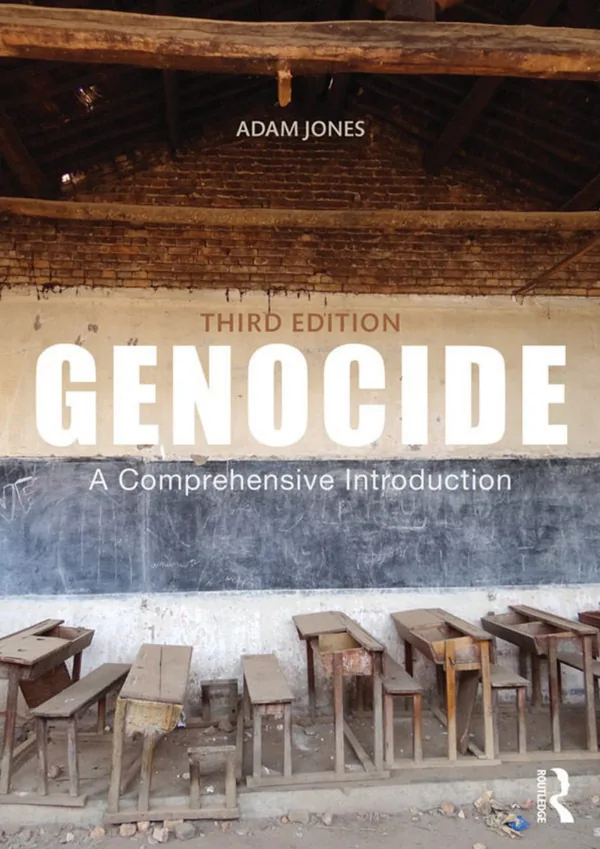
Cover of Genocide: A Comprehensive Introduction, 3rd Edition

Genocide: A Comprehensive Introduction, 3rd Edition

By Adam Jones

About this ebook

Adam Jones's Genocide: A Comprehensive Introduction, 3rd Edition combines historical case studies with theoretical, legal, and comparative analysis. Written for students and general readers, it examines genocidal intent, ideology, gender, bystanders, international responses, and the challenges of prevention, justice, reconciliation, and remembrance after mass violence.

Inside this title
  • Historical case studies paired with comparative and theoretical analysis
Current listed price $26.99Regular price $64.00Digital ebook
Buy now

Digital ebook. Checkout sends an order request.

Format
Digital ebook
ISBN
9781315725390
Last updated
2026-11-03

What this book covers.

Historical cases provide the basis for comparing how genocides develop and how societies respond. The book examines the Holocaust, Armenia, Cambodia, Rwanda, Bosnia, and Darfur alongside debates over definitions and the role of the Genocide Convention. Psychological, ideological, structural, and situational explanations offer different perspectives on the causes of collective violence.

Gender, bystander responsibility, intervention, and prevention extend the analysis beyond individual case narratives. Later questions concern tribunals, truth commissions, reparations, reconciliation, and memory. Chapter summaries, discussion questions, thematic boxes, and reading suggestions support classroom study. The third edition gives students of history, political science, and human rights a framework for examining this field through the scholarship it presents.

Study guide included

Inside Genocide: A Comprehensive Introduction, 3rd Edition.

Adam Jones approaches genocide as a problem of definition, evidence and response. The book pairs comparative histories with work from psychology, sociology and political science, then turns to memory, courts and prevention, asking readers to say which claim each piece of evidence actually supports.

After tracing how the legal category was built and where its edges are disputed, Jones sets destruction inside the machinery of states and empires, and within wars and revolutions. Case chapters cover settler colonialism, Ottoman deportations, the Holocaust, Bosnia, Cambodia and the Great Lakes region. Later sections bring in obedience research, organizational analysis and gender, then examine denial, trials, truth commissions and early warning. Throughout, the argument depends on separating what is documented from what is inferred, and on naming the definition a writer is using before comparing one case with another.

Defining the crime and its limits

Jones starts with Lemkin's coinage and the narrower wording of the 1948 UN convention, which identifies the acts it forbids and the groups it shields while demanding an aim to wipe out such a group, entirely or in part. Scale of suffering may prompt an inquiry, but intent needs its own proof. Contested episodes such as Biafra show how analysts using different definitions can read one record differently.

  • State the definition in use
  • Prove intent separately from harm
  • Expect reasonable disagreement over labels
Ch. 1

States, empires and wartime escalation

The state-and-empire chapter shows officials and commercial firms organizing coercion through territory, labor and resource extraction, with the Congo rubber system as a case where resource demands shaped enforcement. War and revolution are then treated as conditions that alter perceived loyalty, weaken protections and make extreme measures seem workable, so that a campaign's targets or methods can shift over time.

  • Ask who set the quotas
  • Map the chain of enforcement
  • Locate the moment escalation became possible
Ch. 2

Comparing histories without flattening them

Chapters devoted to the Holocaust, Indigenous peoples and the Ottoman Empire place each destruction inside its own chronology of conquest, deportation or industrialized killing, while also following resistance and outside response. Supplementary cases widen the frame. The Great Lakes chapter, for instance, keeps the 1994 Rwandan genocide distinct from later regional warfare involving neighboring states and different sets of actors.

  • Build a chronology per case
  • Keep perpetrators and motives distinct
  • Compare mechanisms, not just outcomes
Chs. 3–9

Perpetrators, rescuers and gender

Psychological accounts weigh fear, humiliation and greed, and the book discusses obedience experiments beside historical testimony. Such findings can suggest why one person complied, but organization and politics explain who set the scene and what options were visible. Gender then shapes who is labeled dangerous, who is singled out for elimination, and how sexual violence and participation are distributed among men and women.

  • Test obedience claims against variation
  • Place individual choice in its setting
  • Ask how gender patterns the harm
Chs. 10–13

Memory, denial and redress

Commemoration, archives, textbooks and testimony are all arenas where the past is contested, and denial takes identifiable forms such as denying a fact or reassigning blame. The book then compares international tribunals, domestic trials, mixed courts, Rwanda's gacaca courts and truth commissions. Each faces constraints on proof, on who takes part, and on authority, and each answers a different question about responsibility or repair.

  • Name the denial strategy precisely
  • Match the forum to its purpose
  • Ask which voices the record admits
Chs. 14–15

Warning signs and prevention

Dehumanizing speech, restrictions on a targeted group and the arming and organizing of violent groups gather meaning only when set beside one another in order. Analysts must ask whether reports are independent, how fast conditions are moving and whether local people can check them without danger. Responses such as intervention, sanctions and institutional pressure depend on timing, political backing and the risk of harming those they aim to protect.

  • Read signals as a sequence
  • Check whether sources are independent
  • Weigh protection against likely harm
Ch. 16

Chapter and section map

  • The Origins of GenocideCh. 1
  • State and Empire; War and RevolutionCh. 2
  • Comparative historical casesChs. 3–9
  • Psychological PerspectivesCh. 10
  • Gendering GenocideCh. 13
  • Memory, Forgetting, and DenialCh. 14
  • Justice, Truth, and RedressCh. 15
  • Strategies of Intervention and PreventionCh. 16

Key takeaways

  • Fix one definition of genocide and test each element of it against evidence separately.
  • Build dated chronologies that show which institutions acted and where alternatives still existed.
  • Judge courts, commissions and prevention work against their declared aims and real reach.

Undergraduates in genocide, human rights and comparative politics courses, and general readers seeking a structured introduction to the scholarship, case histories and policy debates surrounding mass violence.

Topics covered

  • genocide studies
  • mass violence
  • human rights
  • comparative history
  • international law
  • transitional justice
  • early warning
  • memory and denial

Questions about this ebook.

Edition, audience, and study-guide details at a glance.

What is Genocide: A Comprehensive Introduction, 3rd Edition about?

Adam Jones's Genocide: A Comprehensive Introduction, 3rd Edition combines historical case studies with theoretical, legal, and comparative analysis. Written for students and general readers, it examines genocidal intent, ideology, gender, bystanders, international responses, and the challenges of prevention, justice, reconciliation, and remembrance after mass violence.

Which edition of Genocide: A Comprehensive Introduction, 3rd Edition is this?

This listing is for the 3rd edition. Check the title, ISBN, and book details above before ordering, especially if your course or reading list names a specific edition.

Who is Genocide: A Comprehensive Introduction, 3rd Edition for?

Undergraduates in genocide, human rights and comparative politics courses, and general readers seeking a structured introduction to the scholarship, case histories and policy debates surrounding mass violence.

Does this page include a study guide?

Yes. This page includes an original study guide with six thematic sections, key takeaways, and a chapter and section map for structured reading.

Enter your name and email to open a WhatsApp message with your details.