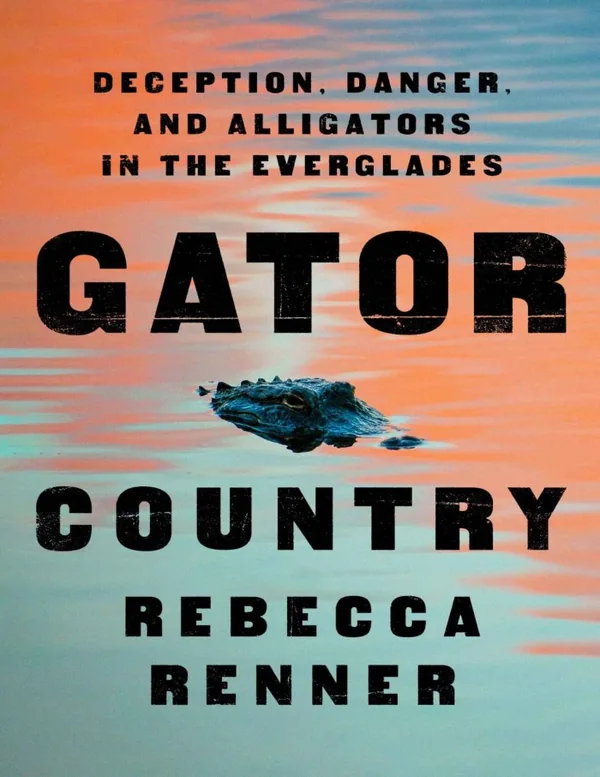
Gator Country: Deception, Danger, and Alligators in the Everglades
By Rebecca Renner
About this ebook
Rebecca Renner's Gator Country recounts an undercover investigation into alligator poaching in the Florida Everglades. Blending reported true crime with environmental narrative, the book follows wildlife officers, informants, and poachers while examining local livelihoods, illegal wildlife markets, conservation, and divided loyalties for readers of investigative nonfiction.
Inside this title
Reported narrative of an undercover alligator poaching investigation
Current listed price $7.99Regular price $15.00Digital ebook
An undercover wildlife operation provides the narrative thread through Renner's account of the Everglades. Officers and informants work within a world of poaching and illegal trade, where relationships and shifting loyalties complicate the boundaries between enforcement, survival, and criminal activity. The investigation supplies suspense while retaining the focus of reported nonfiction.
Natural history and the economics of alligator products give the human story a wider setting. Renner examines the pressures on an ecosystem alongside the motivations of people who live and work around it. True-crime readers, conservation enthusiasts, and students of long-form journalism can follow a story that connects wildlife law enforcement with questions about place, livelihood, and environmental protection.
Study guide included
Inside Gator Country: Deception, Danger, and Alligators in the Everglades.
An undercover wildlife operation gives Renner a way into the Everglades, where officers, informants, and poachers know each other and the line between enforcement and survival keeps shifting. The result is reported true crime threaded through Everglades natural history and the trade in alligator products.
The narrative follows an investigation into illegal alligator hunting, and it uses the operation's suspense to examine a wider world. Wildlife officers work with informants inside a community where livelihoods depend on the same animals that are being protected. Renner keeps the reporting close to the people involved, letting divided loyalties complicate any simple story of criminals and police. Alongside the human drama she sets Everglades ecology and the commercial forces that make poaching attractive, so conservation appears as a social problem and not only a biological one.
Inside an undercover operation
The investigation supplies the book's forward motion. Renner shows how an undercover effort is built, how trust is manufactured, and how the pressure of maintaining a cover shapes the people running it. The operation is reported rather than sensationalised, and its ethical discomforts are left visible.
Follow the operation's construction
Notice manufactured trust in operation
Let discomfort stay visible
Topic 1-2
Informants and shifting loyalty
Informants move between worlds, and their usefulness depends on personal relationships that are never entirely stable. The book examines what they owe to officers, to the community, and to themselves, without resolving the underlying tension neatly. Loyalty becomes the place where enforcement and belonging collide.
Track competing obligations and debts
Notice unstable alliances over time
Resist neat moral resolutions
Topic 3
The economics of poaching
Illegal hunting is connected to the market for alligator products and to the money that can be made from them. Renner treats poaching as an economic activity embedded in local life, not simply as lawbreaking by outsiders. Understanding the market is part of understanding why the practice persists.
Follow the product's market
See poaching as economic activity
Connect enforcement to livelihood
Topic 4
Everglades ecology and habitat
The natural history of the Everglades gives the human story its setting and its stakes. Alligators are presented as part of a system of water, prey, and habitat rather than as a single species of concern. Ecological pressure and human pressure meet in the same landscape.
See alligators within a system
Connect water, prey, and habitat
Link ecology to human pressure
Topic 5
Conservation, enforcement, and legitimacy
Protection depends on officers and rules, but it also depends on the cooperation of people who live in the place. The book shows enforcement as a social practice with limits, where heavy-handedness can undermine the compliance it seeks. Conservation becomes a question of legitimacy as much as biology.
Notice enforcement's social limits
Ask what earns cooperation
Treat legitimacy as a resource
Topic 6-7
The craft of reported narrative
Renner builds the book from interviews, observation, and scene reconstruction while keeping the reporting visible. Suspense is used to carry the reader, but the book's claims rest on journalistic method rather than invented interiority. That combination is what makes it a model of environmental true crime.
Keep reporting visible in scenes
Use suspense without inventing
Ground scenes in evidence
Topic 8
Topic map
The Undercover InvestigationTopic 1
Wildlife Officers and Their WorkTopic 2
Informants and Divided LoyaltiesTopic 3
Poachers and Illegal MarketsTopic 4
Everglades Ecology and AlligatorsTopic 5
Local Livelihoods in the WetlandsTopic 6
Conservation and EnforcementTopic 7
Reported Narrative MethodTopic 8
Key takeaways
Poaching is an economic activity tied to local livelihoods, which makes enforcement a social problem as much as a legal one.
Alligators belong to a wider Everglades system of water, prey, and habitat, so protection has to be ecological and human at once.
The book's suspense rests on reporting method, keeping scene and evidence visible instead of inventing certainty.
True-crime readers, conservation enthusiasts, and students of long-form journalism who want an environmental story about wildlife law enforcement, local livelihood, and the fragile Florida Everglades.
Topics covered
alligator poaching
Florida Everglades ecology
wildlife enforcement
wildlife conservation
undercover investigation
environmental journalism
illegal wildlife trade
Florida ecology
Questions about this ebook.
Edition, audience, and study-guide details at a glance.
What is Gator Country: Deception, Danger, and Alligators in the Everglades about?
Rebecca Renner's Gator Country recounts an undercover investigation into alligator poaching in the Florida Everglades. Blending reported true crime with environmental narrative, the book follows wildlife officers, informants, and poachers while examining local livelihoods, illegal wildlife markets, conservation, and divided loyalties for readers of investigative nonfiction.
Who is Gator Country: Deception, Danger, and Alligators in the Everglades for?
True-crime readers, conservation enthusiasts, and students of long-form journalism who want an environmental story about wildlife law enforcement, local livelihood, and the fragile Florida Everglades.
Does this page include a study guide?
Yes. This page includes an original study guide with six thematic sections, key takeaways, and a topic map for structured reading.