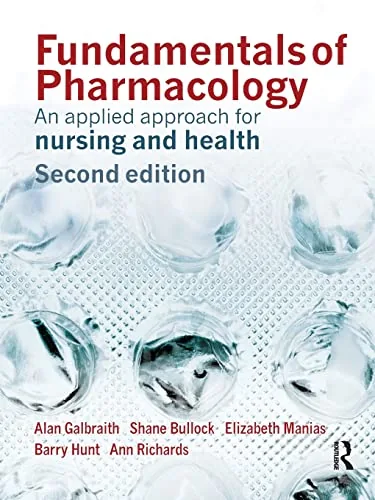
Fundamentals of Pharmacology: An Applied Approach for Nursing and Health, 2nd Edition
By Alan Galbraith, Shane Bullock, Elizabeth Manias, Barry Hunt, Ann Richards
About this ebook
Fundamentals of Pharmacology: An Applied Approach for Nursing and Health, 2nd Edition connects drug mechanisms with medication management and nursing responsibilities. Intended for nursing and health professions students, this edition addresses pharmacokinetics, pharmacodynamics, drug classes, adverse effects, dosage calculations, and the social, legal, and ethical dimensions of medicines.
Inside this title
Pharmacokinetics, pharmacodynamics, drug classes, adverse effects, and interactions
Current listed price $26.00Regular price $63.00Digital ebook
Drug action is examined alongside the practical work of administering medicines and observing their effects. The text introduces pharmacokinetics and pharmacodynamics before addressing therapeutic uses, adverse reactions, drug interactions, and nursing considerations across major drug groups. Cardiovascular, respiratory, neurological, endocrine, antimicrobial, and analgesic medicines are among the areas described.
Medication calculations and the needs of different patient groups connect the underlying science with nursing coursework. The discussion also considers adherence, patient education, and social influences on medicine use. Published as a second edition in 2007, the book offers students a view of applied pharmacology that includes professional and ethical questions as well as mechanisms.
Study guide included
Inside Fundamentals of Pharmacology: An Applied Approach for Nursing and Health, 2nd Edition.
Galbraith and his coauthors situate drug behavior within everyday nursing practice. A medicine's journey and effect matter together with its dose form, professional obligation, patient dialogue, and a disciplined weighing of help against harm. This second edition ranges across social context, giving, pharmacokinetics, individual variation, toxicology, and classes grouped by body system.
The book opens by locating medicines within society and within professional settings, then builds administration, disposition, and drug action. Variation between people, interactions, and toxicology precede a tour of drug groups organized by body system. Practical matters such as a product's identity, route, and paperwork sit alongside wider questions of exposure and response. A repeated classroom case, using two labels that differ in release behavior, keeps those threads apart so learners can tell a verification problem from a pharmacology one.
Medicines inside social settings
Drug development is traced from natural sources through synthetic compounds and biotechnology products. Promotion, nonprescription availability, and brand-and-generic labels are presented as forces shaping use. Beliefs, language, prior experience, and resources change how any explanation is received. Asking about those conditions belongs to grasping how a medicine is actually taken.
Follow development from plants to biotechnology
Treat promotion and naming as influences
Ask about beliefs, language, and means
Sections I–II
Dose form and the giving route
A formulation decides the timing and location of a drug's release. Products differ in behavior and handling: swallowable tablets, slow-release versions, inhaled preparations, and injectables. Sharing an active ingredient does not prove the two release it alike. Route, storage, records, and observed response sit inside one administration sequence, alongside checks of identity, order, dose, and timing.
Tie each dose form to its function
Compare strength and release wording apart
Check identity, order, dose, timing
Section III
Movement through the body
Absorption marks the entry into circulation. Distribution reflects blood flow, tissue traits, binding, and barriers like the one separating blood from brain tissue. Metabolism may change activity or ready a substance for removal, while renal or biliary paths finish elimination. Together these steps clarify onset, duration, and concentration shifts; an interaction may touch any stage.
Pharmacodynamics spans receptor binding, enzyme actions, and further mechanisms. Agonists turn receptors on, antagonists prevent activation, while partial agonists produce a weaker response within one system. Potency and peak effect measure different things. Beneficial and harmful effects may both arise from one mechanism across tissues. Age, illness, diet, heredity, and co-medicines may alter exposure or sensitivity.
Tell potency apart from peak response
Name agonist, antagonist, and partial roles
Weigh age, heredity, and co-medicines
Chs. 16–20
Harm, timing, and exposure
A harmful response can sometimes be forecast from what a drug does, yet in a given patient it may defy prediction. When judging a suspected reaction, weigh its timing, other possible explanations, the person's underlying illness, and concurrent medicines. A link in time invites closer inquiry but does not establish cause. Toxicology approaches poisoning, overdose, bites or stings, and misuse through assessment, supportive principles, and measures that change absorption or removal.
Split predictable risk from unusual events
Test timing and rival causes first
Frame poisoning by agent, amount, and delay
Ch. 11 and Section V
Classes organized by body system
Chapters on autonomic function and chemical mediators set out pathways reused in respiratory, neurological, and cardiovascular work. Drugs may shift signaling, blood-vessel tone, body fluids, or still other mechanisms to reach a clinical aim. Analgesia, anesthesia, digestion, hormones, and nutrition follow. Comparison opens by naming the process a class perturbs, then traces that shift toward likely benefit and harm; anti-infectives and gene therapies add delivery complications.
Begin with the process a class alters
Compare target, benefit, and unwanted effects
Note drug-specific limits beyond the class
Sections VI–XV
Chapter and section map
Pharmacology Within the Social and Professional ContextSections I–II
Drug Administration and Professional ResponsibilitiesSection III
General Aspects of PharmacologySection IV
ToxicologySection V
Autonomic pharmacology and chemical mediatorsSections VI–VII
Behavior, cognition, pain and anesthesiaSections VIII–IX
Oxygenation, digestion, metabolism and nutritionSections X–XIII
Anti-infective, immune, cancer and topical topicsSections XIV–XV
Key takeaways
In a medication example, treat product name, strength, dose form, and route as distinct identifiers.
Let pharmacokinetics account for exposure and pharmacodynamics account for the drug's action at its target.
Weigh timing, other possible causes, and the record before tying a bad reaction to one medicine.
Nursing and allied health students taking an introductory pharmacology course, plus instructors who want mechanisms tied to administration, monitoring, and the ethical handling of medicines in practice.
Topics covered
nursing pharmacology
drug pharmacokinetics
drug pharmacodynamics
medication administration
adverse drug reactions
drug interactions
dosage calculations
clinical toxicology
Questions about this ebook.
Edition, audience, and study-guide details at a glance.
What is Fundamentals of Pharmacology: An Applied Approach for Nursing and Health, 2nd Edition about?
Fundamentals of Pharmacology: An Applied Approach for Nursing and Health, 2nd Edition connects drug mechanisms with medication management and nursing responsibilities. Intended for nursing and health professions students, this edition addresses pharmacokinetics, pharmacodynamics, drug classes, adverse effects, dosage calculations, and the social, legal, and ethical dimensions of medicines.
Which edition of Fundamentals of Pharmacology: An Applied Approach for Nursing and Health, 2nd Edition is this?
This listing is for the 2nd edition. Check the title, ISBN, and book details above before ordering, especially if your course or reading list names a specific edition.
Who is Fundamentals of Pharmacology: An Applied Approach for Nursing and Health, 2nd Edition for?
Nursing and allied health students taking an introductory pharmacology course, plus instructors who want mechanisms tied to administration, monitoring, and the ethical handling of medicines in practice.
Does this page include a study guide?
Yes. This page includes an original study guide with six thematic sections, key takeaways, and a chapter and section map for structured reading.