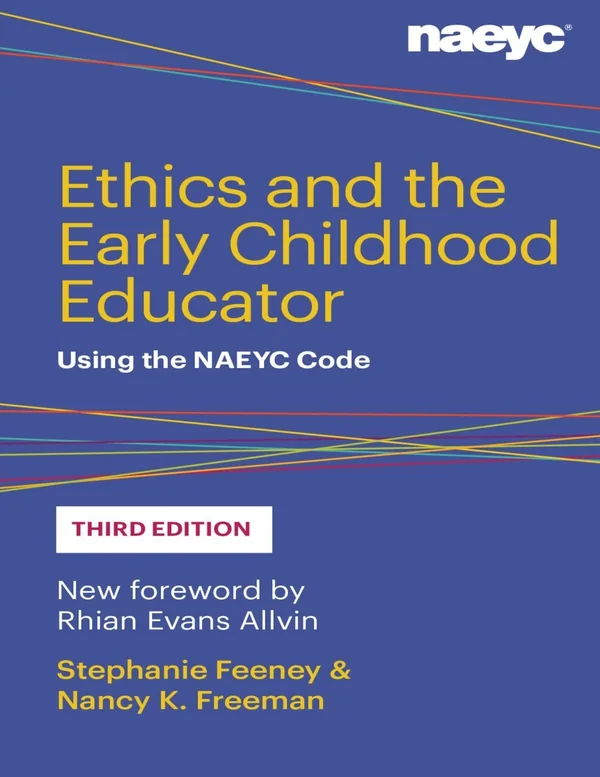
Ethics and the Early Childhood Educator: Using the NAEYC Code, 3rd Edition
By Stephanie Feeney, Nancy K. Freeman
About this ebook
Ethics and the Early Childhood Educator, 3rd Edition, uses the NAEYC Code of Ethical Conduct to examine professional dilemmas in early learning settings. Stephanie Feeney and Nancy K. Freeman combine ethical concepts with cases and discussion questions, addressing responsibilities to children, families, colleagues, and the wider community.
Inside this title
NAEYC responsibilities organize discussion of children, families, colleagues, and community
Current listed price $10.99Regular price $20.00Digital ebook
Everyday professional decisions provide the context for this guide to the NAEYC Code. The book introduces the Code's purpose and organization before examining responsibilities within the relationships that shape early childhood education. Ethical concepts are connected to situations where obligations to different people may pull educators in competing directions.
Case studies, discussion questions, and a problem-solving framework invite readers to identify the ethical issue and explain the reasoning behind a response. Topics include professional boundaries, conflicts of interest, diversity, inclusion, and digital communication. Teachers, program leaders, and students can use the material to structure individual reflection or shared discussion about professional responsibilities.
Study guide included
Inside Ethics and the Early Childhood Educator: Using the NAEYC Code, 3rd Edition.
An ethical guide built around the NAEYC Code of Ethical Conduct. Feeney and Freeman connect the Code's responsibilities to children, families, colleagues, and community with cases, discussion questions, and a problem-solving framework, so early childhood educators can reason through professional dilemmas rather than memorize rules.
The book introduces the Code's purpose and organization before turning to the relationships that shape early childhood practice. Obligations to children, families, colleagues, and the wider community are examined where they may pull in different directions. Ethical concepts are tied to concrete situations, and case studies invite readers to identify the issue and explain their reasoning. A problem-solving framework supports that analysis. Professional boundaries, conflicts of interest, diversity, inclusion, and digital communication supply recurring practical contexts. Teachers, program leaders, and students can use the material for individual reflection or shared discussion of professional responsibility.
The NAEYC Code: Purpose and Structure
The Code is introduced before it is applied. Readers learn what it is for and how its responsibilities are organized, which prepares them to locate a dilemma within it. This groundwork keeps later cases connected to a shared professional reference.
Purpose of the NAEYC Code
How its responsibilities are organized
A shared reference for later cases
Topic 1
Responsibilities to Children
Obligations to children form a central part of the Code. The text connects these responsibilities to everyday decisions in early learning settings. Cases make the abstract commitment concrete by placing it in a situation that requires judgment.
Ethical responsibilities to children
Commitments applied to daily decisions
Cases that require judgment
Topic 2
Responsibilities to Families
Responsibilities to families are examined as their own set of obligations. The discussion recognizes that family relationships can create competing expectations for educators. Ethical concepts help readers sort through what is owed and to whom.
Ethical responsibilities to families
Competing expectations in family relationships
Obligations clarified through ethical concepts
Topic 3
Responsibilities to Colleagues and Community
The Code also addresses colleagues and the wider community. These responsibilities extend professional conduct beyond the classroom. The section shows that ethical practice includes how educators work with one another and with the public.
Responsibilities to colleagues
Responsibilities to the wider community
Conduct that extends beyond the classroom
Topic 4
A Problem-Solving Framework for Dilemmas
A problem-solving framework gives readers a way to work through dilemmas. Ethical concepts are connected to situations where obligations pull in different directions. Case studies and discussion questions ask readers to identify the issue and explain the reasoning behind a response.
Framework for working through dilemmas
Competing obligations made explicit
Reasoning explained, not just concluded
Topics 5–6
Boundaries, Inclusion, and Digital Communication
Practical contexts include professional boundaries, conflicts of interest, diversity, inclusion, and digital communication. These topics show how ethical responsibilities appear in current early childhood settings. They also invite discussion of conduct that may not be covered by simple rules.
Professional boundaries and conflicts of interest
Diversity and inclusion
Digital communication in professional relationships
Topic 7
Topic map
Purpose and organization of the NAEYC CodeTopic 1
Ethical responsibilities to childrenTopic 2
Ethical responsibilities to familiesTopic 3
Responsibilities to colleagues and the wider communityTopic 4
Competing obligations and ethical conceptsTopic 5
A problem-solving framework for ethical dilemmasTopic 6
Boundaries, conflicts of interest, diversity, inclusion, and digital communicationTopic 7
Key takeaways
The NAEYC Code is a reference for reasoning, not a checklist of fixed answers.
Responsibilities to children, families, colleagues, and community can conflict.
A problem-solving framework makes the reasoning behind an ethical response visible.
Early childhood teachers, program leaders, and students preparing for professional practice who want structured guidance on ethical dilemmas in early learning settings.
Topics covered
NAEYC Code of Ethical Conduct
early childhood ethics
professional dilemmas
ethical responsibilities
professional boundaries
inclusion
digital communication
case studies
Questions about this ebook.
Edition, audience, and study-guide details at a glance.
What is Ethics and the Early Childhood Educator: Using the NAEYC Code, 3rd Edition about?
Ethics and the Early Childhood Educator, 3rd Edition, uses the NAEYC Code of Ethical Conduct to examine professional dilemmas in early learning settings. Stephanie Feeney and Nancy K. Freeman combine ethical concepts with cases and discussion questions, addressing responsibilities to children, families, colleagues, and the wider community.
Which edition of Ethics and the Early Childhood Educator: Using the NAEYC Code, 3rd Edition is this?
This listing is for the 3rd edition. Check the title, ISBN, and book details above before ordering, especially if your course or reading list names a specific edition.
Who is Ethics and the Early Childhood Educator: Using the NAEYC Code, 3rd Edition for?
Early childhood teachers, program leaders, and students preparing for professional practice who want structured guidance on ethical dilemmas in early learning settings.
Does this page include a study guide?
Yes. This page includes an original study guide with six thematic sections, key takeaways, and a topic map for structured reading.